


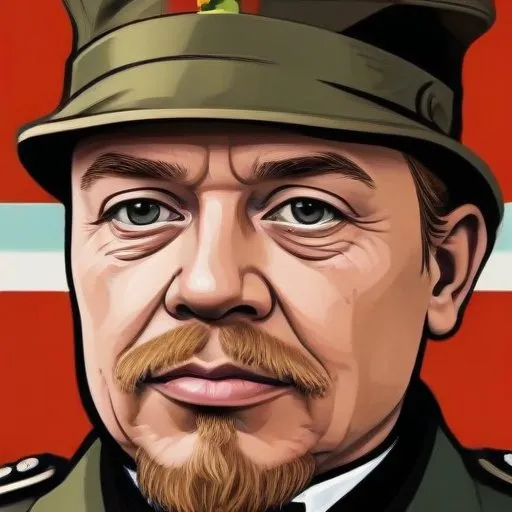
The 5th President of the South African Republic, a Boer war hero who fought against British colonization, and later became a symbol of Afrikaner nationalism. He's most known for his resistance against British rule and his role in shaping South Africa's history.
Paul Kruger, affectionately known as "Oom Paul" or "Uncle Paul," was a stalwart figure in 19th-century South African politics and military affairs. As the State President of the South African Republic, also known as the Transvaal, from 1883 to 1900, Kruger played a pivotal role in shaping the destiny of the Boer Republic, earning him international recognition as the face of the Boer cause.
Born on October 10, 1825, near the eastern edge of the Cape Colony, Kruger's early life was marked by the Great Trek, a period of mass migration by the Boer people. With minimal formal education, Kruger's knowledge was largely self-acquired, with the Bible being his primary source of learning. His early years were shaped by his association with the Voortrekker leader Andries Pretorius, under whom he learned the importance of leadership and diplomacy.
Kruger's transition to a prominent figure in South African politics began with his role in the signing of the Sand River Convention with Britain in 1852. Over the next decade, he played a crucial part in forging the South African Republic, leading commandos and resolving disputes between rival Boer leaders and factions. His leadership skills and diplomatic prowess earned him the title of Commandant-General in 1863, a position he held for a decade.
Kruger's appointment as Vice President in 1877 coincided with the annexation of the South African Republic by Britain as the Transvaal. Undeterred, Kruger headed two deputations to London, determined to overturn the annexation. His persistence ultimately led to the Boers' victory in the First Boer War of 1880-1881, culminating in the restoration of the South African Republic's independence. Kruger's leadership during this period cemented his position as a champion of Boer independence.
In 1883, Kruger was elected President of the South African Republic, a position he held until 1900. During his presidency, Kruger oversaw the development of the country's infrastructure, including the establishment of a railway system and the discovery of gold in the Transvaal. His leadership during the Second Boer War of 1899-1902, although ultimately unsuccessful, further solidified his reputation as a national hero.
Kruger's philosophical outlook was deeply rooted in his Afrikaner heritage and his strong Christian faith. He believed in the importance of preserving the Boer way of life and the need for self-determination for the Afrikaner people. Kruger's unwavering commitment to his people's cause has earned him the admiration of many, who revere him as a symbol of Afrikanerdom.
Kruger's legacy extends beyond the borders of South Africa, with his struggle for independence and self-determination serving as an inspiration to many around the world. His commitment to preserving the Boer way of life has left an indelible mark on South African culture and identity.
"When the time comes, I will not be found wanting. I will be ready to take the fullest responsibility."
Kruger's character, leadership, and philosophical contributions have ensured his place in history as a champion of Afrikanerdom and a symbol of resistance against colonialism.
Born in 1870
A skilled lawyer and politician who played a key role in shaping South Africa's government and served as a prominent international statesman. He's also known for his influential ideas on holism and evolution.
Born in 1853
A British-born entrepreneur and politician who played a significant role in the colonization of South Africa, known for his diamond mining ventures and expansionist policies. He founded the De Beers company and established Rhodes University.
90 Years Old
The last State President of apartheid-era South Africa who led the country's transition to democracy and was awarded the Nobel Peace Prize for his efforts. He's known for his role in releasing Nelson Mandela from prison and dismantling the apartheid system.
