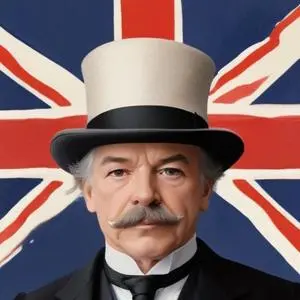
David Lloyd George: The Unyielding Leader of the United Kingdom
Leading the Nation through Turbulent Times
David Lloyd George, 1st
Earl Lloyd-George of Dwyfor, is renowned for his unwavering leadership as the Prime Minister of the United Kingdom from 1916 to 1922. During his tenure, he successfully navigated the nation through the treacherous waters of World War I, implementing radical social reforms, including the National Insurance Act of 1911, and playing a pivotal role in the Paris Peace Conference.
A Welshman with a Vision
Born on January 17, 1863, in Manchester, England, Lloyd George was a Welshman at heart, and his roots had a profound impact on his political ideologies. He championed Welsh devolution, advocated for the disestablishment of the Church of England in Wales, and fought for equality and justice for laborers and tenant farmers.
Rise to Prominence
Lloyd George's entry into politics began in 1890, when he won a by-election to become the Member of Parliament for Caernarvon Boroughs, a seat he held for an impressive 55 years. His eloquence, passion, and conviction soon earned him a place in
Henry Campbell-Bannerman's cabinet in 1905. As Chancellor of the Exchequer, he proposed the People's Budget in 1909, which aimed to fund extensive welfare reforms through taxes on land ownership and high incomes.
The Constitutional Crisis and the Parliament Act
The rejection of the People's Budget by the Conservative-dominated House of Lords led to a constitutional crisis. This crisis was only resolved after two elections in 1910 and the passage of the Parliament Act in 1911, which significantly curbed the power of the House of Lords.
War Efforts and the Ministry of Munitions
In 1915, Lloyd George became Minister of Munitions, where he rapidly expanded artillery shell production for the war against Germany. His exceptional leadership skills and ability to mobilize resources earned him the respect of his peers and the nation.
Secretary of State for War and the Road to Premiership
In 1916, Lloyd George was appointed Secretary of State for War, but he soon became frustrated by his limited power and clashes with the top Army brass. This frustration led him to seek the premiership, which he attained later that year. As Prime Minister, Lloyd George continued to implement his vision for a more equitable society, introducing reforms that laid the foundation for the modern welfare state.
Legacy and Impact
David Lloyd George's legacy is a testament to his unwavering commitment to social reform and his ability to lead the nation through tumultuous times. His leadership during World War I, his role in the Paris Peace Conference, and his advocacy for the establishment of the Irish Free State have cemented his place in history as one of the most influential leaders of the 20th century.
Personal Milestones and Key Life Events
- 1863: Born in Manchester, England
- 1890: Won by-election to become Member of Parliament for Caernarvon Boroughs
- 1905: Became a member of Henry Campbell-Bannerman's cabinet
- 1909: Proposed the People's Budget as Chancellor of the Exchequer
- 1911: Passage of the Parliament Act
- 1915: Became Minister of Munitions
- 1916: Became Secretary of State for War and later Prime Minister
- 1922: Resigned as Prime Minister
- 1945: Passed away on March 26th
Quotes and Memorable Sayings
"The world is not looking for men with testimonials, but for men with testimonies." - David Lloyd George
"Humanity is not a collection of dry bones, but of warm, pulsing hearts." - David Lloyd George
FAQ
What were David Lloyd Georges major accomplishments as Prime Minister?
David Lloyd Georges tenure as Prime Minister of the United Kingdom from 1916 to 1922 was marked by significant accomplishments, including leading the country through World War I, introducing social reforms, and championing the cause of Welsh devolution.
How did David Lloyd Georges policies impact the United Kingdom?
David Lloyd Georges policies had a profound impact on the United Kingdom, including the introduction of old-age pensions, labor exchanges, and national insurance, which improved the lives of millions of Britons and reshaped the countrys social and economic landscape.
What was David Lloyd Georges role in World War I?
David Lloyd George played a crucial role in World War I, serving as Minister of Munitions and later Prime Minister, where he oversaw the countrys war effort and negotiated the Treaty of Versailles.
How did David Lloyd Georges leadership style impact British politics?
David Lloyd Georges leadership style, marked by his charisma, energy, and willingness to challenge convention, had a lasting impact on British politics, inspiring future generations of politicians and shaping the countrys political landscape.
What is David Lloyd Georges legacy in modern British politics?
David Lloyd Georges legacy continues to influence modern British politics, with his commitment to social reform, national unity, and strong leadership remaining an inspiration to British politicians and citizens alike.