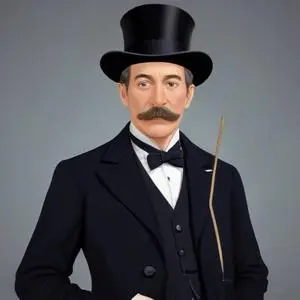
H. H. Asquith: The Liberal Prime Minister Who Shaped Modern Britain
A Champion of Reform and Progress
H. H. Asquith, the 1st Earl of Oxford and Asquith, is renowned for his instrumental role in shaping modern Britain as Prime Minister from 1908 to 1916. As the last Liberal Party prime minister to command a majority government, Asquith played a pivotal role in passing significant liberal legislation and reducing the power of the House of Lords.
Early Life and Education
Born on September 12, 1852, in Morley, Yorkshire, Asquith was the son of a cloth manufacturer. He attended Balliol College, Oxford, where he developed a passion for politics and became president of the Oxford Union. After graduating, Asquith was called to the Bar in 1876 and established a successful law practice.
Rise to Prominence
Asquith's entry into politics began in 1886 when he was elected as the Liberal candidate for East Fife, a seat he held for over three decades. In 1892, he was appointed Home Secretary in Gladstone's fourth ministry, where he demonstrated his commitment to social reform. Asquith's talents did not go unnoticed, and he became a prominent figure in the Liberal Party during their decade in opposition.
Chancellor of the Exchequer and Prime Minister
When the Liberals regained power in 1905, Asquith was appointed Chancellor of the Exchequer under Sir
Henry Campbell-Bannerman. Upon Campbell-Bannerman's death in 1908, Asquith succeeded him as Prime Minister, a position he held until 1916. As Prime Minister, Asquith's government was driven by a commitment to reform, and he oversaw the passage of several landmark bills, including the Old-Age Pensions Act and the National Insurance Act.
Constitutional Crisis and the Parliament Act
Asquith's government faced significant opposition from the House of Lords, which rejected the People's Budget of 1909. This led to a constitutional crisis, which Asquith resolved by calling two general elections in 1910. The subsequent passage of the Parliament Act 1911 allowed the House of Commons to override the Lords, fundamentally altering the balance of power in British politics.
Leading Britain into World War I
In August 1914, Asquith's government declared war on Germany, drawing Britain into World War I. Despite initial optimism, the war effort was marked by early setbacks, including the Gallipoli Campaign and a shortage of munitions. Criticism of Asquith's leadership mounted, and he was eventually forced to form a coalition government with other parties.
Legacy and Later Life
Asquith's tenure as Prime Minister came to an end in December 1916, after which he led the Liberal Party in opposition. He continued to play an important role in British politics until his death on February 15, 1928. Today, Asquith is remembered as a champion of liberal values, a skilled politician, and a significant figure in shaping modern Britain.
Quotes and Memorable Sayings
- "Wait and see" – Asquith's catchphrase, which reflected his cautious approach to politics.
- "I would rather be an effervescent bubble on the wave of excitement than a stagnant pool of indifference." – Asquith's reflection on his approach to politics.
Historical Context and Comparative Analysis
Asquith's premiership is often contrasted with that of his contemporaries, including
Winston Churchill and
David Lloyd George. While Churchill's leadership during World War II overshadows Asquith's wartime efforts, Asquith's commitment to social reform and his role in shaping the British constitution earn him a significant place in British history.
FAQ
What was H. H. Asquiths role in British politics?
H. H. Asquith was a British lawyer and politician who served as Prime Minister of the United Kingdom from 1908 to 1916, leading the Liberal Party.
What were H. H. Asquiths contributions to British politics?
H. H. Asquith made significant contributions to British politics, including the introduction of social welfare reforms, the expansion of the British Empire, and the management of World War I.
What was H. H. Asquiths background?
H. H. Asquith was born in 1852 in Yorkshire, England, and came from a family of modest means. He was educated at Oxford University and later became a successful lawyer.
How did H. H. Asquiths government impact the United Kingdom?
H. H. Asquiths government had a significant impact on the United Kingdom, introducing a range of reforms and initiatives that shaped the countrys development and growth.
What was H. H. Asquiths legacy?
H. H. Asquiths legacy lies in his contributions to British politics, including his role in shaping the countrys social welfare system, expansion of the empire, and management of World War I.