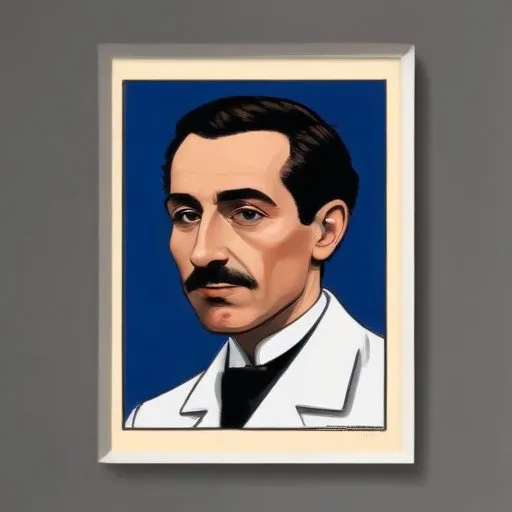
Henri Pitot

Henri Pitot

Henri Pitot was born on May 3rd, 1695

Full Name: Henri Pitot
Nationality: French
Occupation: Physicist, Engineer
Birth Year: 1695
Death Year: 1771
Invention: Pitot tube
Field: Fluid dynamics
Role: Academic

A French physicist and engineer credited with inventing the Pitot tube, a device used to measure fluid pressure and velocity, revolutionizing aerodynamics and modern aviation.

Written by: Carlos Hernandez Carlos Hernandez

Henri Pitot: The French Hydraulic Engineer and Inventor of the Pitot Tube

A Legacy in Fluid Dynamics

Henri Pitot, a renowned French hydraulic engineer, is credited with the invention of the pitot tube, a device that measures fluid velocity. This groundbreaking innovation has had a profound impact on various fields, including aerodynamics, engineering, and physics.

Early Life and Education

Born on May 3, 1695, in Aramon, France, Pitot was fascinated by mathematics and science from an early age. He pursued his passion for learning, eventually becoming a skilled engineer and mathematician.

The Pitot Tube: A Breakthrough in Fluid Dynamics

In 1732, Pitot was tasked with measuring the flow of the River Seine. This challenge led him to develop the pitot tube, which consists of a tube with an inlet orifice and a vertical column. The height of the fluid column is proportional to the square of the velocity of the fluid at the depth of the inlet. This fundamental relationship, known as Pitot's Law, revolutionized the field of fluid dynamics.

Notable Achievements and Contributions

Pitot's contributions extend beyond his invention of the pitot tube. He designed the Aqueduc de Saint-Clément near Montpellier, a project that lasted thirteen years. He also played a significant role in the extension of Pont du Gard in Nîmes. These achievements demonstrate his expertise in hydraulic engineering and his ability to tackle complex projects.

Awards and Honors

In recognition of his outstanding work, Pitot was elected a member of the French Academy of Sciences in 1724 and a fellow of the Royal Society in 1740. These prestigious honors reflect his commitment to scientific excellence and his impact on the scientific community.

The Pitot Theorem and Its Significance

In addition to his work in fluid dynamics, Pitot made significant contributions to plane geometry. The Pitot theorem, named after him, is a fundamental concept in mathematics. This theorem has far-reaching implications in various fields, including engineering, physics, and computer science.

Legacy and Impact

Pitot's legacy extends beyond his invention of the pitot tube. He has inspired generations of engineers, scientists, and mathematicians. His work has had a profound impact on our understanding of fluid dynamics, aerodynamics, and engineering. The pitot tube remains an essential tool in various industries, including aerospace, chemical processing, and power generation.

Personal Life and Milestones

Pitot's life was marked by significant personal milestones, including his election to the French Academy of Sciences and his fellowship in the Royal Society. He was a private individual, and little is known about his personal life beyond his professional achievements.

Rue Henri Pitot: A Tribute to a Visionary

In recognition of Pitot's contributions to science and engineering, Rue Henri Pitot in Carcassonne was named in his honor. This tribute acknowledges his lasting impact on the world of science and his role as a visionary in his field.

Conclusion

Henri Pitot's legacy is a testament to his innovative spirit, dedication to science, and passion for engineering. His invention of the pitot tube has had a profound impact on various fields, and his contributions to plane geometry and hydraulic engineering continue to inspire new generations of scientists and engineers.
Henri Pitot

Henri Pitot Quiz

What is Henri Pitot credited with inventing?

Score: 0/5
FAQ
What is Henri Pitot famous for?
Henri Pitot is famous for inventing the Pitot tube, a device used to measure fluid pressure and velocity in fluids.
What was Henri Pitots contribution to the field of physics?
Henri Pitot made significant contributions to the field of physics, particularly in the areas of fluid mechanics and aerodynamics.
What other notable inventions did Henri Pitot create?
Henri Pitot created several notable inventions, including a machine for lifting heavy weights and a device for measuring the velocity of fluids.
What is Henri Pitots legacy in the field of engineering?
Henri Pitots legacy is one of a brilliant engineer and inventor who contributed significantly to the development of modern engineering.
How did Henri Pitot die?
Henri Pitot died on December 27, 1771, at the age of 76, leaving behind a legacy of groundbreaking inventions and scientific contributions.

Related People:

Blaise Pascal

Born in 1623

A 17th-century genius who made major contributions to mathematics, physics, and philosophy, inventing the mechanical calculator and developing the theory of probability. His writings also explored the human condition and faith.

Pierre-Simon Laplace

Born in 1749

Developed nebular hypothesis of the origin of the solar system and formulated Laplace's equation, a fundamental concept in mathematics and physics. He's considered the founder of celestial mechanics.

Jean-Baptiste Biot

Born in 1774

A French polymath who made significant contributions to the fields of physics, astronomy, and mathematics, particularly in the discovery of chromatic polarization and the Biot-Savart law.

Augustin-Jean Fresnel

Born in 1788

Developed groundbreaking theories on light and wave optics, revolutionizing our understanding of the physical world. His work laid the foundation for modern optics and telecommunications.

André-Marie Ampère

Born in 1775

A pioneer in the field of electromagnetism, he formulated fundamental laws that describe the relationship between electric currents and magnetic fields. His work laid the foundation for many modern technologies, including electric motors and generators.

François Arago

Born in 1786

A mathematician and politician who made significant contributions to the development of electromagnetism and served as Prime Minister of France, advocating for social reform and education.

Jean-Victor Poncelet

Born in 1788

Developed projective geometry, a fundamental area of mathematics, and made significant contributions to the field of engineering, particularly in the design of machines and mechanisms.