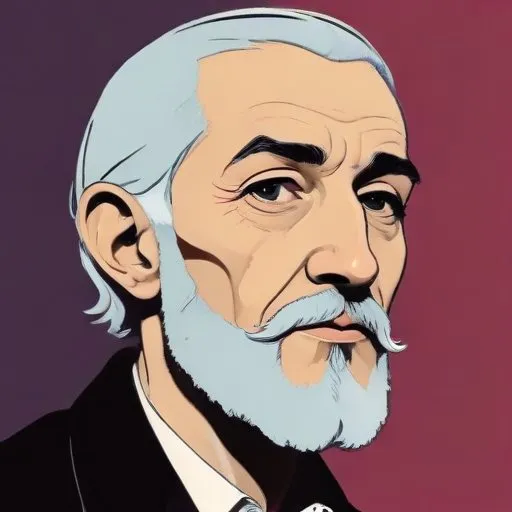
Henri Richelet: The Provocative French Painter
A Master of Dark Humor and Vivid Imagery
Henri Richelet was a French painter known for his striking and often unsettling works that explored the themes of sex, death, and the human condition. With a style that blended elements of Caravaggio and
Georges de La Tour, Richelet's art is characterized by its dark humor, vivid colors, and a sense of unease that lingers long after the viewer looks away.
Early Life and Education
Born on June 16, 1944, in a small village near Domremy, France, Richelet was raised in a family of primary school teachers. He spent his childhood and adolescence in the nearby town of Neufchâteau, Vosges, where he developed a passion for art that would stay with him throughout his life. Richelet went on to study at the École des Beaux-Arts in Nancy and later at the École nationale supérieure des Beaux-Arts in Paris, where he honed his skills as a painter and etcher.
Awards and Recognition
In 1968, Richelet was awarded the prestigious First Grand Prix of the Casa de Velázquez in Madrid, Spain, in the etching category. This recognition marked the beginning of a successful career that would see him exhibit his work in numerous solo and group exhibitions across France, Quebec, and Chile.
Artistic Style and Themes
Richelet's artwork is characterized by its dark and often macabre sense of humor, which he used to explore themes of mortality, desire, and the human condition. His paintings and etchings often feature twisted and contorted figures, set against dark backgrounds that seem to draw the viewer in. The use of vivid colors, particularly vermilion, adds a sense of drama and tension to his work, creating a sense of unease that is both captivating and unsettling.
Influence and Legacy
Richelet's work has had a significant impact on the art world, influencing a generation of artists who have followed in his footsteps. His unique style and themes have also made him a favorite among collectors and art enthusiasts, who appreciate his ability to push boundaries and challenge convention.
Personal Life and Later Years
Richelet lived in Paris for many years, where he was married to the Chilean painter
Ximena Armas. During the COVID-19 pandemic, he passed away on March 18, 2020, at the age of 75, leaving behind a legacy of provocative and thought-provoking art that continues to inspire and disturb in equal measure.
Notable Exhibitions and Works
- Salon d'Automne, Paris (1963)
- Salon de Mai, Paris (1965)
- Salon Comparaisons, Paris (1967)
- Salon Grands et jeunes d'aujourd'hui, Paris (1970)
- Salon de Boulogne-Billancourt, Paris (1975)
- Salon d'art contemporain de Montrouge, Paris (1980)
Richelet's work continues to be exhibited in galleries and museums around the world, a testament to his enduring influence and legacy as a master of provocative and thought-provoking art.
FAQ
What is Henri Richelets most notable artistic style?
Henri Richelet was a French painter and etcher known for his Post-Impressionist style, characterized by bold colors, expressive brushstrokes, and a focus on capturing light and atmosphere.
Where did Henri Richelet study art?
Henri Richelet studied art at the École des Beaux-Arts in Paris, where he was influenced by the works of Claude Monet, Pierre-Auguste Renoir, and other Impressionist masters.
What subjects did Henri Richelet typically depict in his art?
Henri Richelets artwork often featured landscapes, still lifes, and scenes of everyday life, capturing the beauty and simplicity of rural France.
Has Henri Richelets art been exhibited in notable museums?
Henri Richelets art has been exhibited in several prominent museums, including the Musée dOrsay, the Musée National dArt Moderne, and the Bibliothèque Nationale de France.
What is Henri Richelets most famous artwork?
Henri Richelets most famous artwork is likely Les Vendanges (The Grape Harvest), a vibrant and expressive painting that showcases his mastery of color and light.