


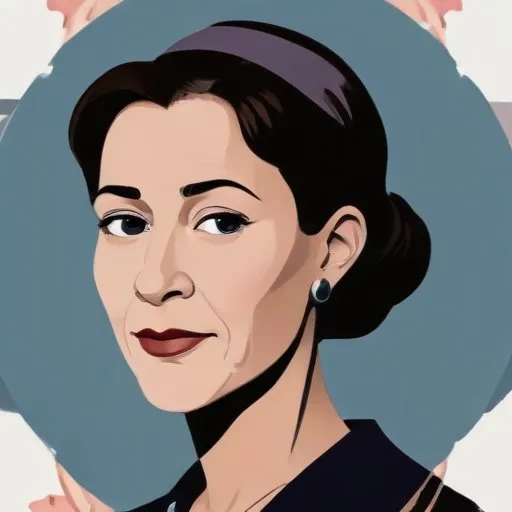
Pioneering advocate for women's rights and social justice, instrumental in shaping Canada's laws and policies, particularly in the areas of marriage, property, and suffrage.
Henrietta Edwards was a Canadian women's rights activist, author, and reformer who dedicated her life to securing fundamental rights for women. Alongside her fellow trailblazers, Emily Murphy, Nellie McClung, Louise McKinney, and Irene Parlby, Edwards formed the famous "Famous Five" group, instrumental in having women recognized as persons under the law and gaining the right to vote in elections.
Born on December 18, 1849, in Montreal, Edwards grew up in an upper-middle-class family that valued culture and religion. However, her experiences in religious organizations sparked her discontent with the exclusion of women, leading her to become an active advocate for women's rights.
In 1875, Edwards and her sister Amelia founded the Working Girls Association in Montreal, providing meals, reading rooms, and study classes for working-class women. This pioneering initiative would eventually become one of Canada's first YWCAs. The association also published a periodical, The Working Women of Canada, which brought working conditions into the public eye and was funded entirely by the sisters' earnings as artists.
In 1876, Edwards married Dr. Oliver C. Edwards, and the couple had three children. The family moved to Indian Head, Northwest Territories (now Saskatchewan), in 1883, where Dr. Edwards served as the government doctor for Indigenous reserves. During this time, Henrietta continued to pursue her passion for women's rights and feminist organizations on the prairies.
After Dr. Edwards' illness in 1890, the family relocated to Ottawa, where Henrietta took up the cause of female prisoners. She worked closely with Lady Aberdeen, wife of the Governor General of Canada, to establish the National Council of Women of Canada (NCWC) in 1893. Edwards would go on to serve as the chair of the NCWC's Laws Governing Women committee for 35 years.
Edwards' contributions extended beyond her work in women's rights. She was also an accomplished artist, commissioned by the Canadian government to create a set of dishes for the 1893 World's Columbian Exposition. Her artistic talents were a testament to her boundless energy and dedication to multiple causes.
Edwards' tireless efforts earned her the respect and admiration of her contemporaries. She was recognized with numerous awards and honors, including her induction into the Order of the British Empire in 1930.
Henrietta Edwards' unwavering commitment to women's rights has left an indelible mark on Canadian history. Her crusade for equality paved the way for future generations of women, inspiring countless individuals to continue the fight for justice and equality.
Through her life's work, Edwards demonstrated that even the most marginalized voices can be heard, and that collective action can bring about lasting change. As we reflect on her remarkable legacy, we are reminded of the power of dedicated activism and the importance of honoring the women who have shaped our world.
Born in 1873
A pioneering Canadian feminist and writer who fought for women's right to vote, using satire and persuasive writing to challenge social norms.
Born in 1868
A pioneering female jurist who fought for women's rights and equality, known for being the first woman magistrate in Canada and a key figure in the "Persons Case" that recognized women as persons under the law.
Born in 1868
A pioneering female politician and educator who broke barriers in Canadian politics, advocating for women's rights and education reform.
53 Years Old
A dual-sport Olympian who won multiple medals in both Summer and Winter Games, known for her remarkable versatility and endurance in cycling and speed skating.
