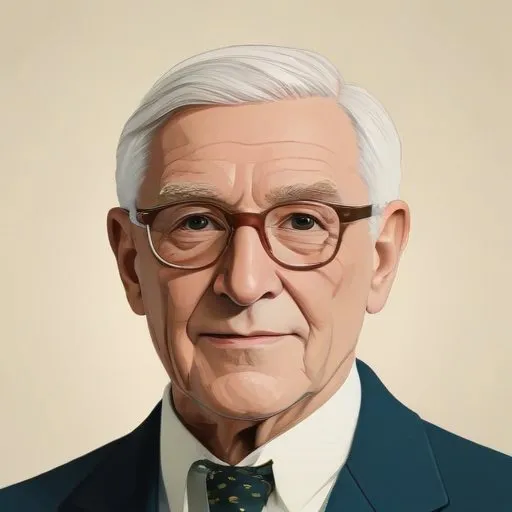
Henry Beachell: The Savior of Millions from Starvation
The Quiet Hero of the Green Revolution
Henry Beachell, an American plant breeder, is renowned for his groundbreaking research that led to the development of hybrid rice cultivars, saving millions of people around the world from starvation. His work in rice breeding has had a profound impact on global food security, earning him the title of the most important person in rice improvement in the world.
Early Life and Education
Born on September 21, 1906, in Waverly, Nebraska, Beachell grew up on a corn and wheat farm in western Nebraska. He developed an interest in agriculture at a young age, which led him to pursue a Bachelor's degree in agronomy from the University of Nebraska-Lincoln in 1930. He was a member of the FarmHouse fraternity during his time at the university. Beachell furthered his education by earning a Master's degree at Kansas State University.
Career Highlights and Major Works
Beachell's career in rice breeding spanned over four decades, during which he worked with the U.S. Department of Agriculture in Texas and later with the International Rice Research Institute (IRRI). Some of his notable achievements include:
- Developing nine rice varieties that eventually accounted for more than 90% of the U.S. long-grain rice production.
- Creating the high-yielding rice variety IR8 in 1964, based on the previous work by Peter Jennings.
- IR8 dramatically increased the yields of Asian rice from 1 or 2 tons per hectare to 4 or 5 tons per hectare, playing a significant part in the Green Revolution.
Awards and Honors
Beachell received numerous international awards and honors for his contributions to rice breeding and food security. Some of his notable awards include:
- 1987 Japan Prize
- 1996 World Food Prize
- Honorary doctorate from the University of Nebraska in 1972
Personal Milestones and Key Life Events
Beachell's dedication to his work and passion for rice breeding led him to consult with RiceTec, the only commercial hybrid rice-breeding program in the U.S., even in his centenarian years. He continued to make significant contributions to the field until his death on December 13, 2006.
Legacy and Impact on Modern Society
Beachell's work has had a lasting impact on global food security, improving nutrition and increasing farmers' incomes in many Asian countries. His legacy serves as a testament to the power of scientific innovation and dedication to improving human lives. As a pioneer in rice breeding, Beachell's work continues to inspire future generations of scientists and researchers.
Philosophical Contributions and Beliefs
Throughout his career, Beachell believed in the importance of applying scientific knowledge to solve real-world problems. His work embodied the philosophy of using science to improve human lives and alleviate suffering. Beachell's legacy serves as a reminder of the significant impact that individuals can have on the world through their work and dedication.
FAQ
What are Henry Beachells contributions to rice breeding?
Henry Beachell is renowned for his groundbreaking work in rice breeding, leading to the development of high-yielding, disease-resistant varieties that revolutionized rice production worldwide.
How did Henry Beachells work impact global food security?
Beachells innovative rice breeding techniques and varieties enabled farmers to increase yields, reducing the risk of famine and improving food security for millions of people, particularly in Asia.
What awards did Henry Beachell receive for his work?
Henry Beachell was awarded the World Food Prize in 1996 for his contributions to rice breeding and food security, among other honors and recognition.
What is Henry Beachells legacy in the field of botany?
Beachells pioneering work in rice breeding has inspired subsequent generations of botanists and plant breeders, leaving a lasting impact on the field of botany and agriculture.
What is Henry Beachells background in biology and botany?
Henry Beachell earned his bachelors degree in biology and later his Ph.D. in botany, laying the foundation for his distinguished career in rice breeding and research.