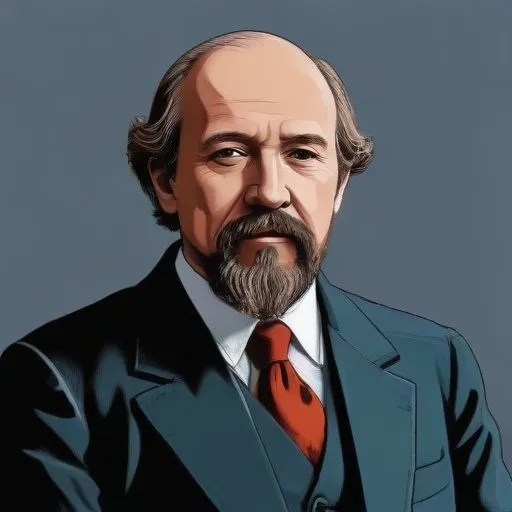
Henry George, Jr.: The Unlikely Pioneer of Aerial Photography
A Bird's-Eye View of History
Henry George, Jr. is remembered for his groundbreaking work in aerial photography, capturing the world from unprecedented heights and revolutionizing the way we see our planet. As an American photographer and inventor, George pioneered the use of kites and balloons to take stunning aerial photographs, earning him a place in the annals of aviation and photography history.
The Early Years and Inspiration
Born in 1866 in Philadelphia, Pennsylvania,
Henry George, Jr. grew up with a fascination for photography and innovation. His father, Henry George Sr., was a journalist and economist who instilled in him a sense of curiosity and creativity. George's early experiments with photography and aeronautics laid the foundation for his later achievements.
Aerial Photography Pioneering
In the late 1800s, George began experimenting with kite-borne cameras, capturing breathtaking views of Philadelphia and its surroundings. His innovative approach involved attaching cameras to kites and balloons, which would then soar to great heights, snapping photographs of the landscape below. This technique allowed him to capture unique perspectives, including the first-ever aerial photograph of a city (Philadelphia) in 1887.
Major Works and Contributions
George's aerial photography work led to several significant contributions:
- Documentation of urban development: His aerial photographs provided invaluable insights into urban planning and development, helping cities design and implement more effective infrastructure.
- Advancements in cartography: George's work improved mapmaking by providing accurate and detailed aerial views of territories, aiding in the creation of more precise maps.
- Innovations in aerial photography techniques: His experiments with kite-borne cameras and balloons paved the way for future generations of aerial photographers.
Personal Life and Milestones
Henry George, Jr.'s personal life was marked by a passion for exploration and innovation. He was an avid traveler, and his adventures took him to various parts of the world, including Europe and Asia. In his later years, George became fascinated with the concept of aerial navigation, predicting the development of air travel and its potential to revolutionize transportation.
Legacy and Impact
Henry George, Jr.'s pioneering work in aerial photography has had a lasting impact on various fields, including:
- Aerial photography: His innovative techniques paved the way for modern aerial photography, used in fields such as urban planning, cartography, and environmental monitoring.
- Aviation: George's contributions to aerial navigation and photography helped lay the groundwork for the development of air travel.
- Environmental awareness: His photographs raised awareness about urban development and environmental issues, inspiring future generations to take action.
Trivia and Fun Facts
* Henry George, Jr. was a prolific inventor, holding several patents for his innovative photography and aeronautics-related inventions.
* He was an early advocate for the use of aerial photography in archaeology, recognizing its potential to uncover hidden sites and provide new insights into ancient civilizations.
* George's aerial photographs were exhibited at the 1893 World's Columbian Exposition in Chicago, further solidifying his reputation as a pioneer in the field.
FAQ
What was Henry George Jr.s role in American politics?
Henry George Jr. was an American journalist and politician who served in the New York State Assembly and the United States Congress. He was a vocal advocate for social justice and reform.
How did Henry George Jr.s journalism career influence his political views?
Henry George Jr.s journalism career gave him a platform to express his views on social justice and reform. He used his writings to advocate for policies that benefited the working class and promoted greater equality.
What was Henry George Jr.s relationship with his father, Henry George?
Henry George Jr. was the son of Henry George, the famous economist and social reformer. He followed in his fathers footsteps, advocating for many of the same causes, including land reform and social justice.
How did Henry George Jr.s experiences in the Progressive Era shape his political views?
Henry George Jr.s experiences during the Progressive Era, a time of great social and political change in the United States, shaped his views on the need for reform and social justice. He was a strong supporter of progressive policies and politicians.
What is Henry George Jr.s legacy in American politics?
Henry George Jr.s legacy in American politics is that of a dedicated advocate for social justice and reform. His writings and political activities helped to promote progressive policies and inspire future generations of reformers.