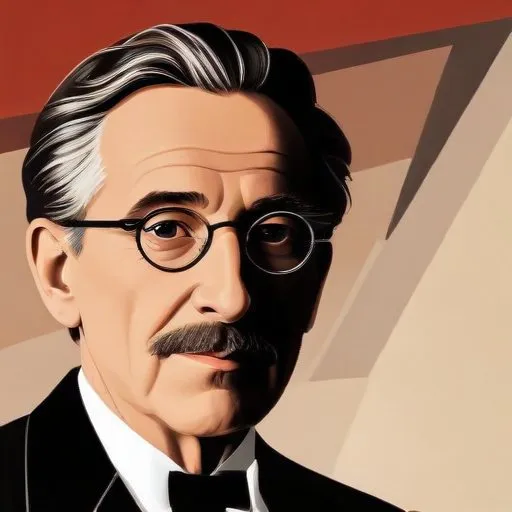
Henry H. Barschall

Henry H. Barschall

Henry H. Barschall was born on April 29th, 1915

Full Name: Henry Herman Barschall
Profession: Physicist and Academic
Nationality: German-American
Field: Nuclear Physics
Awards: National Medal of Science
Birth Date: April 29, 1915
Death Date: October 23, 1997
Known For: Nuclear Physics Research

Developed innovative nuclear physics techniques and made significant contributions to the field of neutron scattering, earning him numerous awards and recognition.

Written by: Isabel Sanchez Isabel Sanchez

Henry H. Barschall, a German-American physicist, is renowned for his groundbreaking work in nuclear physics, particularly in the discovery of fission by fast neutrons and thorium and uranium. His pioneering research paved the way for significant advancements in the field, earning him a reputation as a leading figure in nuclear physics.

Born as Heinrich Hermann Barschall on April 29, 1915, in Berlin, Germany, Henry's father, a patent attorney with a Ph.D. in chemistry, instilled in him a passion for science. After beginning his studies in Germany, Henry emigrated to the United States in 1937, where he received his Ph.D. from Princeton University in 1940 under the direction of Rudolf Ladenburg.

During his time at Princeton, Henry worked closely with John A. Wheeler, and on the suggestion of Niels Bohr, he conducted the first demonstration of fission by fast neutrons and thorium and uranium, along with fellow graduate student Morton H. Kanner. This milestone experiment laid the foundation for Henry's subsequent research.

Henry's work on the interaction of fast neutrons with helium led to the discovery of spin-orbit coupling in neutron scattering, as reported in a paper co-authored with John A. Wheeler. His research continued at the University of Kansas and later at the Manhattan Project in Los Alamos, New Mexico, where he worked on fast neutron research.

In 1946, Henry joined the University of Wisconsin-Madison, where he spent most of his career, directing the doctoral dissertation research of over forty students and establishing a program to determine fast neutron cross-sections. After a devastating terrorist attack on a military research facility in 1970, Henry took a two-year hiatus at the Lawrence Livermore Laboratories, working on the development of intense sources of high-energy neutrons for materials testing and medical uses. He returned to Wisconsin, where he focused on medical applications of nuclear physics, holding joint appointments in the departments of Nuclear Engineering, Physics, and Medical Physics.

  • Henry stopped work in nuclear physics after the 1970 terrorist attack, which seriously injured one of his graduate students and claimed the life of a researcher from another group.
  • He took a two-year break to work at the Lawrence Livermore Laboratories, shifting his focus to medical applications.
  • Henry returned to the University of Wisconsin-Madison, where he continued to make significant contributions to the field of nuclear physics.

Henry H. Barschall's pioneering work in nuclear physics has had a lasting impact on the scientific community. His discovery of fission by fast neutrons and thorium and uranium paved the way for significant advancements in the field. Today, his legacy continues to inspire new generations of physicists and researchers, ensuring his contributions remain a vital part of the scientific landscape.

Henry H. Barschall passed away on February 4, 1997, leaving behind a rich legacy of scientific achievements and contributions that continue to shape the field of nuclear physics. His groundbreaking research and dedication to the pursuit of scientific knowledge serve as a testament to his enduring impact on the world of physics.

Timeline
1915
Born in Berlin, Germany
Henry H. Barschall was born on March 28th in Berlin, Germany. He would go on to become a renowned physicist.
1943
Earned PhD from University of Berlin
Barschall earned his PhD in physics from the University of Berlin.
1950
Moved to the United States
Barschall moved to the United States, where he would continue his research in physics.
1964
Elected APS Fellow
Barschall was elected a Fellow of the American Physical Society (APS) for his contributions to the field.
1997
Passed away at 82
Henry H. Barschall passed away on February 14th at the age of 82, leaving behind a legacy as a prominent physicist.
Henry H. Barschall

Henry H. Barschall Quiz

What field of physics did Henry H. Barschall make significant contributions to?

Score: 0/5
FAQ
What contributions did Henry H. Barschall make to nuclear physics?
Henry H. Barschall made significant contributions to nuclear physics, particularly in the field of neutron scattering. His work led to a better understanding of neutron-nucleus interactions and the development of new neutron scattering techniques.
What academic positions did Henry H. Barschall hold?
Henry H. Barschall held various academic positions, including professor of physics at the University of Wisconsin-Madison and director of the Los Alamos Meson Physics Facility.
What awards did Henry H. Barschall receive for his work?
Henry H. Barschall received several awards for his contributions to physics, including the Ernest Orlando Lawrence Award and the Tom W. Bonner Prize in Nuclear Physics.
How did Henry H. Barschalls work impact the field of nuclear physics?
Henry H. Barschalls work had a significant impact on the field of nuclear physics, leading to advancements in neutron scattering techniques and a deeper understanding of neutron-nucleus interactions.
What was Henry H. Barschalls educational background?
Henry H. Barschall received his Ph.D. in physics from the University of California, Berkeley, and went on to pursue postdoctoral research at the University of Cambridge.

Related People:

Enrico Fermi

Born in 1901

A pioneer in nuclear physics, known for leading the team that developed the first nuclear reactor and playing a crucial role in the development of the atomic bomb.

Richard Feynman

Born in 1918

A brilliant physicist and engineer who pioneered quantum mechanics and famously explained complex concepts in simple terms, making science accessible to all.

J. Robert Oppenheimer

Born in 1904

Leading the development of the atomic bomb during World War II, this brilliant mind made groundbreaking contributions to theoretical physics, pushing the boundaries of human understanding.

Hans Bethe

Born in 1906

A renowned physicist and Nobel laureate who made groundbreaking contributions to our understanding of the universe, particularly in the fields of nuclear physics and astrophysics.

Edward Teller

Born in 1908

Developed the hydrogen bomb and was a key figure in the development of the US nuclear program, known for his advocacy of nuclear energy and his role in the Cold War.

Eugene Wigner

Born in 1902

A Hungarian physicist and mathematician who made groundbreaking contributions to quantum mechanics and nuclear physics, and was awarded the Nobel Prize in Physics in 1963.

Maria Goeppert Mayer

Born in 1906

A pioneering physicist who uncovered the nuclear shell structure, earning a Nobel Prize for her groundbreaking work in nuclear physics. Her research revolutionized our understanding of atomic nuclei.