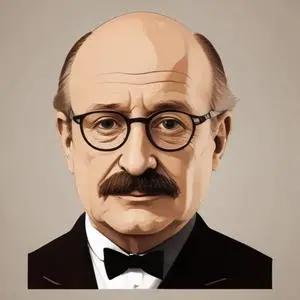
Henry James: The Master of Psychological Insight
A pioneer of literary realism and modernism
Henry James is renowned for his nuanced and psychologically complex novels that delve into the intricacies of human relationships, societal norms, and the complexities of the human mind. As a key transitional figure between literary realism and modernism, James's works continue to captivate readers with their depth, complexity, and intricate character studies.
Early Life and Influences
Born on April 15, 1843, in New York City, James was the son of Henry James Sr. and the brother of philosopher and psychologist
William James and diarist Alice James. Growing up in a family that valued intellectual pursuits, James was exposed to a wide range of literature and ideas that would later shape his writing style.
Major Works and Contributions
James's most notable works include:
- The Portrait of a Lady, a novel that explores the social and marital interplay between Americans, the English, and continental Europeans
- The Ambassadors, The Wings of the Dove, and The Golden Bowl, novels that showcase James's experimental style and his ability to capture the internal states of mind and social dynamics of his characters
- The Turn of the Screw, a novella that has become one of the most analyzed and ambiguous ghost stories in the English language
- The Jolly Corner, another highly regarded ghost story that showcases James's mastery of the supernatural and the psychological
Writing Style and Themes
James's writing style is characterized by his use of ambiguous and contradictory motives, overlaid or juxtaposed in the discussion of a character's psyche. This style, reminiscent of Impressionist painting, creates a sense of depth and complexity that draws readers into the world of his characters.
James's works often explore themes of identity, morality, and the human condition, delving into the intricacies of human relationships and the social norms that govern them.
Literary Criticism and Influence
James was a prolific writer of literary criticism, publishing numerous articles and books on the subject. His essays on literature and art are still widely read and respected today, offering valuable insights into the literary movements of his time.
James's influence on modern literature is immeasurable, with authors such as
Jorge Luis Borges, E.M. Forster, and
Virginia Woolf citing him as an inspiration.
Personal Life and Later Years
James relocated to Europe as a young man, eventually settling in England, where he became a British citizen in 1915. He was nominated for the Nobel Prize in Literature in 1911, 1912, and 1916, but never received the award.
James died on February 28, 1916, leaving behind a legacy of literary masterpieces that continue to captivate readers to this day.
Legacy and Impact
Henry James's works have had a profound impact on modern literature, shaping the course of literary realism and modernism. His nuanced and psychologically complex novels continue to inspire authors, scholars, and readers alike, cementing his place as one of the greatest novelists in the English language.
FAQ
Who was Henry James?
Henry James was an American-British novelist, short story writer, and critic, known for his literary realism and psychological insight.
What was Henry Jamess most famous work?
Henry Jamess most famous work is his novel The Turn of the Screw, which is considered a classic of Gothic fiction.
What style of writing did Henry James practice?
Henry James practiced a style of writing known as literary realism, which focused on detailed descriptions of everyday life and the human condition.
How did Henry Jamess work influence literature?
Henry Jamess work had a significant influence on literature, as he helped to establish the genre of psychological realism and influenced generations of writers.
What legacy did Henry James leave behind?
Henry James left behind a legacy as one of the greatest writers of his time, whose work continues to be widely read and studied today.