


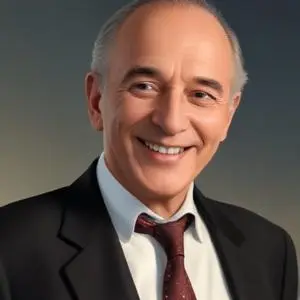
A Nobel Prize-winning chemist who pioneered the understanding of electron transfer reactions, revolutionizing the field of inorganic chemistry.
Henry Taube, a Canadian-born American chemist, is renowned for his groundbreaking work on the mechanisms of electron transfer reactions, particularly in metal complexes. His groundbreaking research earned him the prestigious Nobel Prize in Chemistry in 1983, solidifying his position as a leading figure in the field.
Born on November 30, 1915, in Neudorf, Saskatchewan, Canada, Taube's curiosity and passion for chemistry were evident from an early age. He pursued his undergraduate and master's degrees at the University of Saskatchewan, where he was exposed to the works of renowned chemists, including Gerhard Herzberg, who would later win the Nobel Prize in Chemistry in 1971. Taube completed his PhD at the University of California, Berkeley in 1940, under the guidance of William C. Bray.
Taube's research focused on redox reactions, transition metals, and the use of isotopically labeled compounds to follow reactions. His work led to the publication of over 600 papers, including a book, and mentored more than 200 students during his distinguished career. He held esteemed positions at Cornell University, the University of Chicago, and Stanford University, where he continued to make significant contributions to the field of chemistry.
In addition to the Nobel Prize, Taube received numerous prestigious awards, including the Priestley Medal in 1985 and two Guggenheim Fellowships in 1949 and 1955. He was also bestowed with numerous honorary doctorates, recognizing his outstanding contributions to the field of chemistry.
Taube's personal life was marked by a long and fulfilling marriage to Mary, with whom he had three children. His son, Karl, is an anthropologist at the University of California, Riverside. Taube's legacy extends beyond his scientific contributions, inspiring generations of chemists and researchers to pursue careers in the field.
Taube's work embodied a deep understanding of the intricacies of chemical reactions, fostering a greater appreciation for the underlying mechanisms that govern our world. His research instilled a sense of wonder and curiosity, encouraging scientists to continually explore and push the boundaries of human knowledge.
Taube's groundbreaking work on electron transfer reactions has far-reaching implications for a wide range of fields, from materials science to environmental chemistry. His research has enabled the development of more efficient and sustainable technologies, ultimately contributing to a better understanding of the world around us.
| 1915 | Henry Taube born on November 30th in Neudorf, Saskatchewan, Canada |
| 1935 | Completes BSc at the University of Saskatchewan |
| 1937 | Completes MSc at the University of Saskatchewan |
| 1940 | Completes PhD at the University of California, Berkeley |
| 1949 | Receives first Guggenheim Fellowship |
| 1955 | Receives second Guggenheim Fellowship |
| 1983 | Awarded the Nobel Prize in Chemistry |
| 1985 | Receives the Priestley Medal |
| 2005 | Henry Taube passes away on November 16th |
Henry Taube's remarkable journey from a small town in Saskatchewan to the pinnacle of scientific achievement serves as a testament to the power of human curiosity and determination. His groundbreaking research continues to inspire and influence generations of scientists, ensuring a lasting legacy that will forever change the face of chemistry.
Born in 1901
Pioneering chemist and peace activist who won two unshared Nobel Prizes, one for chemistry and one for peace, for his groundbreaking work on the nature of the chemical bond and his tireless efforts to promote nuclear disarmament.
Born in 1896
Developed the molecular orbital method, a fundamental concept in chemistry that explains the structure and behavior of molecules. He was awarded the Nobel Prize in Chemistry in 1966 for his work.
Born in 1902
A Hungarian physicist and mathematician who made groundbreaking contributions to quantum mechanics and nuclear physics, and was awarded the Nobel Prize in Physics in 1963.
Born in 1881
Developed groundbreaking theories on polymers, revolutionizing the field of organic chemistry, and was awarded the Nobel Prize in Chemistry in 1953.
Born in 1912
A renowned chemist and academic who discovered and isolated ten transuranic elements, including plutonium, and was a leading figure in the development of nuclear energy. His work had a profound impact on our understanding of the periodic table and the properties of atomic nuclei.
Born in 1893
A pioneering scientist who discovered deuterium, a heavy isotope of hydrogen, and later contributed to the discovery of many other elements, revolutionizing our understanding of the universe.
