


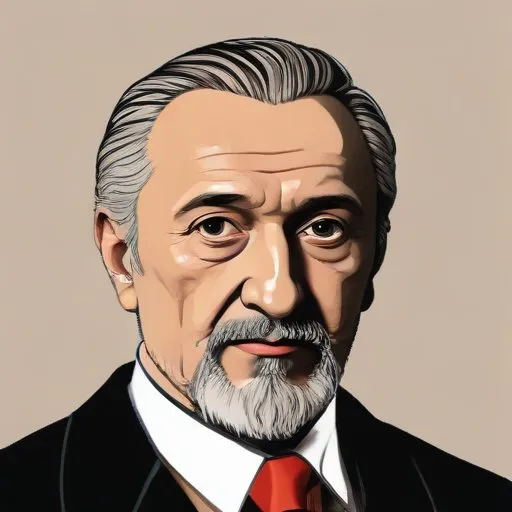
A Polish composer and academic, renowned for his minimalist and sacred music, particularly his iconic Symphony No. 3, which topped classical music charts worldwide. His work often explores themes of spirituality and social justice.
Henryk Grecki, a Polish composer of contemporary classical music, is renowned for his emotional and haunting symphonies that have captivated audiences worldwide. His Symphony No. 3, also known as the Symphony of Sorrowful Songs, is widely regarded as one of the most successful classical music compositions of the 20th century, selling over a million copies and exceeding the typical lifetime sales of a recording of symphonic music by a 20th-century composer.
Grecki was born on December 6, 1933, in Czernica, Poland, during a tumultuous time in the country's history. His early life was marked by the scars of World War II, and the subsequent Soviet domination of Poland. These experiences would later influence his music, imbuing it with a sense of longing and melancholy.
Grecki's passion for music was ignited at a young age, and he began studying piano and composition at the State Higher School of Music in Katowice. He later continued his education at the Academy of Music in Kraków, where he earned a degree in composition.
Grecki's early work was characterized by a strong adherence to dissonant modernism, heavily influenced by the likes of Anton Webern, Luigi Nono, and Karlheinz Stockhausen. His serialist compositions of the 1950s and 1960s were marked by complexity and avant-garde experimentation.
In the mid-1970s, Grecki underwent a significant transformation, shifting towards a more minimalist and sacred style. This change was exemplified in his Symphony No. 2 and Symphony No. 3, which showcased a more contemplative and introspective approach.
Grecki's music remained largely unknown outside of Poland until the late 1980s. It wasn't until 1992, when a recording of his Symphony No. 3 was released to commemorate the memory of those lost during the Holocaust, that he gained widespread international recognition. The recording, featuring soprano Dawn Upshaw and conductor David Zinman, became a critical and commercial success, selling over a million copies worldwide.
Grecki's ability to connect with listeners on a profound level was reflected in his own words: "Perhaps people find something they need in this piece of music... somehow I hit the right note, something they were missing. Something somewhere had been lost to them. I feel that I instinctively knew what they needed."
Grecki's music was deeply rooted in his Catholic faith and his experiences during World War II. He believed that music had the power to transcend the boundaries of human suffering, offering solace and comfort to those who needed it most.
In his own words, "Music is a bridge between heaven and earth. It is a bridge between the world of the living and the world of the dead. It is a bridge between the past and the present."
Grecki's influence on contemporary classical music is undeniable. His unique blend of modernism and traditionalism has inspired a new generation of composers and musicians. His music has also been featured in various films, plays, and television shows, further cementing his place in popular culture.
Grecki's legacy extends beyond the realm of music. He is a testament to the power of art to heal, comfort, and inspire humanity. As he once said, "Music is not just a matter of notes and rhythms. It is a matter of the human heart."
Grecki's life and music serve as a poignant reminder of the transformative power of art to heal, inspire, and connect humanity. His legacy continues to resonate with audiences worldwide, a testament to the enduring beauty and significance of his haunting melodies.
Born in 1913
A Polish composer and conductor who blended modernist and neoromantic styles, creating complex yet accessible orchestral works, including symphonies and concertos.
92 Years Old
A renowned Polish composer and conductor, known for his avant-garde and eclectic style, blending traditional and modern elements, creating a unique sound that resonates with audiences worldwide.
Born in 1914
A Polish pianist, composer, and conductor who blended traditional and modern styles, creating a unique sound that resonated with audiences worldwide. He's most known for his innovative compositions that pushed the boundaries of classical music.
94 Years Old
A renowned Polish pianist and composer, known for his hauntingly beautiful and evocative film scores, including Bram Stoker's Dracula and The Pianist.
