


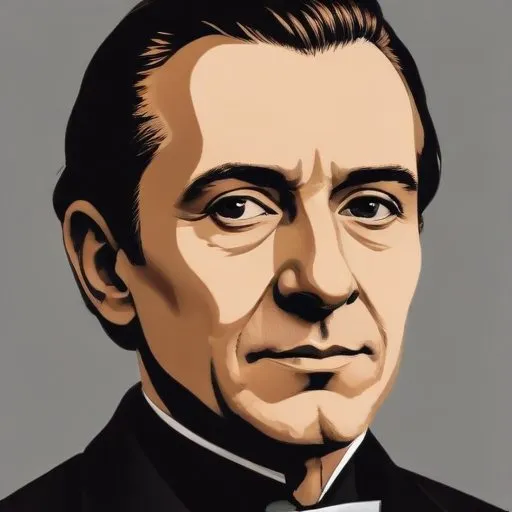
A Polish composer and conductor who blended modernist and neoromantic styles, creating complex yet accessible orchestral works, including symphonies and concertos.
Witold Lutosławski, a Polish composer and conductor, is renowned for being one of the most significant contributors to 20th century classical music, ranking alongside the greatest Polish composers since Frédéric Chopin. His compositions, which include symphonies, concertos, orchestral song cycles, and chamber works, have left an indelible mark on the classical music landscape.
Born on January 25, 1913, in Warsaw, Poland, Lutosławski's early life was marked by a strong affinity for music. He studied piano and composition at the Warsaw Conservatory, where he was heavily influenced by Polish folk music. This cultural heritage is evident in his early works, which showcased a rich atmospheric texture and a deep connection with traditional Polish music.
Lutosławski's compositional style underwent a significant transformation in the late 1950s, as he began to experiment with new techniques. He introduced limited aleatoric elements, which allowed for a degree of randomness while maintaining control over the music's material, architecture, and performance. This innovative approach enabled him to create complex, yet cohesive, musical structures.
One of his most notable contributions to classical music was his development of a unique harmonic system, built from small groups of musical intervals. This system allowed for greater expressiveness and a more nuanced exploration of sound.
Lutosławski's compositions are a testament to his mastery of various genres. Some of his most celebrated works include:
Throughout his career, Lutosławski received numerous awards and honors, including the Grawemeyer Award and a Royal Philharmonic Society Gold Medal.
During World War II, Lutosławski narrowly escaped German capture and made a living by playing piano in Warsaw bars. In the post-war era, he faced opposition from Stalinist authorities, who labeled his First Symphony as "formalist" and inaccessible to the masses. Undeterred, Lutosławski continued to support the Solidarity movement throughout the 1980s, providing artistic resistance to the oppressive regime.
Witold Lutosławski's contributions to classical music are immeasurable. His innovative compositions, coupled with his unwavering commitment to artistic integrity, have inspired generations of musicians and composers. As a testament to his enduring legacy, Lutosławski was awarded Poland's highest honor in 1994, shortly before his passing on February 7, 1994.
Through his life's work, Lutosławski has left an indelible mark on the world of classical music, cementing his place as one of the most significant composers of the 20th century.
Born in 1906
A renowned Russian pianist and composer, known for blending classical music with dark humor and satire, creating iconic symphonies and film scores that still resonate today.
Born in 1881
A Hungarian musical genius who merged folk melodies with modernist techniques, creating a unique sound that transformed classical music.
Born in 1882
A Russian master of music, renowned for revolutionizing classical music with bold, avant-garde compositions that blended traditional and modern elements. His iconic works, such as "The Rite of Spring," continue to inspire and influence artists across genres.
92 Years Old
A renowned Polish composer and conductor, known for his avant-garde and eclectic style, blending traditional and modern elements, creating a unique sound that resonates with audiences worldwide.
Born in 1925
A renowned French musician who revolutionized classical music with his avant-garde compositions and innovative conducting style, pushing boundaries and redefining the genre.
Born in 1916
A renowned French pianist, composer, and educator, he was a prominent figure in 20th-century classical music, celebrated for his unique and innovative compositions.
Born in 1908
A pioneering composer of modern classical music, known for his complex and innovative works that pushed the boundaries of harmony and rhythm.
Born in 1923
A visionary composer and educator who pushed the boundaries of classical music with his avant-garde and innovative works, blending dissonance and harmony in unique ways.
