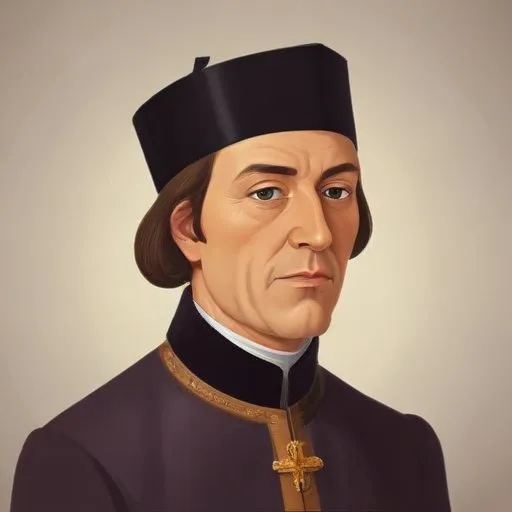
Count Henry of Stolberg: A German Nobleman and Advocate of Protestantism
A Leader in Faith and Family
Count Henry of Stolberg, born on January 2, 1509, at Stolberg Castle, was a prominent German nobleman and a devout advocate of Protestantism. He is best known for his role in disseminating the Protestant faith, particularly in the regions of Cologne and Halberstadt, where he held influential positions as a cathedral dean.
Early Life and Education
Henry was the fourth son of Count Bodo VIII and Countess Anna of Eppstein-Königstein, and was named after his uncle, Count Henry the Younger of Stolberg. He received his education at the court of his maternal grandfather, Count Eberhard of Eppstein, where he was taught by the renowned humanist, Dr. Johann Caesarius from Cologne. Later, he attended the University of Leipzig, where his advisor was Tilemann Plathner.
Rise to Prominence
Henry's father managed to reserve posts for him as dean in Cologne and Mainz, and in 1538, he became the dean in Halberstadt. He eventually moved to Cologne, where he was appointed cathedral dean in 1542, following the death of his predecessor, Frederick of Beichlingen. During this time, the new archbishop,
Hermann of Wied, converted to Protestantism, and Henry joined him in spreading the faith.
Conversion and Consequences
Their efforts to propagate Protestantism, however, did not go unnoticed by the Pope, who subsequently removed them from their offices. This bold move marked a significant turning point in Henry's life, as he continued to advocate for the Protestant faith, despite the challenges and controversies that accompanied it.
Marriage and Progeny
On November 3, 1556, Henry married Elisabeth, a daughter of Count Hector I of Gleichen, in Quedlinburg. The couple had four children: Bodo, George Louis, Anna, and Christopher. Their offspring went on to inherit various territories, including Stolberg, Wernigerode, and Ortenburg.
Lasting Legacy
Henry's unyielding commitment to Protestantism left an indelible mark on the region, shaping the faith and practices of the people. His courage in the face of adversity serves as an inspiration to those who value the principles of freedom and religious expression.
Personal Milestones and Key Life Events
- Born on January 2, 1509, at Stolberg Castle
- Educated at the court of his maternal grandfather, Count Eberhard of Eppstein
- Attended the University of Leipzig
- Appointed cathedral dean in Halberstadt (1538)
- Appointed cathedral dean in Cologne (1542)
- Converted to Protestantism and removed from office by the Pope
- Married Elisabeth, daughter of Count Hector I of Gleichen, on November 3, 1556
- Died on November 12, 1572, at Stolberg Castle
Historical Context and Legacy
Count Henry of Stolberg's life and actions are a testament to the complex and tumultuous nature of 16th-century Europe. His unwavering dedication to Protestantism helped shape the religious landscape of the region, leaving a lasting impact on the people and the faith. As a nobleman, educator, and advocate, Henry's legacy serves as a powerful reminder of the importance of standing by one's convictions, even in the face of adversity.
FAQ
Who was Henry of Stolbergs family?
Henry of Stolberg was a member of the noble German family of Stolberg. His family was known for their prominence in the Holy Roman Empire and their connections to the ruling houses of Europe.
What was Henry of Stolbergs role in the Protestant Reformation?
Henry of Stolberg was a prominent supporter of the Protestant Reformation. He was a close friend and ally of Martin Luther and provided financial and military support to the Protestant cause.
Where did Henry of Stolberg live?
Henry of Stolberg lived in the Stolberg Castle in Saxony, Germany. The castle was the seat of the Stolberg family and a center of their power and influence.
What was Henry of Stolbergs relationship with the Holy Roman Empire?
Henry of Stolberg had a complex relationship with the Holy Roman Empire. While he was a loyal subject of the Empire, he also challenged its authority and supported the Protestant Reformation, which led to conflicts with the Emperor and the Catholic Church.
What is Henry of Stolbergs legacy?
Henry of Stolbergs legacy is as a champion of the Protestant Reformation and a defender of German liberties. He played a significant role in shaping the course of German history and left a lasting impact on the region.