


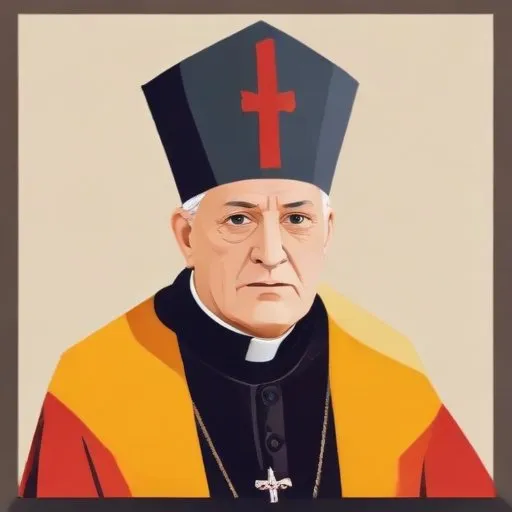
A 16th-century German archbishop who attempted to reform the Catholic Church and was a key figure in the Protestant Reformation. He's known for his efforts to reconcile Catholicism and Lutheranism.
Hermann of Wied, also known as Hermann von Wied, was a German Catholic archbishop and elector who made significant contributions to the Protestant Reformation. As the Archbishop-Elector of Cologne from 1515 to 1546, Hermann played a crucial role in introducing reforms to the Catholic Church, ultimately leading to his formal break with Rome.
Hermann was born on January 14, 1477, as the fourth son of Frederick, Count of Wied. He was educated for the Church and went on to become elector and archbishop in 1515.
Hermann supported the claims of Charles V, whom he crowned at Aachen in 1520. This move solidified his position as a prominent figure in the Holy Roman Empire.
At the Diet of Worms, Hermann initially endeavored to have Martin Luther declared an outlaw. However, a quarrel with the papacy soon turned his thoughts towards church reform.
With the aid of his friend Johann Gropper, Hermann began to institute reforms in his own diocese around 1536. His program for change expanded, and his evangelical sympathies became more pronounced. He appointed Martin Bucer as his court preacher in Bonn in 1542 and sought advice from Philip Melanchthon, a compatriot of Luther.
Hermann's formal break with Rome was hailed by Protestants, and the Schmalkaldic League declared they were resolved to defend him. However, his theological innovations found little support among the people of Cologne. Summoned before both the emperor and the pope, Hermann was deposed and excommunicated by Pope Paul III in 1546. He resigned his office in February 1547 and retired to Wied.
Hermann's efforts towards church reform, although ultimately unsuccessful, paved the way for future reformers. His legacy serves as a testament to the complexities and challenges of the Protestant Reformation.
Hermann's commitment to reform is reflected in his statement, "I desire to reform, not to overthrow."
Hermann's Erasmian agenda recognized the need for reform within the Catholic Church, but he hoped for change from within rather than from without. His later adoption of evangelical sympathies reflected his commitment to addressing the Church's shortcomings.
