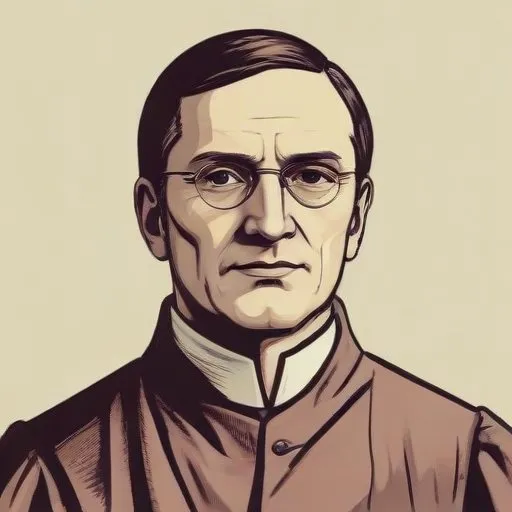
Martin Bucer: The Mediating Mind Behind the Reformation
A Life of Reform and Diplomacy
Martin Bucer, a German Protestant reformer, is renowned for his tireless efforts to unite the disparate forces of the Reformation, seeking common ground between Lutheranism, Calvinism, and Anglicanism. Through his diplomacy and theological acumen, Bucer played a pivotal role in shaping the doctrines and practices of these faiths.
The Dominican Turned Reformer
Born on November 11, 1491, in Schlettstadt, Alsace (now part of France), Bucer originally joined the Dominican Order. However, after encountering
Martin Luther in 1518, he became disillusioned with the Catholic Church and orchestrated the annulment of his monastic vows. This marked the beginning of his journey as a reformer, with the support of Franz von Sickingen.
A Mediator Among Giants
Bucer's reforming zeal took him to Wissembourg, where he faced excommunication from the Catholic Church. Forced to flee to Strasbourg, he joined a cluster of reformers, including Matthew Zell, Wolfgang Capito, and Caspar Hedio. Here, he exercised his remarkable talent for mediation, brokering agreements between the prominent reformers Martin Luther and
Huldrych Zwingli on the contentious issue of the Eucharist.
The Quest for Unity
Bucer's unrelenting pursuit of unity led him to participate in a series of conferences convened by Charles V, aiming to reconcile Protestants and Catholics within the Holy Roman Empire. Though this endeavor ultimately failed, Bucer continued to promote reforms, collaborating closely with Philipp Melanchthon on the Wittenberg Concord.
A Foray into England
In 1549, Bucer was exiled to England, where he worked under the guidance of
Thomas Cranmer. During this period, he influenced the Edwardine Ordinals and the second revision of the Book of Common Prayer. His English sojourn ended with his death in Cambridge on February 28, 1551, at the age of 59.
Legacy of Mediation
Although Bucer's ministry did not give rise to a new denomination, his mediating spirit and theological acuity have left an enduring mark on Protestantism. His legacy serves as a testament to the power of diplomacy and ecumenism in the pursuit of religious reform.
Key Works and Contributions
- Tetrapolitan Confession (1530)
- Wittenberg Concord (1536)
- Influence on the Book of Common Prayer (1549)
- Edwardine Ordinals (1549)
Personal Milestones and Quotes
- "The Church is not a static thing, but a living, growing organism."
- Met Martin Luther in 1518, leading to his reforming journey
- Excommunicated from the Catholic Church in 1523
- Fled to Strasbourg, joining a team of reformers in 1524
Controversies and Persecution
- Forced to sign the Augsburg Interim in 1548 under duress
- Exiled to England in 1549 following the Schmalkaldic War
Inspirational Stories and Motivations
Bucer's unyielding commitment to reform and unity serves as a beacon of inspiration to those seeking to bridge the divides within Christianity. His legacy reminds us that even in the face of adversity, the pursuit of truth and conciliation can lead to a deeper understanding of the divine.
FAQ
What were the key contributions of Martin Bucer to the Protestant Reformation?
Martin Bucer made significant contributions to the Protestant Reformation, including his role in shaping the theology of the Reformed Church, promoting ecumenical dialogue, and influencing the development of Protestant liturgy.
What was Martin Bucers relationship with Martin Luther?
Martin Bucer had a complex relationship with Martin Luther, marked by initial admiration and later disagreement over issues of theology and ecclesiology.
How did Martin Bucers theology influence the development of Calvinism?
Martin Bucers theology, particularly his emphasis on the importance of community and the role of the Church in shaping Christian life, influenced the development of Calvinism and the theology of John Calvin.
What was Martin Bucers role in the Colloquy of Regensburg?
Martin Bucer played a key role in the Colloquy of Regensburg, a significant ecumenical conference that brought together Protestant and Catholic theologians to discuss the possibility of reunification.
What was the legacy of Martin Bucer?
Martin Bucers legacy was one of theological innovation, ecumenical commitment, and pastoral dedication, cementing his place as an important figure in the Protestant Reformation.