


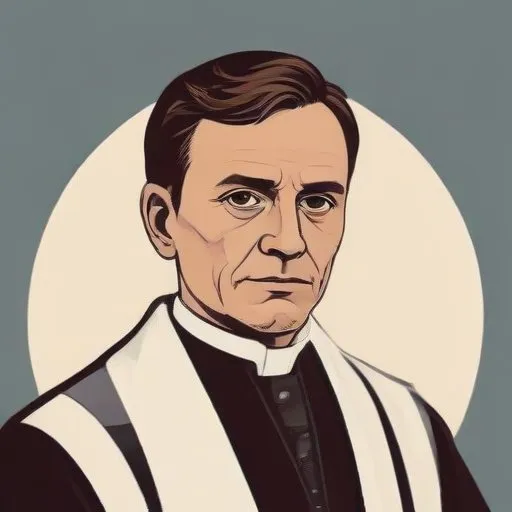
A prominent figure in the Swiss Reformation, he played a key role in shaping Protestant theology and wrote influential works on covenant theology. His writings had a lasting impact on Reformed Christianity.
Heinrich Bullinger, a Swiss theologian and reformer, is renowned for succeeding Huldrych Zwingli as the head of the Church of Zurich and playing a pivotal role in shaping the Swiss Reformation. His collaborative efforts with John Calvin led to the development of a Reformed doctrine of the Lord's Supper, cementing his legacy as one of the most influential leaders of the Protestant Reformation.
Born on July 18, 1504, in Bremgarten, Aargau, Switzerland, Bullinger was the youngest of seven children to Heinrich Bullinger Sr., a priest, and Anna Wiederkehr. His family's affluence allowed him to pursue a quality education, which would later serve as the foundation for his theological pursuits.
At the tender age of 11, Bullinger was sent to the St. Martins Latin school in Emmerich, where he studied classic texts, including those of Jerome, Horace, and Virgil. This formative period was marked by his father's decision to withhold financial support, forcing him to beg for bread for three years. This experience instilled in him empathy for the poor and shaped his perspective on Christian living.
In 1519, Bullinger enrolled at the University of Cologne, where he was exposed to the teachings of the Brethren of the Common Life and their emphasis on Christian living and Bible reading. This exposure sparked his interest in becoming a Carthusian monk, a testament to the profound impact of the Devotio moderna on his theological development.
As he delved deeper into his academic pursuits, Bullinger's thoughts were shaped by the works of prominent theologians, including Augustine and Erasmus. His extensive knowledge of Scripture and the Church Fathers would later serve as the bedrock for his Reformed theology.
Bullinger's most significant contribution to the Protestant Reformation lies in his collaborative efforts with John Calvin. Together, they worked towards developing a Reformed doctrine of the Lord's Supper, which emphasized the real presence of Christ in the Eucharist. This doctrine would go on to shape the theological landscape of the Swiss Reformation.
He also played a crucial role in the development of the Helvetic Confessions, a comprehensive statement of faith that outlined the core beliefs of the Swiss Reformed Church. This document would serve as a testament to Bullinger's theological prowess and his commitment to the principles of the Reformation.
Heinrich Bullinger's legacy extends far beyond his theological contributions. As a pastor at the Grossmünster, he played a pivotal role in shaping the spiritual fabric of Zurich. His commitment to the principles of the Reformation inspired a generation of theologians and reformers, cementing his place as one of the most influential leaders of the Protestant Reformation.
Through his extensive writings and correspondences, Bullinger left an indelible mark on the development of Reformed theology. His emphasis on the authority of Scripture, the importance of preaching, and the role of the Church in shaping Christian living continues to inspire theologians and scholars to this day.
These quotes offer a glimpse into Bullinger's theological convictions and his commitment to the principles of the Reformation. His legacy serves as a testament to the enduring power of Scripture and the importance of faith in shaping Christian living.
This timeline offers a glimpse into the pivotal moments that shaped Bullinger's life and contributed to his lasting legacy in the world of theology.
Heinrich Bullinger's legacy is deeply intertwined with the tumultuous landscape of the Protestant Reformation. His contributions to the development of Reformed theology and his collaborative efforts with John Calvin cemented his place as one of the most influential leaders of the Swiss Reformation.
In conclusion, Bullinger's unwavering commitment to the principles of the Reformation, his extensive knowledge of Scripture, and his collaborative spirit have left an indelible mark on the world of theology. As a testament to his enduring legacy, his teachings continue to inspire and shape the spiritual fabric of Christian communities around the world.
Born in 1484
Leader of the Swiss Reformation, advocating for church reform and inspiring other Protestant movements.
Born in 1509
A French pastor and theologian who played a key role in the Protestant Reformation, shaping Christian theology and influencing Western civilization. He's famous for his teachings on predestination and his role in establishing Calvinism.
Born in 1483
A German monk and priest who sparked the Protestant Reformation, challenging Catholic Church authority and shaping Western Christianity. He's famous for nailing 95 theses to a church door, sparking a religious revolution.
Born in 1519
A 16th-century French theologian and scholar who played a key role in shaping Protestantism, particularly Calvinism, through his writings and teachings. He's also known for his Greek New Testament translation.
