


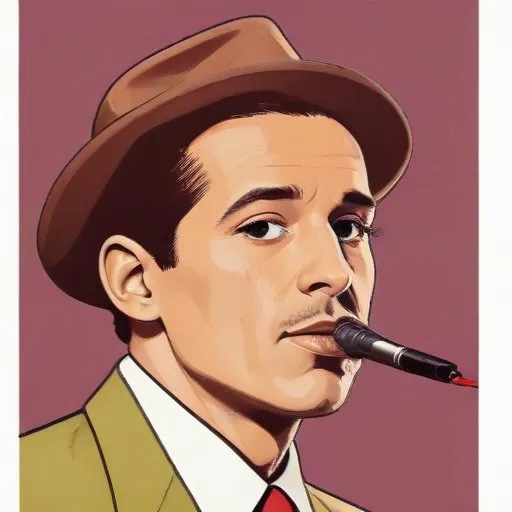
A pioneering African American jazz and blues singer, known for his smooth, velvety voice and iconic cowboy films.
Herb Jeffries, known for his smooth baritone voice and charismatic on-screen presence, was a trailblazing actor, singer, and songwriter who made a lasting impact on the entertainment industry. With a career spanning over six decades, Jeffries starred in numerous low-budget Western films aimed at black audiences, earning him the nickname "The Bronze Buckaroo."
Born Umberto Alexander Valentino on September 24, 1913, in Detroit, Michigan, Jeffries' early life was marked by uncertainty and diversity. His mother, a white Irish woman, ran a rooming house, while his father's identity remained a mystery. Jeffries claimed to have mixed ancestry, with roots in French Canada, Italy, and Moorish heritage, and even Ethiopia through his paternal great-grandmother.
Jeffries' music career took off in the 1940s and 1950s, with recordings on prominent labels such as RCA Victor, Exclusive, and Coral. He released several albums, including the concept album "Jamaica," which featured self-composed calypso songs. His smooth vocals and genre-bending style earned him a loyal following in the jazz and R&B communities.
In the world of film, Jeffries starred in a string of low-budget Westerns, including "Harlem on the Prairie" (1937), "Two-Gun Man from Harlem" (1938), and "The Bronze Buckaroo" (1939). These films, aimed at black audiences, helped establish Jeffries as a leading man in the entertainment industry.
Herb Jeffries' impact on modern society extends beyond his entertainment career. As one of the first African American actors to star in leading roles, he paved the way for future generations of black actors. His music, which blended jazz, R&B, and calypso styles, influenced a range of artists, from Duke Ellington to Harry Belafonte.
Today, Jeffries' legacy is celebrated through various tributes and honors, including a star on the Hollywood Walk of Fame. His contributions to the entertainment industry serve as a testament to his trailblazing spirit and dedication to his craft.
"I'm proud to be black, and I'm proud to be American... I'm proud to be Herb Jeffries."
This quote, spoken in a 1990s interview, reflects Jeffries' unwavering commitment to his heritage and identity.
Herb Jeffries' remarkable life and career serve as a testament to his boundless talent, determination, and pride in his heritage. As a trailblazing figure in entertainment, his legacy continues to inspire generations of artists and fans alike.
Born in 1899
A legendary jazz pianist, composer, and bandleader who revolutionized the genre with his unique style and iconic compositions, such as "Take the A Train" and "Mood Indigo".
Born in 1907
A charismatic jazz singer and bandleader who led the Orchestra at the Cotton Club, known for energetic stage performances and hits like "Minnie the Moocher" and "Reefer Man".
Born in 1901
A legendary jazz musician who revolutionized the genre with his unique trumpet playing and raspy vocals, leaving an indelible mark on American music.
Born in 1917
A virtuosic jazz vocalist known for her pure, expressive tone, impeccable phrasing, and incredible scat singing abilities. She won 13 Grammy Awards and recorded over 200 albums.
Born in 1904
A legendary jazz pianist and bandleader who led a iconic orchestra, blending swing and blues to create a unique sound that influenced generations of musicians. Known for his distinctive "less-is-more" style and hits like "April in Paris" and "One O'Clock Jump".
Born in 1919
A legendary singer, pianist, and TV host who charmed audiences with his smooth, velvety voice and effortless style, leaving a lasting mark on the music industry.
Born in 1925
A legendary entertainer who dazzled audiences with his smooth vocals, impressive dance moves, and charismatic stage presence, leaving an indelible mark on the entertainment industry.
Born in 1915
A legendary entertainer who charmed audiences with smooth vocals and iconic film roles, leaving an indelible mark on American popular culture.
