


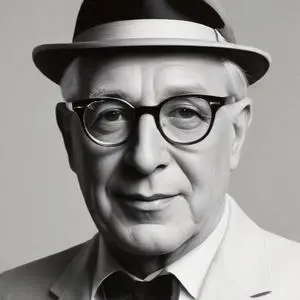
Pulitzer Prize-winning author of sweeping historical novels, including "The Caine Mutiny" and "Winds of War", known for meticulously researched and engaging stories of war, history, and human drama.
Herman Wouk, a Pulitzer Prize-winning author, is renowned for his meticulously researched and eloquently written historical fiction novels, including The Caine Mutiny, The Winds of War, and War and Remembrance. With a writing career spanning over six decades, Wouk has captivated readers with his sweeping narratives that delve into the complexities of human nature and the twists of fate.
Wouk was born on May 27, 1915, in the Bronx, New York, to Russian Jewish immigrants Abraham Isaac Wouk and Esther Levine. His father's dedication to providing for the family and his maternal grandfather's emphasis on Jewish education had a profound impact on Wouk's life and writing. The influence of his grandfather, who encouraged him to study the Talmud, is evident in Wouk's later exploration of Judaism in his non-fiction work, This Is My God.
Wouk's writing career began in the 1940s, but it was his 1951 novel, The Caine Mutiny, that catapulted him to fame and earned him the Pulitzer Prize in fiction. This novel, which explores the tensions and conflicts on a US Navy destroyer during World War II, is still widely regarded as one of the greatest novels of the 20th century.
Wouk's fascination with history and his commitment to exploring the human experience through his writing led him to create some of the most iconic historical fiction novels of our time. His Winds of War and War and Remembrance duology, which spans from the pre-war period to the aftermath of World War II, is a testament to his meticulous research and masterful storytelling. Wouk's exploration of Judaism, particularly in This Is My God, showcases his deep understanding of the faith and its significance in modern society.
Wouk's 103-year life was marked by significant personal milestones, including his marriage to Betty Brown, with whom he had three sons, and his service in the US Navy during World War II. His experiences in the Navy had a profound impact on his writing, particularly in The Caine Mutiny. Wouk's commitment to his faith and his family remained a constant throughout his life.
Wouk's writing often grappled with fundamental questions about human nature, morality, and the role of faith in modern society. His exploration of Judaism and its relevance to contemporary life is a testament to his commitment to exploring the complexities of human experience. Wouk believed that writing should be both entertaining and thought-provoking, and his work continues to inspire readers to reflect on the human condition.
Herman Wouk's writing has left an indelible mark on the literary world. His dedication to crafting meticulously researched and engaging narratives has inspired generations of writers and readers alike. As a master of historical fiction, Wouk's work continues to captivate audiences, offering a unique window into the complexities of human experience and the significance of faith in modern society.
Born in 1914
Pulitzer Prize-winning journalist and author who exposed the horrors of war through his writing, most notably with his book "Hiroshima", which told the story of the atomic bombing of Hiroshima from the perspective of six survivors.
Born in 1913
Acclaimed author of novels and short stories that explored the human condition, known for his poignant and thought-provoking works that often delved into the complexities of relationships and social issues.
Born in 1907
Prolific writer of epic historical novels and generous donor to educational institutions, known for meticulously researched and engaging stories that transport readers to different eras and cultures.
Born in 1924
American soldier and author, best known for writing historical fiction novels that explore the human experience during wartime, particularly in the Middle East.
Born in 1923
Pulitzer Prize-winning author and journalist who explored American politics and culture through provocative novels and essays, known for his bold, lyrical writing style.
Born in 1923
Acclaimed author of satirical novels and plays that critique societal norms, best known for his classic novel "Catch-22".
Born in 1922
A satirical and socially conscious writer who crafted unique blends of science fiction, humor, and anti-war commentary, leaving an indelible mark on American literature.
Born in 1909
A pioneering filmmaker who directed iconic movies like "On the Waterfront" and "East of Eden," and was a key figure in the development of the Actors Studio.
