


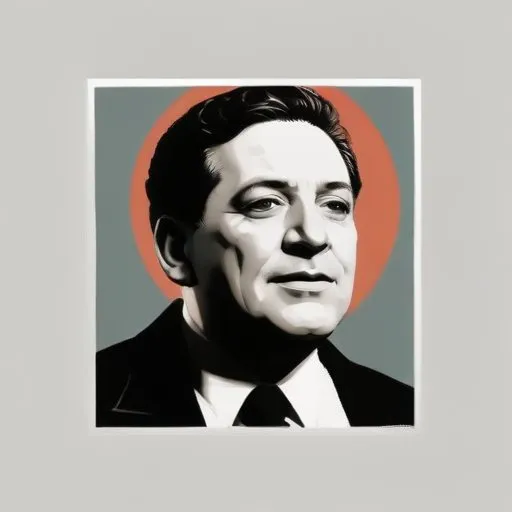
Acclaimed author of novels and short stories that explored the human condition, known for his poignant and thought-provoking works that often delved into the complexities of relationships and social issues.
Irwin Shaw, a renowned American playwright, screenwriter, novelist, and short-story author, left an indelible mark on the literary world with his works that have sold over 14 million copies. He is best known for his iconic novels, The Young Lions and Rich Man, Poor Man, which were adapted into successful films and miniseries, respectively.
Shaw's writing career spanned multiple decades, during which he wrote scripts for several radio shows, including Dick Tracy, The Gumps, and Studio One, in the 1930s. His transition to screenwriting in 1935 marked the beginning of a prolific career in Hollywood, where he worked with notable directors like William Wyler.
Born Irwin Gilbert Shamforoff in the South Bronx, New York City, to Jewish immigrants from Ukraine, Shaw's early life was marked by a strong cultural heritage. He changed his surname upon entering college and spent most of his youth in Brooklyn, where he graduated from Brooklyn College with a Bachelor of Arts degree in 1934. His younger brother, David Shaw, also became a noted Hollywood producer and writer.
During World War II, Shaw served in the Regular Army and was later reassigned to the Signal Corps with George Stevens' film unit, where he became a warrant officer. After the war, he returned to his writing career and married actress and producer Marian Edwards in 1939, with whom he had a tumultuous relationship that ended in divorce in 1967, only to remarry two years before his death in 1984.
Shaw's novels, The Young Lions (1948) and Rich Man, Poor Man (1970), are considered his magnum opus. The Young Lions, a gripping tale of three soldiers during World War II, was adapted into a film starring Marlon Brando and Montgomery Clift. Rich Man, Poor Man, a saga of two brothers and a sister in the post-war decades, was adapted into a popular miniseries starring Peter Strauss, Nick Nolte, and Susan Blakely.
Throughout his career, Shaw received numerous awards and nominations for his works, including the O. Henry Award for his short story, "The Girls in Their Summer Dresses" (1939).
Irwin Shaw's contributions to literature and Hollywood have left a lasting impact on popular culture. His works continue to inspire new generations of writers, filmmakers, and readers alike. Shaw's legacy serves as a testament to the power of storytelling and its ability to transcend time and medium.
Irwin Shaw passed away on May 16, 1984, at the age of 71, after undergoing treatment for prostate cancer in Davos, Switzerland. His remarkable life and body of work continue to captivate audiences, ensuring his place as one of the most beloved and respected writers of the 20th century.
Born in 1924
Acclaimed filmmaker behind gritty, socially conscious dramas and classics like "12 Angry Men" and "Dog Day Afternoon", known for his intense, realistic direction.
Born in 1924
A cultural icon who revolutionized acting with his intense, nuanced performances, earning him numerous accolades, including two Oscars. He's synonymous with iconic roles in "A Streetcar Named Desire" and "The Godfather".
Born in 1925
A legendary actor, philanthropist, and entrepreneur who founded a food company that donates all profits to charity, starring in iconic films like "Butch Cassidy" and "The Sting".
Born in 1909
A pioneering filmmaker who directed iconic movies like "On the Waterfront" and "East of Eden," and was a key figure in the development of the Actors Studio.
Born in 1915
Pulitzer Prize-winning playwright behind iconic dramas like "Death of a Salesman" and "The Crucible", exploring American identity and morality through powerful storytelling.
Born in 1894
Pioneering author of hard-boiled detective fiction, crafting gritty, iconic characters like Sam Spade and Nick Charles, influencing the genre for generations. 82
Born in 1913
A talented actor and singer who starred in classic films like "The Postman Always Rings Twice" and brought a new level of realism to Hollywood's Golden Age. Known for his brooding, intense performances that captivated audiences.
Born in 1899
Iconic leading man of classic Hollywood cinema, starring in timeless films like Casablanca and The African Queen, embodying a tough, charismatic on-screen presence.
