


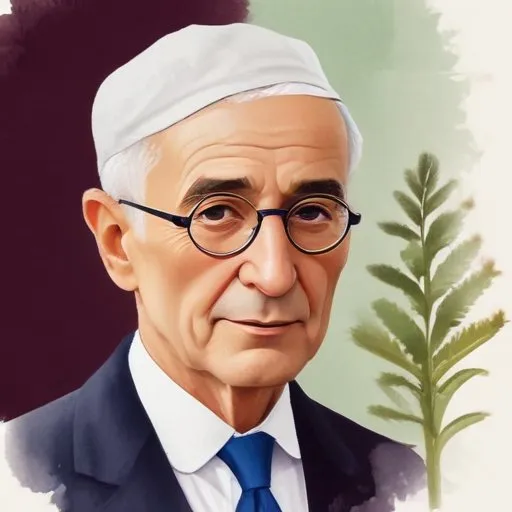
A German-Israeli botanist and academic who made significant contributions to the field of plant anatomy and was a pioneer in the study of desert plants, particularly in Israel.
Hillel Oppenheimer, a trailblazing botanist, is renowned for his groundbreaking contributions to the field of agriculture, particularly in the development of citrus cultivation and plant physiology. His profound impact on Israeli agriculture has earned him a revered place in the country's scientific community.
Born Heinz Reinhard Oppenheimer on April 4, 1899, in Berlin, Germany, Hillel Oppenheimer's early life was marked by a strong emphasis on education. His father, Franz Oppenheimer, a German-Jewish sociologist and political economist, instilled in him a passion for learning. Between 1917 and 1922, Oppenheimer pursued his interest in botany at universities in Berlin, Frankfurt, and Freiburg in Germany, as well as the University of Vienna in Austria, where he earned his doctorate.
In 1925, Oppenheimer immigrated to Mandate Palestine at the invitation of Selig Suskin, a prominent figure in the country's agricultural development. Upon his arrival, Oppenheimer became deeply involved in the establishment of new settlements and the drainage of swamps around Zichron Yaacov. This period marked the beginning of his lifelong dedication to the development of Israeli agriculture.
In 1931, Oppenheimer joined the Department of Botany at the Hebrew University of Jerusalem as a physiologist, where he played a pivotal role in shaping the university's Faculties of Natural Science and Agriculture. He was the first lecturer on the subjects of anatomy and physiology of plants, laying the groundwork for future generations of scientists.
From 1933 to 1941, Oppenheimer headed the Department of Physiology and Genetics of the Agricultural Research Station in Rehovot, and later, from 1941 to 1953, he led the department for the growth of citrus trees and agricultural botany. In 1949, he was appointed as a professor, a testament to his exceptional academic achievements.
Oppenheimer's outstanding contributions to the field of agriculture earned him the esteemed position of dean of the Faculty of Agriculture at the Hebrew University from 1953 to 1954.
In 1959, Oppenheimer was awarded the Israel Prize in agriculture, a prestigious recognition of his tireless efforts to advance Israeli agriculture and his profound impact on the country's scientific community.
Hillel Oppenheimer's pioneering work in botany and agriculture has left an indelible mark on Israeli society. His contributions have not only shaped the country's agricultural landscape but have also paved the way for future generations of scientists and researchers. His legacy serves as a testament to the power of human ingenuity and dedication to the advancement of science.
Through his remarkable career, Oppenheimer has demonstrated the transformative potential of scientific inquiry, inspiring countless individuals to pursue careers in agriculture and related fields. As a respected figure in Israeli academia, his influence continues to resonate, shaping the country's agricultural policies and practices.
Born in 1874
A pioneering chemist and statesman who played a key role in establishing the State of Israel and served as its first president, known for his diplomatic efforts and scientific contributions.
Born in 1896
A renowned Italian poet and translator, celebrated for his unique and expressive style that explores the human condition, earning him the Nobel Prize in Literature.
Born in 1909
A pioneering neuroscientist who discovered the growth factor NGF, revolutionizing our understanding of cell growth and development, and leading to major breakthroughs in cancer and neurodegenerative disease research.
Born in 1879
A brilliant physicist who developed the theory of relativity and is considered one of the most influential scientists of the 20th century, known for his groundbreaking work in physics and mathematics.
Born in 1878
A philosopher who explored the nature of human relationships, dialogue, and existence, and is best known for his concept of "I-Thou" relationships, which emphasizes mutual respect and understanding.
Born in 1897
A renowned expert on Jewish mysticism and Kabbalah, uncovering the hidden symbolism and codes within ancient texts, and shedding light on the esoteric traditions of Judaism.
Born in 1915
A South African-born Israeli diplomat who served as the first Ambassador to the United Nations, known for his charismatic oratory skills and instrumental role in shaping Israel's international relations.
Born in 1898
A pioneering female leader who served as Israel's first and only female Prime Minister, known for her strong leadership during times of war and peace. She played a crucial role in shaping Israel's early years and remains an iconic figure in Israeli politics.
