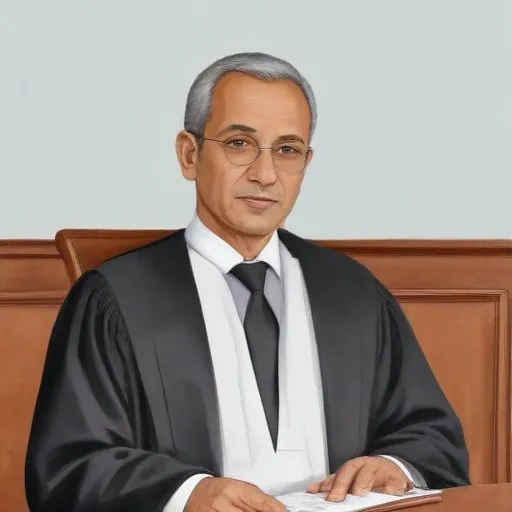
The Controversial Legacy of Hisham Barakat: Egypt's Prosecutor General
A Life Marked by Controversy and Assassination
Hisham Muhammad Zaki Barakat, Egypt's Prosecutor General from 2013 to 2015, is known for his tumultuous tenure, marked by thousands of controversial prosecutions, many of which were deemed politically motivated. His reign was marked by a wave of death sentences for hundreds of Muslim Brotherhood members and supporters of deposed Egyptian President Mohamed Morsi.
Early Life and Career
Born on November 21, 1950, Barakat graduated from Cairo University with a Bachelor of Arts in Law in 1973. He joined the judiciary and worked in courts of first instance and appeal courts, eventually becoming the head of the technical office of the president of the Cairo Appeals Court.
Rise to Prosecutor General
Barakat was appointed as Prosecutor General by Egypt's interim President
Adly Mansour on July 10, 2013, following Abdel Meguid Mahmoud's resignation in the aftermath of the 2013 Egyptian coup d'état.
Notable Prosecutions and Controversies
During his tenure, Barakat ordered the freezing of assets of 14 prominent Egyptian Islamists, including Muslim Brotherhood supreme guide
Mohammed Badie and deposed Egyptian President
Mohamed Morsi. He also referred Morsi to criminal court for charges of espionage. These actions were widely criticized as politically motivated and sparked widespread controversy.
Assassination and Legacy
On June 29, 2015, Barakat was assassinated in a car bombing, marking a tragic end to his tumultuous career. His legacy remains shrouded in controversy, with many viewing him as a symbol of the Egyptian government's crackdown on opposition.
Philosophical Contributions and Beliefs
Barakat's philosophical contributions and beliefs remain somewhat obscure, with his career marked more by its political implications than any distinct ideological stance. However, his actions suggest a strong allegiance to the Egyptian government and a willingness to enforce its policies, regardless of their legal or moral implications.
Personal Milestones and Key Life Events
- Graduated from Cairo University with a Bachelor of Arts in Law in 1973
- Joined the judiciary and worked in courts of first instance and appeal courts
- Became the head of the technical office of the president of the Cairo Appeals Court
- Appointed as Prosecutor General by Egypt's interim President Adly Mansour in 2013
- Assassinated on June 29, 2015
Influence on Modern Society
Barakat's legacy continues to shape modern Egyptian society, with his actions sparking widespread debate and controversy. His tenure as Prosecutor General highlighted the complexities and challenges of Egyptian politics, particularly in the aftermath of the Arab Spring.
FAQ
What was Hisham Barakats role in the Egyptian judiciary?
Hisham Barakat served as the Attorney General of Egypt from 2013 until his assassination in 2015, playing a key role in prosecuting high-profile cases related to the Arab Spring and Islamist extremism.
What was Hisham Barakats background in law?
Hisham Barakat earned a law degree from Cairo University and began his career as a prosecutor in the Egyptian judiciary, eventually rising to become Attorney General.
What notable cases did Hisham Barakat prosecute?
Hisham Barakat prosecuted several high-profile cases, including those related to the Muslim Brotherhood and its leaders, as well as cases involving corruption and terrorism.
What was Hisham Barakats stance on human rights in Egypt?
Hisham Barakat was criticized by human rights groups for his role in prosecuting activists and journalists, as well as for his involvement in cases related to police brutality and torture.
What was the circumstances of Hisham Barakats assassination?
Hisham Barakat was assassinated in a car bombing in Cairo in 2015, with Islamist extremists claiming responsibility for the attack.