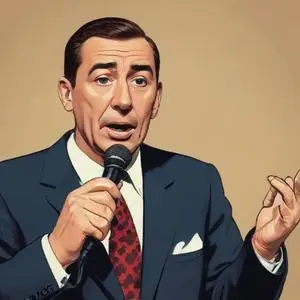
Howard Cosell: The Voice of American Sports
The Man Behind the Mic
Howard Cosell, the iconic American sports journalist, broadcaster, and author, is widely regarded as one of the most influential and controversial figures in the history of American sports broadcasting. Known for his bold, confident, and often provocative style, Cosell left an indelible mark on the world of sports, entertaining and infuriating audiences alike with his sharp wit, acerbic commentary, and unwavering opinions.
A Colorful Career
Cosell's broadcasting career spanned over three decades, from the mid-1950s to 1985, during which he worked with ABC Sports, becoming a household name and a dominant force in American sports coverage. His tenure at ABC Sports was marked by his unapologetic and unbridled commentary, which often sparked controversy and debate. Cosell's willingness to speak his mind and challenge the status quo earned him a reputation as a trailblazer in sports broadcasting, influencing generations of broadcasters to come.
The Rise to Prominence
Born on March 25, 1918, in Winston-Salem, North Carolina, to a Jewish family, Cosell's early life was marked by a strong sense of determination and ambition. After serving in the Army Transportation Corps during World War II, Cosell began his broadcasting career in the early 1950s, hosting a sports radio show in New York City. His big break came when he joined ABC Sports in 1953, where he would go on to cover some of the most iconic sporting events of the 20th century, including the Olympics, the World Series, and Monday Night Football.
A Blustery Personality
Cosell's larger-than-life personality was as much a part of his appeal as his commentary. Known for his bombastic style, Cosell was often criticized for being arrogant, obnoxious, and vain. However, he wore these criticisms as badges of honor, embracing his reputation as "Humble Howard," a nickname coined by his detractors. In reality, Cosell was a complex and multifaceted individual, driven by a passion for sports and a desire to tell the stories that needed to be told.
Controversies and Criticisms
Cosell's unapologetic commentary often landed him in hot water, particularly during his coverage of Monday Night Football. His criticism of quarterback
Terry Bradshaw, suggesting that he lacked the intelligence to win in the league, sparked widespread outrage and ignited a heated debate. While Cosell's remarks were often provocative, they also sparked important conversations about the role of sports in American society and the responsibility of athletes to serve as role models.
Awards and Accolades
Despite the controversy surrounding him, Cosell's contributions to sports broadcasting were widely recognized and celebrated. In 1993, TV Guide named him the "All-Time Best Sportscaster," a testament to his enduring impact on the world of sports. Cosell's numerous awards and honors include several Emmy Awards, a Peabody Award, and induction into the National Sportscasters and Sportswriters Association Hall of Fame.
Legacy and Impact
Howard Cosell's legacy extends far beyond his own broadcasting career. He influenced generations of sports broadcasters, shaping the way we consume and interact with sports today. Cosell's unwavering commitment to telling the stories that needed to be told, coupled with his unapologetic style, paved the way for a new era of sports broadcasting, one that is more diverse, more inclusive, and more provocative.
A Lasting Legacy
Today, Cosell's impact is felt across the sports broadcasting landscape, from the bombastic commentary of ESPN's
Stephen A. Smith to the irreverent humor of Fox Sports' Skip Bayless. While Cosell may have been a divisive figure during his lifetime, his influence on American sports broadcasting is undeniable, and his legacy continues to shape the way we experience sports today.
FAQ
What is Howard Cosells background and early life?
Howard Cosell was born on March 25, 1918, in New York City to a Jewish family. He served in the United States Army during World War II and later attended New York University, where he earned a degree in English. Cosell began his career as a journalist, working as a reporter and later as a sports announcer.
What was Howard Cosells role in the rise of Monday Night Football?
Howard Cosell was a key figure in the success of Monday Night Football, which debuted in 1970. He was the lead announcer and commentator, known for his witty humor and vivid descriptions of the games. Cosells chemistry with co-announcers Frank Gifford and Don Meredith helped make the program a huge ratings success.
What awards and honors did Howard Cosell receive?
Howard Cosell received numerous awards and honors for his work, including three Emmy Awards, a Peabody Award, and a National Sportscasters and Sportswriters Association Hall of Fame induction. He was also named the National Sportscaster of the Year in 1967.
What did Howard Cosell do after retiring from sports broadcasting?
After retiring from sports broadcasting in 1985, Howard Cosell pursued a writing career, publishing several books, including his memoir, I Never Had It Made. He also made occasional appearances on television and radio, and remained a prominent figure in American sports.
What is Howard Cosells legacy in sports broadcasting?
Howard Cosells legacy in sports broadcasting is that of a pioneer and innovator. He brought a level of sophistication and humor to sports announcing, and his iconic voice and style have influenced generations of sportscasters. Cosells impact on Monday Night Football helped establish the program as a cultural phenomenon.