


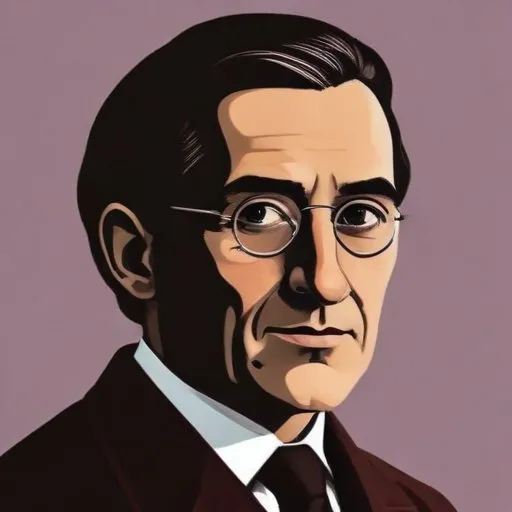
Developed innovative solutions for water supply systems and wrote influential books on architecture and engineering, shaping urban planning and infrastructure development.
Hubert Gautier, a French engineer born in 1660, is renowned for his groundbreaking contributions to the field of engineering, particularly in the art of building bridges. His seminal work, Trait des ponts, published in 1716, remains a testament to his innovative spirit and expertise.
Gautier's journey began as a medical doctor, but his passion for mathematics and engineering soon steered him towards a path that would change the face of civil engineering. For 28 years, he served as an engineer in the province of Languedoc, where he honed his skills and developed a deep understanding of the intricacies of bridge construction.
In 1713, Gautier's exceptional work earned him the prestigious appointment of Inspecteur général des ponts et chaussées, a position that allowed him to bring his expertise to the national stage. He relocated to Paris, where he continued to work tirelessly, leaving an indelible mark on the city's infrastructure.
Gautier's publications, including Trait des ponts and La bibliothèque des philosophes, showcased his mastery of engineering principles and his commitment to sharing knowledge. His work not only elevated the standard of bridge construction but also inspired future generations of engineers.
Gautier's unwavering commitment to honesty and excellence earned him the respect of his peers and the admiration of the public. He famously stated, "The contractors do not hesitate to enrich themselves at the expense of the King or of those who work for them... the engineers or inspectors of the works, on the contrary, have only in mind the honesty with which they act and to be highly esteemed."
Gautier's contributions to the field of engineering have had a profound and lasting impact on modern society. His work has inspired countless engineers, architects, and innovators, shaping the course of urban development and infrastructure design. As we reflect on his remarkable life and achievements, we are reminded of the power of vision, innovation, and integrity.
Hubert Gautier passed away on September 27, 1737, at the age of 77, leaving behind a legacy that continues to inspire and educate future generations.
Born in 1749
Developed nebular hypothesis of the origin of the solar system and formulated Laplace's equation, a fundamental concept in mathematics and physics. He's considered the founder of celestial mechanics.
Born in 1736
Developed calculus, number theory, and celestial mechanics, making significant contributions to the fields of mathematics and astronomy.
Born in 1752
Developed the theory of elliptic integrals, and his work on number theory laid the foundation for modern cryptography.
Born in 1774
A French polymath who made significant contributions to the fields of physics, astronomy, and mathematics, particularly in the discovery of chromatic polarization and the Biot-Savart law.
Born in 1781
Developed mathematical tools to analyze probability and statistics, and made significant contributions to the fields of electricity and magnetism.
Born in 1789
Developed rigorous mathematical theories and introduced concepts like convergence and continuity, revolutionizing calculus and paving the way for modern mathematics.
Born in 1713
A French mathematician, astronomer, and geophysicist who calculated the Earth's shape and made significant contributions to the field of astronomy, particularly in understanding the behavior of the Moon.
Born in 1663
Developed innovative instruments, including the hygrometer and thermometer, and made significant contributions to the study of friction and temperature.
