


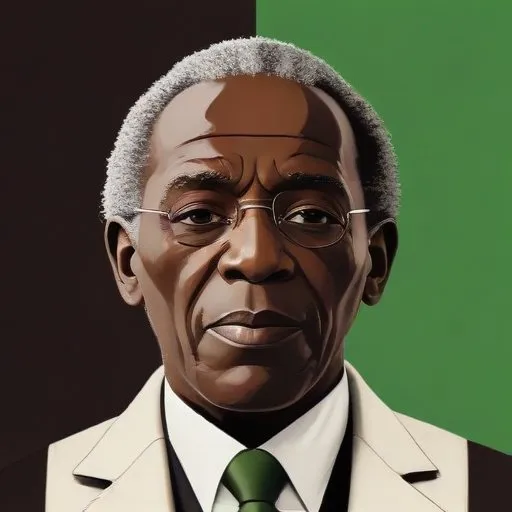
Led Jamaica through a period of economic growth and social change, implementing policies to reduce poverty and increase access to education. He's also known for his role in shaping the country's foreign policy.
Hugh Lawson Shearer, the 3rd Prime Minister of Jamaica, is remembered for his unwavering commitment to trade unionism and his instrumental role in shaping the country's political landscape from 1967 to 1972. As a stalwart of the Jamaican Labour Party, Shearer's pioneering work in the trade union movement paved the way for his ascent to the nation's highest office.
Born on May 18, 1923, in Martha Brae, Trelawney, Jamaica, Shearer's early life was marked by humble beginnings. His father, James Shearer, a former soldier, and mother, Esther Lindo, a dressmaker, instilled in him the value of hard work and determination. Shearer's academic prowess earned him a parish scholarship to St. Simon's College, and later, an honorary LLD from Howard University School of Law.
In 1941, Shearer joined the staff of the Jamaican Worker, a weekly trade union newspaper, where he caught the attention of Sir Alexander Bustamante, the founder of the Jamaican Labour Party. Under Bustamante's mentorship, Shearer rose through the ranks, becoming the Island Supervisor of the Bustamante Industrial Trade Union (BITU) and eventually, its Vice-President.
Shearer's political career took off in 1955, when he was elected to the House of Representatives as the member for Western Kingston. Although he was defeated in the 1959 elections, he continued to serve as a member of the Senate from 1962 to 1967. During this period, he also represented Jamaica as Deputy Chief of Mission at the United Nations.
In 1967, Shearer was appointed Prime Minister following the death of Sir Donald Sangster. His premiership was marked by a focus on social and economic development, particularly in the areas of education and housing. Shearer's commitment to the working class and his ability to connect with the Jamaican people earned him widespread popularity.
Shearer received an honorary LLD from Howard University School of Law and was married to the former Dr. Dawn Taylor.
Hugh Shearer's legacy extends beyond his political career. His commitment to trade unionism and social justice continues to inspire generations of Jamaicans. His leadership played a significant role in shaping the country's political landscape, paving the way for future leaders to build upon his foundation.
In the context of Jamaica's post-independence era, Shearer's premiership was a significant milestone in the country's transition to self-governance. His leadership and vision for social and economic development continue to influence Jamaican politics and society to this day.
Hugh Lawson Shearer's remarkable life and achievements serve as a testament to the power of dedication, hard work, and a commitment to the betterment of society. As Jamaica continues to grow and evolve, his legacy remains an integral part of the nation's fabric.
Born in 1924
The 4th Prime Minister of Jamaica, a champion of democratic socialism, who implemented policies to reduce poverty and increase self-reliance, and was a strong advocate for Third World solidarity.
95 Years Old
A renowned academic and politician who served as Jamaica's 5th Prime Minister, known for his significant contributions to the country's economic development and cultural heritage.
78 Years Old
The 8th Prime Minister of Jamaica, serving from 2007 to 2011, known for his efforts to address Jamaica's economic and social challenges, particularly in the areas of education and crime reduction.
72 Years Old
A renowned expert in early music, particularly the Renaissance and Baroque periods, known for his meticulous research and performances that revived interest in neglected composers.
