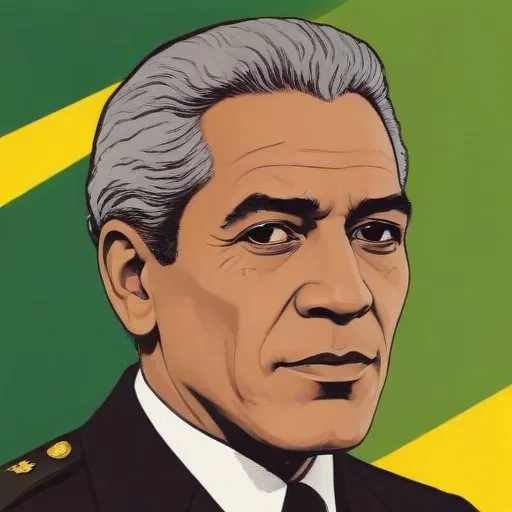
Michael Manley: The Champion of Democratic Socialism and Jamaica's Most Popular Prime Minister
Early Life and Influences
Michael Manley, Jamaica's fourth prime minister, was born on December 10, 1924, to a prominent family of politicians and artists. His father, Norman Washington Manley, was a premier of Jamaica, and his mother, Edna Manley, was a renowned artist. Manley's early life was marked by a strong sense of social justice, which would later shape his political ideology.
Rise to Prominence
Manley's entry into politics was not immediate. He pursued higher education at the London School of Economics, where he was influenced by Fabian socialism and the writings of Harold Laski. After graduating in 1949, he returned to Jamaica and became involved in the trade union movement, becoming a negotiator for the National Workers Union. In 1962, he accepted an appointment to the Senate of the Parliament of Jamaica, marking the beginning of his political career.
First Premiership (1972-1980)
Manley's landslide victory in the 1972 Jamaican general election marked the beginning of his first premiership. His Peoples National Party won 37 of 53 seats, defeating the incumbent Prime Minister
Hugh Shearer of the Jamaica Labour Party. During his first term, Manley implemented a series of socioeconomic reforms aimed at reducing poverty and inequality. These reforms included the introduction of free education, a minimum wage law, and a land redistribution program.
Democratic Socialism and Populist Politics
Manley's political ideology was grounded in democratic socialism, which emphasized the importance of social welfare and economic equality. His populist approach to politics earned him widespread popularity among Jamaicans, who saw him as a champion of the working class. Manley's government also established close ties with Cuba, which led to increased economic cooperation and cultural exchange between the two countries.
Second Premiership (1989-1992)
After a period of political exile, Manley returned to power in 1989, winning a parliamentary majority. During his second term, he implemented economic reforms aimed at stimulating economic growth and reducing Jamaica's dependence on foreign aid. His government also introduced a range of social programs, including a national health insurance scheme and a housing development program.
Legacy and Impact
Michael Manley's legacy in Jamaican politics is profound. He remains one of the country's most popular prime ministers, credited with implementing critical socioeconomic reforms that improved the lives of thousands of Jamaicans. His commitment to democratic socialism and populist politics continues to inspire politicians and social activists today.
Personal Milestones and Key Life Events
- December 10, 1924: Born in Kingston, Jamaica
- 1945: Enrolled at the London School of Economics
- 1949: Graduated from the London School of Economics
- 1953: Became a full-time official of the National Workers Union
- 1962: Accepted an appointment to the Senate of the Parliament of Jamaica
- 1967: Elected to the Jamaican House of Representatives for the Central Kingston constituency
- 1969: Elected leader of the Peoples National Party
- 1972: Became Prime Minister of Jamaica for the first time
- 1980: Lost the general election to the Jamaica Labour Party
- 1989: Returned to power as Prime Minister of Jamaica for the second time
- 1992: Lost the general election to the Jamaica Labour Party
- March 6, 1997: Passed away at the age of 72
Quotes and Memorable Sayings
- "The struggle for social justice is a struggle for human dignity."
- "We must not be afraid to dream of a better Jamaica, and to work tirelessly to make that dream a reality."
Awards and Honors
- Order of the Companions of O.R. Tambo (South Africa)
- Order of José Martí (Cuba)
- Order of the Liberator (Venezuela)
Historical Context and Comparative Analysis
Michael Manley's political career was marked by a commitment to democratic socialism and populist politics, which set him apart from his contemporaries. His reforms aimed at reducing poverty and inequality earned him widespread popularity among Jamaicans. In contrast, his economic policies were often criticized by the international community, which viewed them as too radical. Manley's legacy can be compared to that of other populist leaders in the Caribbean, such as
Fidel Castro of Cuba and Michael
Forbes Burnham of Guyana.
Personal Relationships and Anecdotes
Michael Manley's personal relationships were marked by a strong sense of loyalty and commitment to his family and friends. He was married to Jacqueline Manley, and they had four children together. Manley was known for his charismatic personality and his ability to connect with people from all walks of life.
FAQ
What was Michael Manleys role in Jamaican politics?
Michael Manley was the 4th Prime Minister of Jamaica, serving from 1972 to 1980 and again from 1989 to 1992.
What were Michael Manleys major policies as Prime Minister?
Michael Manleys major policies as Prime Minister included the introduction of democratic socialism, land reform, and the nationalization of key industries.
What was Michael Manleys education and background?
Michael Manley was a pilot and politician who was educated at the London School of Economics and later worked as a journalist and trade unionist.
What was Michael Manleys relationship with Fidel Castro?
Michael Manley had a close relationship with Fidel Castro, and Jamaica and Cuba established diplomatic relations during his first term as Prime Minister.
What awards did Michael Manley receive?
Michael Manley received the Order of the Companions of O.R. Tambo, the highest South African honor awarded to non-citizens, for his support of the anti-apartheid movement.