


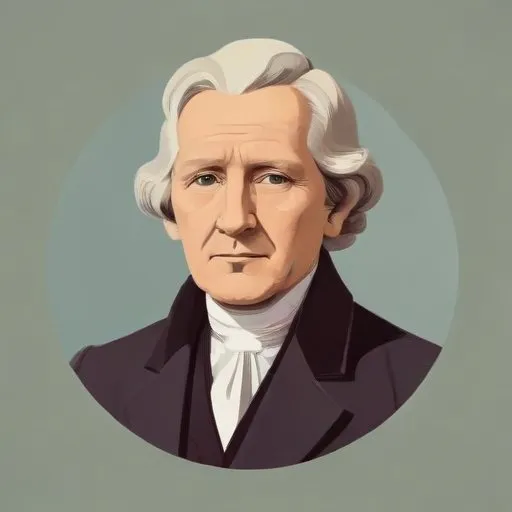
Developed mathematical theories, including the concept of infinite series, and wrote influential philosophical works on morality and natural law.
Humphry Ditton, an English mathematician, is renowned for his influential works that redefined the boundaries of mathematics, shedding light on the complexities of curves, catoptrics, and fluxions. His groundbreaking contributions not only earned him recognition in his lifetime but also left a lasting impact on the development of mathematics and science.
Born on May 29, 1675, in Salisbury, Ditton was the only son of Humphry Ditton, a gentleman and ardent nonconformist, and Miss Luttrell of Dunster Castle. His early years were marked by a strong inclination towards theology, and he studied theology privately, eventually becoming a dissenting minister in Tonbridge, where he married Miss Ball.
After his father's death, Ditton redirected his focus towards mathematics, which would become the hallmark of his life's work. His association with Isaac Newton, one of the greatest mathematicians of the time, proved instrumental in his election as mathematical master in Christ's Hospital.
Ditton's theological inclinations led him to write A Discourse Concerning the Resurrection of Jesus Christ, which employed a mathematical, deductive approach to the subject. The work underwent four editions, with translations in French and German. A diary containing his religious meditations was published posthumously in the Gospel Magazine (1777).
Humphry Ditton's contributions to mathematics and science have left an indelible mark on the academic community. His works, though dated, continue to inspire and educate scholars, cementing his legacy as a pioneer in the field of mathematics.
Born in 1646
Developed calculus independently of Isaac Newton, and made major contributions to the fields of philosophy, politics, and history.
Born in 1656
Predicted celestial events, including the return of a comet that bears his name, and made significant contributions to navigation, astronomy, and mathematics.
Born in 1898
A pioneer of modern sculpture, creating abstract, biomorphic forms that evoke a sense of primal emotion, and illustrating books with whimsical, dreamlike drawings.
Born in 1632
A 17th-century thinker who laid the groundwork for modern democracy, arguing that governments derive their power from the people and that individuals have inherent rights to life, liberty, and property.
Born in 1616
Developed calculus and cryptography methods, including the concept of infinity and deciphering codes for the British government.
Born in 1623
A 17th-century genius who made major contributions to mathematics, physics, and philosophy, inventing the mechanical calculator and developing the theory of probability. His writings also explored the human condition and faith.
