


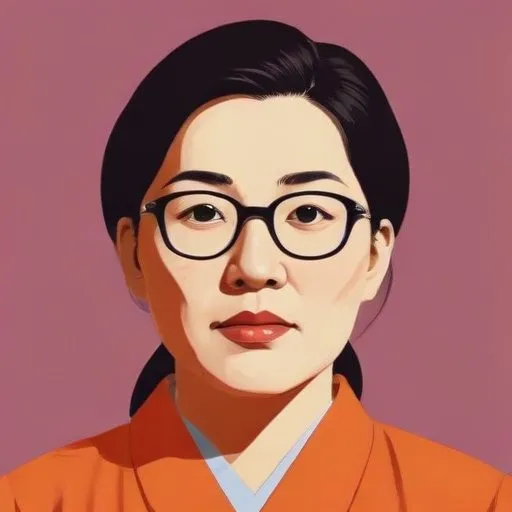
A renowned North Korean writer, known for his poignant and introspective works that explore the human condition, often set against the backdrop of Korea's turbulent history.
Hwang Sunwon was a Korean literary giant, celebrated for his poignant short stories, novels, and poetry thatcaptured the essence of Korea's turbulent 20th century. As a master storyteller, he is renowned for his nuanced exploration of the human condition, set against the backdrop of colonialism, war, and social upheaval.
Born on March 26, 1915, in Taedong, South Pyongan, Korea, during the Japanese colonial rule, Hwang's early life was marked by a passion for literature. He made his literary debut as a middle school student with the publication of his poems "My Dream" and "Fear Not, My Son" in 1931.
After graduating from Waseda University in Japan with a degree in English, Hwang founded a theater group called Tokyo Students Group for the Arts, along with fellow students Lee Haerang and Kim Dongwon. This marked the beginning of his lifelong dedication to promoting Korean arts and culture.
Hwang's literary career spanned multiple decades, during which he published numerous works that reflected his deep understanding of the human experience. His writing often explored the themes of resilience, love, and goodwill in the face of adversity, as seen in his works such as "Stars" (1940), "Old Man Hwang" (1942), and "The Old Potter" (1944).
What set Hwang apart from his contemporaries was his unwavering commitment to writing in Korean, despite the dominance of Japanese language during the colonial era. This stance earned him recognition as a champion of Korean culture and identity.
Hwang's significant contributions to Korean literature were recognized with numerous awards and honors. He was awarded the prestigious Korean Literature Prize in 1958 and the Wunjeong Literature Prize in 1962.
Today, Hwang Sunwon is celebrated as one of the most important Korean writers of the 20th century, and his works continue to inspire generations of readers and writers. His legacy extends beyond literature, as his stories have been adapted into films, plays, and TV dramas, cementing his place in Korean popular culture.
Hwang's literary works were not only a reflection of his own experiences but also a testament to his philosophical beliefs. He believed in the power of literature to inspire hope, foster empathy, and promote social change.
Through his writing, Hwang sought to capture the essence of the Korean spirit, which he believed was defined by its resilience, generosity, and capacity for love. His stories often highlighted the human side of historical events, emphasizing the importance of compassion and understanding in the face of adversity.
Hwang's literary legacy extends beyond the realm of literature, as his stories have had a profound impact on modern Korean society. His works have inspired countless writers, artists, and intellectuals, shaping the country's cultural identity and informing its social consciousness.
Today, Hwang's stories continue to resonate with readers, offering a window into Korea's complex history and its people's struggles. His writing serves as a reminder of the importance of empathy, compassion, and social responsibility, inspiring future generations to build a more just and equitable society.
Born in 1926
A South Korean politician who served as Prime Minister and played a key role in the country's economic development and democratization. He's also known for his involvement in the Gwangju Democratization Movement.
