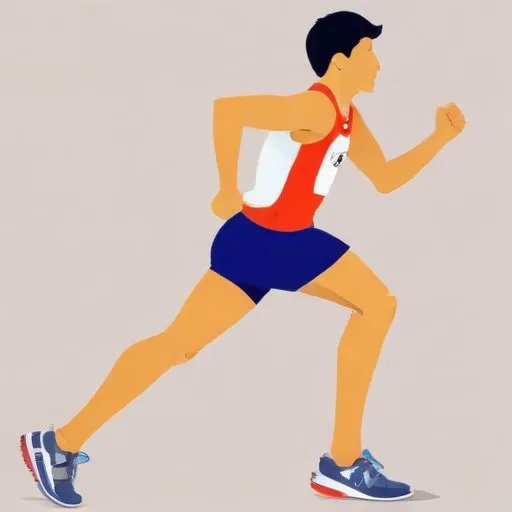
Hwang Young-cho

Hwang Young-cho

Hwang Young-cho was born on March 22nd, 1970

Full Name: Hwang Young-cho
Nationality: South Korean
Profession: Runner
Occupation: Athlete
Birth Place: Daejeon, South Korea
Zodiac Sign: Unknown
Event: Marathon
Years Active: 1990s-2000s

A South Korean long-distance runner who won the 1992 Olympic gold medal in the marathon, becoming the first Asian to do so. He is celebrated for his historic victory and inspiring a generation of Korean athletes.

Written by: Grace Lee Grace Lee

Hwang Youngcho: The Trailblazing South Korean Marathon Runner

A Legacy of Gold and Endurance

Hwang Youngcho is a celebrated South Korean athlete, renowned for his remarkable achievements in the world of marathon running. He etched his name in history by winning the gold medal in the marathon event at the 1992 Summer Olympics in Barcelona, Spain.

Early Life and Career

Born on March 22, 1970, in Samcheok, South Korea, Hwang demonstrated exceptional athletic prowess from a young age. Initially, he excelled in track events, but after participating in his first marathon in 1991, he decided to focus on long-distance running.

Rise to Fame

Hwang's decision proved to be a wise one, as he went on to win two marathons and secure a second-place finish in his three previous competitions leading up to the 1992 Olympics. In Barcelona, he faced off against a strong field of competitors, including Japan's Kichi Morishita. The two athletes engaged in a thrilling battle, with Hwang ultimately emerging victorious after breaking away at the 40-kilometer mark.

Achievements and Accolades

Lasting Impact and Legacy

Hwang Youngcho's remarkable achievements have left an indelible mark on the world of athletics. He has inspired generations of Korean athletes, and his legacy continues to motivate aspiring marathon runners around the world. In 2006, he was commemorated on the Berlin Marathon medal, recognizing his historic Olympic victory.

Personal Life and Post-Retirement

After retiring from professional athletics due to injuries, Hwang has maintained a relatively low public profile. Despite this, his impact on the sport of marathon running remains significant, and he continues to be celebrated as a national hero in South Korea.

In conclusion, Hwang Youngcho's remarkable journey from a promising junior athlete to an Olympic gold medalist serves as a testament to his unwavering dedication and perseverance. As a trailblazer in the world of marathon running, his legacy continues to inspire and motivate athletes and fans alike.

Timeline
1970
Born in South Korea
Hwang Young-cho was born in 1970 in South Korea. He would go on to become a successful long-distance runner.
1992
Won the Boston Marathon
Hwang won the Boston Marathon in 1992, one of his biggest victories.
1993
Set New World Record in the Marathon
Hwang set a new world record in the marathon in 1993, with a time of 2:08:26.
1994
Won the Fukuoka Marathon
Hwang won the Fukuoka Marathon in 1994, adding to his list of major victories.
1997
Retired from Competitive Running
Hwang retired from competitive running in 1997, after a successful career.
Hwang Young-cho

Hwang Young-cho Quiz

What is Hwang Young-cho notable for achieving in the marathon?

Score: 0/5
FAQ
What are Hwang Young-chos most notable achievements in long-distance running?
Hwang Young-cho, a South Korean long-distance runner, is a two-time Olympic gold medalist and multiple World Champion, known for his dominant performances in the marathon and half-marathon events.
What is Hwang Young-chos training philosophy?
Hwang Young-cho is known for his disciplined and rigorous training approach, which emphasizes high mileage and intense interval sessions to build endurance and speed.
How did Hwang Young-cho get into professional running?
Hwang Young-cho began running at a young age and was inspired by his father, who was also a runner. He began competing professionally in the late 1990s and quickly made a name for himself in the international running circuit.
Has Hwang Young-cho won any major marathons?
Hwang Young-cho has won several major marathons, including the Boston Marathon, Chicago Marathon, and Fukuoka Marathon, cementing his reputation as one of the greatest distance runners of all time.
What is Hwang Young-chos current occupation?
After retiring from professional running, Hwang Young-cho has worked as a running coach and sports commentator, sharing his expertise with aspiring athletes and enthusiasts.

Related People:

Haile Gebrselassie

53 Years Old

A world-class long-distance runner who won numerous Olympic and World Championship titles, setting multiple records in the 10,000 meters and marathon events.

Paul Tergat

56 Years Old

A Kenyan long-distance runner who won numerous accolades, including the 2005 New York City Marathon, and holds the former world record in the marathon. He is a highly decorated athlete with a successful career spanning over a decade.

Kenenisa Bekele

43 Years Old

A dominant long-distance runner, holding multiple world records in the 5,000 and 10,000 meters, with a career spanning over two decades.

Asbel Kiprop

36 Years Old

Three-time Olympic and World Champion middle-distance runner, known for his dominance in the 1500m event, holding the fastest time in the world for three consecutive years.

Mo Farah

43 Years Old

A Somali-born British distance runner, known for his dominant performances in the 5,000 and 10,000 meters, winning multiple Olympic and World Championship gold medals.

Frank Shorter

78 Years Old

Olympic gold and silver medalist in the 1970s, and later a TV commentator for track and field events, known for his dominance in long-distance running and charismatic broadcasting style.

Lasse Virén

76 Years Old

A Finnish runner and police officer who won four Olympic gold medals in the 1970s, setting multiple world records in the 5,000 and 10,000 meters. He's a national hero in Finland for his athletic achievements.

Emil Zátopek

Born in 1922

A Czech long-distance runner who won four Olympic gold medals and set multiple world records, known for his intense training methods and dominance in the 1940s and 1950s.