


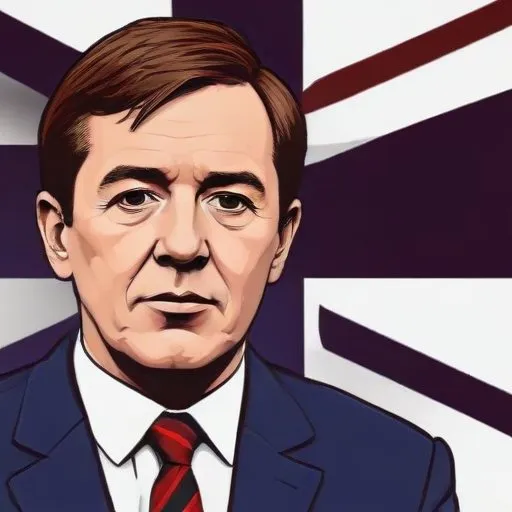
A Scottish politician who served as Minister of State for Trade, playing a key role in shaping the UK's trade policies and promoting British business interests globally.
Ian McCartney is a British Labour Party politician who served as Member of Parliament (MP) for Makerfield from 1987 to 2010. Throughout his illustrious career, he has been a tireless advocate for labour rights, social justice, and equality, earning him a reputation as a champion of the working class.
Born on 25 April 1951 in Lennoxtown, Stirlingshire, Scotland, McCartney grew up in a family deeply rooted in trade unionism. His father, Hugh McCartney, was a Labour MP for East Dunbartonshire, and his mother, Margaret, was a committed trade unionist. Despite leaving school at the age of 15 without qualifications, McCartney went on to develop a strong sense of social responsibility, which would shape his future in politics.
McCartney's journey in politics began in 1982 when he became a councillor for Abram ward in Wigan. In 1987, he was elected as the MP for Makerfield, a position he held for 23 years. During his time in opposition, he held various roles, including spokesman on Health, Employment, Education, and Social Services. His passion for labour rights led him to become one of the founders of the All-Party Parliamentary Rugby League Group in 1987, which he chaired for several years.
Following Labour's electoral victory in 1997, McCartney was appointed Minister of State for Competitiveness at the Department of Trade and Industry (DTI). In this role, he successfully steered the Competition Act 1998 through the House of Commons and introduced several key employment rights, including whistleblower protection.
Throughout his career, McCartney has been guided by a strong sense of social justice and a commitment to improving the lives of working-class individuals. His unwavering dedication to labour rights has made him a respected figure in British politics.
Ian McCartney's contributions to British politics have left an indelible mark on the country. His tireless advocacy for labour rights, social justice, and equality has inspired generations of politicians and activists. As a champion of the working class, McCartney's legacy continues to shape the Labour Party's agenda and inform the country's ongoing debates about social justice.
In recognition of his outstanding service to politics, McCartney was awarded a knighthood in 2010.
75 Years Old
The Prime Minister of the United Kingdom from 2007 to 2010, known for his key role in shaping the country's economy and response to the 2008 global financial crisis.
73 Years Old
The former Prime Minister of the United Kingdom who led the country through a transformative period, including the Iraq War, and is known for his charismatic leadership and controversial decisions.
88 Years Old
Deputy Prime Minister of the UK from 1997 to 2007, known for his strong personality and advocacy for social justice and environmental issues. He played a key role in shaping the country's climate change policies.
72 Years Old
A British politician who played a key role in the Northern Ireland peace process and served in various UK cabinet positions, known for his diplomatic efforts and Labour Party leadership.
79 Years Old
A British Labour politician who served as Home Secretary from 2001 to 2004, known for his reform efforts and controversies surrounding his personal life.
80 Years Old
A British politician who served in various cabinet positions, including Foreign Secretary, and played a key role in shaping the country's foreign policy, particularly during the Iraq War.
80 Years Old
A Scottish educator and politician who served as the UK's Foreign Secretary, known for his strong stance against the Iraq War and his efforts to promote international cooperation. He resigned from the government in protest of the war, making him a respected figure in British politics.
Born in 1721
Led a Scottish army to victory in the Battle of Prestonpans, a significant Jacobite Rising in 1745. He's remembered for his military prowess and strategic thinking.
