


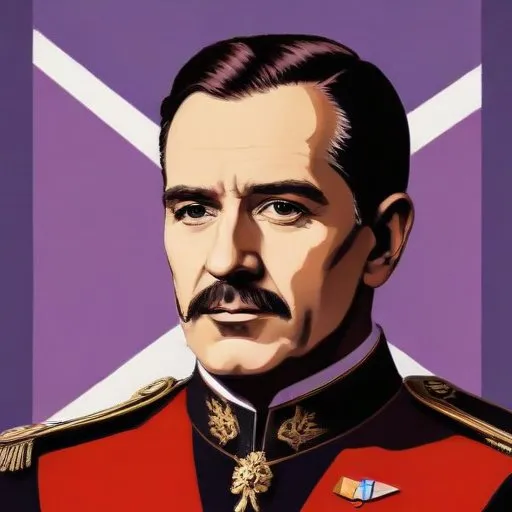
Led a Scottish army to victory in the Battle of Prestonpans, a significant Jacobite Rising in 1745. He's remembered for his military prowess and strategic thinking.
John Reid, a British army general and cultural patron, is renowned for establishing the chair of music at the University of Edinburgh, a legacy that continues to resonate in the city's vibrant cultural landscape. Through his tireless efforts, Reid fostered a deeper appreciation for music, leaving an indelible mark on Edinburgh's cultural heritage.
Born John Robertson on 13 February 1721, Reid inherited the Straloch estate in Perthshire from his father, Alexander Robertson, which came with the condition of adopting the surname Reid, a nod to his paternal ancestor's fiery red hair. Reid's father had actively resisted the Jacobite rising of 1745, incurring significant losses in the process.
Reid's own military career began when he received a commission in Lord Loudon's regiment of highlanders in 1745. He served with distinction, playing a pivotal role in capturing French troops landed in Tongue Bay from the sloop Hazard in 1746. This courageous feat earned him recognition, although Lord Reay and his sons would later lay claim to the achievement.
In the late 18th century, Reid's passion for music led him to establish the chair of music at the University of Edinburgh. This visionary move not only reflected his own love for music but also recognized the importance of music education in Scottish society. Today, the Reid School of Music, Reid Concerts, and Reid Orchestra stand as testaments to his enduring legacy.
John Reid's influence on Edinburgh's cultural landscape extends far beyond his military accomplishments. His dedication to music education has inspired generations of musicians, composers, and music enthusiasts. The Reid School of Music remains a hub of creative expression, fostering collaboration and innovation in the heart of Scotland's capital city.
John Reid's remarkable life serves as a testament to the power of vision, perseverance, and cultural patronage. As a British army general, he demonstrated bravery and strategic acumen on the battlefield. As a champion of music education, he left an indelible mark on Edinburgh's cultural heritage, ensuring that the city remains a vibrant hub of artistic expression to this day.
Born in 1770
Prime Minister of the United Kingdom during the Napoleonic Wars, leading Britain to victory and establishing the country as a dominant world power. He also reformed the British government and economy.
Born in 1769
A renowned military leader who defeated Napoleon at the Battle of Waterloo, and later served as Prime Minister of the United Kingdom, shaping the country's politics and history.
Born in 1768
A prominent military leader and politician, he played a crucial role in the Battle of Waterloo and later served as Lord Lieutenant of Ireland, shaping the country's politics and governance.
Born in 1620
A 17th-century Lord Mayor of London who played a significant role in the city's financial and economic development, particularly in the rebuilding of London after the Great Fire of 1666.
