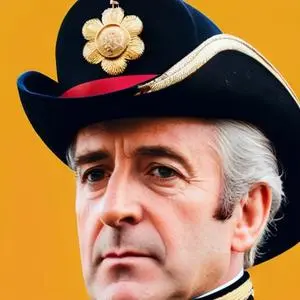
Arthur Wellesley, 1st Duke of Wellington

Arthur Wellesley, 1st Duke of Wellington

Arthur Wellesley, 1st Duke of Wellington was born on May 1st, 1769

Full Name: Arthur Wellesley, 1st Duke of Wellington
Occupation: Field Marshal, Politician
Nationality: Irish-English
Birth Date: May 1, 1769
Birth Place: Dublin, Ireland
Notable Battle: Battle of Waterloo
Prime Minister: United Kingdom
Death Date: September 14, 1852

A renowned military leader who defeated Napoleon at the Battle of Waterloo, and later served as Prime Minister of the United Kingdom, shaping the country's politics and history.

Written by: Jack Thompson Jack Thompson

Arthur Wellesley, 1st Duke of Wellington: The Iron Duke of British History

Arthur Wellesley, 1st Duke of Wellington, is one of the most iconic figures in British history, renowned for his unwavering military prowess and statesmanship during the late 18th and early 19th centuries. He is perhaps best known for leading the coalition forces to a crushing defeat of Napoleon Bonaparte at the Battle of Waterloo in 1815, marking the end of the Napoleonic Wars and cementing his place as one of the greatest military minds in history.

Military Career

Wellesley's military career spanned over four decades, during which he fought in numerous battles and campaigns, including the Anglo-Mysore Wars, the Peninsular War, and the Battle of Waterloo. He rose through the ranks swiftly, earning the respect and admiration of his peers and superiors alike. His adaptability, tactical genius, and unwavering resolve in the face of adversity earned him the nickname "The Iron Duke."

Battles and Campaigns

Beyond his military achievements, Wellesley played a significant role in British politics, serving twice as Prime Minister of the United Kingdom. He was a strong advocate for Catholic emancipation and played a key role in the passage of the Catholic Relief Act in 1829.

Political Milestones

  • Member of Parliament (Irish House of Commons): Wellesley was elected to the Irish House of Commons in 1790, marking the beginning of his parliamentary career.
  • Prime Minister of the United Kingdom (1828-1830): Wellesley served as Prime Minister for the first time, during which he oversaw the passage of the Catholic Relief Act.
  • Prime Minister of the United Kingdom (1834): Wellesley returned as Prime Minister for a second time, albeit briefly, before resigning due to ill health.

Personal Life and Legacy

Wellesley was born into a prominent Anglo-Irish family and was known for his strong sense of duty, honor, and loyalty. His personal life was marked by a strong sense of discipline and frugality, earning him the nickname "The Duke of Wellington's Duchess" among his contemporaries.

Quotes and Memorable Sayings

  • "Nothing except a battle lost can be half so melancholy as a battle won."
  • "The only thing I am afraid of is fear."

Legacy and Impact

Arthur Wellesley, 1st Duke of Wellington, left an indelible mark on British history, shaping the course of modern warfare and politics. His military prowess, tactical genius, and unwavering dedication to duty continue to inspire generations of military leaders, politicians, and historians alike.

Today, the Duke of Wellington's legacy can be seen in the numerous monuments, statues, and memorials dedicated to his honor, including the iconic Wellington Arch in London. His story continues to captivate audiences, serving as a testament to the enduring power of courage, leadership, and determination.

Timeline
1769
Born in Dublin, Ireland
Arthur Wellesley, 1st Duke of Wellington, was born on May 1, 1769, in Dublin, Ireland. He would go on to become a renowned field marshal and politician.
1787
Joined the British Army
Wellesley joined the British Army as an ensign and began his military career.
1803
Fought in the Battle of Assaye
Wellesley fought in the Battle of Assaye, a decisive victory for the British during the Second Anglo-Maratha War.
1815
Defeated Napoleon at the Battle of Waterloo
Wellesley led the coalition forces to victory over Napoleon at the Battle of Waterloo, a turning point in European history.
1852
Died in Walmer, England
Arthur Wellesley, 1st Duke of Wellington, died on September 14, 1852, in Walmer, Kent, England, leaving behind a legacy as a great military leader and statesman.
Arthur Wellesley, 1st Duke of Wellington

Arthur Wellesley, 1st Duke of Wellington Quiz

What was the profession of Arthur Wellesley, 1st Duke of Wellington?

Score: 0/5
FAQ
What were the key battles fought by Arthur Wellesley, 1st Duke of Wellington?
Arthur Wellesley, 1st Duke of Wellington, led British forces to victory in several key battles, including the Battle of Assaye, Battle of Talavera, and the Battle of Waterloo, which ended Napoleons reign.
What was Arthur Wellesleys role in the Napoleonic Wars?
Arthur Wellesley played a crucial role in the Napoleonic Wars, leading British forces to victory against Napoleons army and ultimately contributing to his defeat at the Battle of Waterloo.
What was Arthur Wellesleys political career like?
After his military career, Arthur Wellesley served as the Prime Minister of the United Kingdom from 1828 to 1830, and again in 1834. He was known for his conservative policies and his role in the Reform Act of 1832.
How did Arthur Wellesleys Irish heritage influence his life and career?
Arthur Wellesleys Irish heritage had a significant impact on his life and career, influencing his worldview and shaping his military and political strategies. His Irish roots also influenced his relationships with his contemporaries.
What were Arthur Wellesleys contributions to British history?
Arthur Wellesley made significant contributions to British history, including his role in the Napoleonic Wars and his service as Prime Minister, leaving a lasting legacy in the fields of politics, military strategy, and British heritage.

Related People:

Napoleon Bonaparte

Born in 1769

A French military leader who rose to prominence during the French Revolution and became Emperor of France, known for his military conquests and reorganization of Europe. He is also famous for his Napoleonic Code, which remains a foundation of modern law.

George III of the United Kingdom

Born in 1738

The British monarch who ruled during the American Revolution, losing the colonies, and later suffered a mental illness that led to a regency crisis. He's also known for his cultural and artistic patronage.

George IV of the United Kingdom

Born in 1762

The extravagant and flamboyant King of the United Kingdom, known for his lavish lifestyle, extravagant fashion sense, and architectural projects, including the transformation of Buckingham Palace. He played a significant role in the development of Regency London.

William Pitt the Younger

Born in 1759

Prime Minister of the United Kingdom from 1783 to 1801 and 1804 to 1806, known for leading the country through the French Revolutionary and Napoleonic Wars.

Spencer Perceval

Born in 1762

The only British Prime Minister to be assassinated, he served from 1809 to 1812 and is known for his strong leadership during the Napoleonic Wars.