


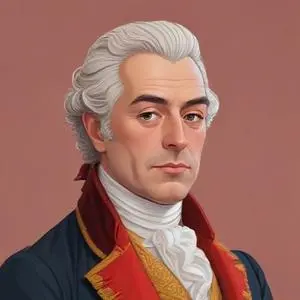
Prime Minister of the United Kingdom during the Napoleonic Wars, leading Britain to victory and establishing the country as a dominant world power. He also reformed the British government and economy.
As the longest-serving Prime Minister of the United Kingdom during the 19th century, Robert Jenkinson, 2nd Earl of Liverpool, played a pivotal role in shaping Britain's destiny. From 1812 to 1827, he navigated the treacherous waters of politics, steering the country through the tumultuous period following the Napoleonic Wars.
Born on June 7, 1770, to Charles Jenkinson, 1st Earl of Liverpool, and Amelia Watts, Robert Jenkinson was baptized at St. Margaret's, Westminster. He was educated at Charterhouse School and Christ Church, Oxford, before entering politics in 1790.
Jenkinson's early political career was marked by his appointments as Under-Secretary of State for Foreign Affairs (1796) and Secretary of State for War and the Colonies (1801). He later became Foreign Secretary (1801-1804) and Home Secretary (1804-1806, 1807-1809). His experience and statesmanship earned him the respect of his peers, leading to his appointment as Prime Minister in 1812.
During his 14-year tenure, Jenkinson faced numerous challenges, including the War of 1812 with the United States, the Sixth and Seventh Coalitions against the French Empire, and the conclusion of the Napoleonic Wars at the Congress of Vienna. He also dealt with domestic unrest, such as the Peterloo Massacre, and navigated the contentious issue of Catholic emancipation.
Despite being dubbed the "Archmediocrity" by Benjamin Disraeli, scholars rank Jenkinson highly among British prime ministers. His government's accomplishments include:
Jenkinson married Mary Chester in 1795, and they had one son, Charles Cecil Cope Jenkinson. He was known for his strong relationships with the Prince Regent and King George III, which helped him navigate the complexities of royal politics.
Jenkinson's leadership during a tumultuous period in British history has left a lasting legacy. He played a crucial role in maintaining order and stability, while also pursuing reforms that benefited the country. His ability to balance competing interests and navigate the complexities of politics has earned him a place among the most notable British prime ministers.
Jenkinson's legacy can be seen in the modern British political system, where his reforms and policies continue to influence contemporary politics. His ability to navigate complex issues and balance competing interests has inspired generations of politicians and statesmen.
Born in 1759
Prime Minister of the United Kingdom from 1783 to 1801 and 1804 to 1806, known for leading the country through the French Revolutionary and Napoleonic Wars.
Born in 1749
A prominent 18th-century politician who championed individual liberties and opposed British imperialism, known for his charismatic oratory skills and influential foreign policy decisions.
Born in 1759
An 18th-century academic and politician who served as Prime Minister of the United Kingdom, known for his role in abolishing the slave trade in the British Empire.
Born in 1762
The only British Prime Minister to be assassinated, he served from 1809 to 1812 and is known for his strong leadership during the Napoleonic Wars.
Born in 1788
A British politician who served as Prime Minister and is credited with establishing the modern police force and repealing the Corn Laws, a major trade restriction. He's also known for his role in shaping the Conservative Party.
Born in 1804
A skilled politician who served as Prime Minister of the United Kingdom, known for his influential role in shaping the country's politics and economy during the 19th century.
