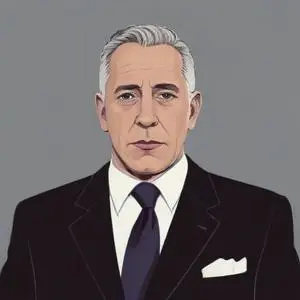
Ian Paisley: The Fiery Politician and Religious Leader
A Life of Controversy and Conviction
Ian Paisley, a Protestant religious leader and politician from Northern Ireland, left an indelible mark on the country's tumultuous history. Best known for his fiery sermons and unwavering stance on unionism, Paisley's life was a testament to his unshakeable convictions.
Early Life and Ministry
Born on April 6, 1926, Paisley grew up in a Protestant family in Armagh, Northern Ireland. He became a Protestant evangelical minister in 1946, a calling that would shape his life and politics. In 1951, he co-founded the Free Presbyterian Church of Ulster, a fundamentalist denomination that reflected his conservative views. Paisley's ministry was characterized by his powerful oratory skills, which captivated audiences and earned him a loyal following.
Entry into Politics
Paisley's foray into politics began in the late 1950s, when he became involved in Ulster unionist-loyalist politics. His activism against the Catholic civil rights movement in the mid-1960s contributed to the outbreak of the Troubles, a period of sectarian violence that ravaged Northern Ireland for three decades.
Rise to Prominence
In 1970, Paisley was elected Member of Parliament for North Antrim, a seat he held for over 40 years. The following year, he founded the Democratic Unionist Party (DUP), which he led for almost four decades. Paisley's party became a dominant force in Northern Irish politics, with him at the helm.
Opposition to the Peace Process
Throughout the Troubles, Paisley was a vocal opponent of any attempts to resolve the conflict through power-sharing between unionists and Irish nationalists-republicans. He also opposed the involvement of the Republic of Ireland in Northern Irish affairs. Paisley's defiance earned him the reputation of a hardline unionist, and his efforts helped bring down the Sunningdale Agreement of 1974.
Later Life and Legacy
In 2005, Paisley's DUP became the largest unionist party in Northern Ireland, displacing the Ulster Unionist Party. Despite his eventual support for the St. Andrews Agreement in 2006, Paisley's legacy remains complex and multifaceted. His unwavering commitment to unionism and opposition to the peace process leaves a lasting impact on Northern Ireland's politics and history.
Quotes and Memorable Sayings
- "I am not going to sit down with people who have bombed and murdered my people."
- "The Roman Catholic Church is a foreign organization, and its priests are foreign agents."
Personal Milestones and Key Life Events
- 1946: Became a Protestant evangelical minister
- 1951: Co-founded the Free Presbyterian Church of Ulster
- 1970: Elected Member of Parliament for North Antrim
- 1971: Founded the Democratic Unionist Party (DUP)
- 2005: DUP becomes the largest unionist party in Northern Ireland
- 2007: Became First Minister of Northern Ireland
- 2014: Died on September 12, at the age of 88
Impact on Modern Society
Ian Paisley's life and legacy continue to shape Northern Ireland's politics and society. His unwavering commitment to unionism and opposition to the peace process leave a lasting impact on the region's history. While controversy surrounds his life, Paisley's influence on modern society is undeniable.
FAQ
What was Ian Paisleys role in Northern Irish politics?
Ian Paisley was a prominent Northern Irish evangelical minister and politician who played a key role in the countrys political landscape, serving as the 2nd First Minister of Northern Ireland.
What was Ian Paisleys stance on Catholicism?
Ian Paisley was a staunch Protestant who often clashed with Catholic leaders, and his views on Catholicism were widely criticized as sectarian and divisive.
What was Ian Paisleys role in the Northern Irish peace process?
Ian Paisleys later years saw a shift towards a more conciliatory approach, and he played a key role in the Northern Irish peace process, working alongside Martin McGuinness to establish a power-sharing government.
What awards did Ian Paisley receive for his work?
Ian Paisley received numerous awards for his work, including the Nobel Peace Prize in 2008, which he shared with Martin McGuinness.
What is Ian Paisleys legacy in Northern Irish politics?
Ian Paisleys legacy in Northern Irish politics is complex and contested, but he remains a significant figure in the countrys history, remembered for his unwavering commitment to his beliefs and his role in shaping the regions political landscape.