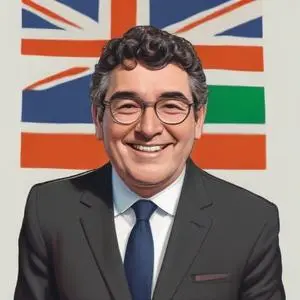
John Hume: The Architect of Peace in Northern Ireland
A Nobel Peace Prize Laureate and Champion of Reconciliation
John Hume was an Irish nationalist politician who dedicated his life to finding a peaceful solution to the sectarian conflict in Northern Ireland. He is best known for his instrumental role in brokering the Good Friday Agreement, a historic peace accord that brought an end to decades of sectarian violence and paved the way for a new era of cooperation and understanding between Unionists and Nationalists.
Early Life and Education
Born on January 18, 1937, in Derry, Northern Ireland, Hume grew up in a working-class Catholic family. His parents, Anne and Samuel Hume, instilled in him the values of hard work, compassion, and social justice. Hume was an exceptional student and went on to attend St. Columb's College, a prestigious grammar school, and later St. Patrick's College, Maynooth, where he studied for the priesthood.
Rise to Prominence
In the 1960s, Hume became involved in the civil rights movement in Northern Ireland, advocating for equal rights and opportunities for Catholics in a predominantly Protestant society. He co-founded the Social Democratic and Labour Party (SDLP), which became a leading force in Northern Irish politics. Hume's charm, intelligence, and eloquence made him a compelling leader, and he quickly gained international recognition as a champion of peace and reconciliation.
The Quest for Peace
Throughout the 1970s and 1980s, Hume worked tirelessly to find a peaceful solution to the sectarian conflict in Northern Ireland. He engaged in secret talks with Unionist leaders, including
David Trimble, and convinced the Irish government to support his efforts. Hume's persistence and diplomatic skills paid off in 1998 when the Good Friday Agreement was signed, establishing a power-sharing government and paved the way for disarmament.
Awards and Recognition
In 1998, Hume was awarded the Nobel Peace Prize, along with David Trimble, for his efforts to bring peace to Northern Ireland. This recognition cemented his status as a global leader in the pursuit of peace and reconciliation.
Personal Milestones
- Married to Pat Hume, a fellow civil rights activist, in 1960
- Father of five children, including three sons and two daughters
- Was a pioneer of the credit union movement in Northern Ireland
Philosophical Contributions
Hume believed that the key to peace in Northern Ireland lay in understanding and respecting the differences between Unionists and Nationalists. He advocated for dialogue, compromise, and mutual respect, often citing the wisdom of
Mahatma Gandhi and
Martin Luther King Jr. as inspirations.
Legacy
John Hume's legacy continues to inspire generations of peacemakers and leaders around the world. His unwavering commitment to non-violence, dialogue, and reconciliation serves as a beacon of hope in regions torn apart by conflict. As a testament to his impact, Hume's name is etched on the European Parliament's Flag of Honour, and his portrait adorns the walls of the SDLP headquarters in Belfast.
Quotes
- "The only way to make sense out of change is to plunge into it, move with it, and join the dance."
- "In Ireland, we'd say that someone who doesn't know where he's going, shouldn't be surprised when he gets there."
Timeline of Major Events
- 1947: The Education Act revolutionizes access to secondary and further education in Northern Ireland, enabling Hume to pursue his studies
- 1960: Hume marries Pat Hume
- 1969: Hume helps found the SDLP
- 1974: Hume becomes a member of the Northern Ireland Assembly
- 1981: Hume meets with Pope John Paul II to discuss the Irish conflict
- 1993: Hume begins secret talks with David Trimble
- 1998: The Good Friday Agreement is signed
- 1998: Hume awarded the Nobel Peace Prize
- 2020: John Hume passes away on August 3, leaving behind a legacy of peace and reconciliation
FAQ
What was John Humes role in the Northern Ireland peace process?
John Hume was a key figure in the Northern Ireland peace process, working tirelessly to promote dialogue and cooperation between Nationalists and Unionists.
What is John Humes approach to conflict resolution?
John Hume is known for his commitment to non-violent conflict resolution, using his skills as a politician and educator to promote understanding and reconciliation.
How did John Hume contribute to the Good Friday Agreement?
John Hume played a crucial role in the negotiations leading to the Good Friday Agreement, working to build trust and consensus among the parties involved.
What awards has John Hume won?
John Hume has won numerous awards for his contributions to peace and reconciliation, including the Nobel Peace Prize in 1998.
What is John Humes legacy in Northern Irish politics?
John Humes legacy in Northern Irish politics is marked by his unwavering commitment to peace, his vision for a united Ireland, and his inspiring leadership during a period of great change and transformation.