


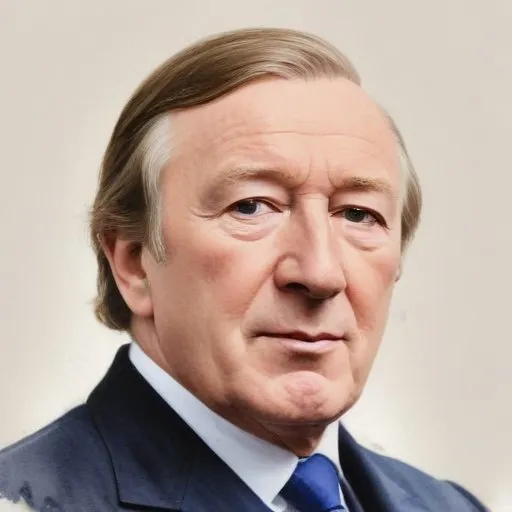
A charismatic and controversial leader who served as Ireland's prime minister, known for his role in shaping the country's economy and politics during the 1980s.
Charles Haughey, the former Taoiseach of Ireland, is known for leading four governments from 1979 to 1992 and being a dominant figure in Irish politics for over three decades. During his tenure, he implemented various economic reforms, which some economists credit with starting Ireland's economic transformation in the late 1980s.
Haughey was born on September 16, 1925, in Castlebar, County Mayo, Ireland. He studied law at University College Dublin and later qualified as a solicitor. Before entering politics, he worked as a solicitor and later as a businessman.
Haughey's political career began in 1957 when he was elected as a Teachta Dála (TD) for Dublin North-East. He quickly rose through the ranks, becoming a minister in 1961 and holding various ministerial positions, including Minister for Justice, Agriculture, and Finance.
Haughey's leadership was marked by several controversies, including the Arms Crisis in 1970, which nearly ended his career. However, he managed to revive his political reputation and eventually became the Leader of Fianna Fáil in 1979.
Haughey's tenure as Taoiseach was marred by several scandals, including the GUBU Affair in 1982, which damaged his reputation. Despite facing several leadership challenges, he managed to retain his position, earning him the nickname "The Great Houdini."
Haughey's economic reforms, including the introduction of free trade and economic liberalization, are credited with transforming Ireland's economy in the late 1980s. However, his legacy was later tarnished by revelations of political corruption, embezzlement, tax evasion, and a 27-year extramarital affair, which forced him to resign as Taoiseach and retire from politics in 1992.
Haughey married Maureen Lemass in 1951, and they had four children together. He passed away on June 13, 2006, at the age of 80, leaving behind a complex and controversial legacy.
"Ireland is not just a geographical location, it's a state of mind."
"The greatest glory in living lies not in never falling, but in rising every time we fall."
Haughey's impact on Irish politics and society is still debated among historians and politicians. While he implemented significant economic reforms, his leadership was marked by controversy and scandal. Nevertheless, he remains one of the most dominant figures in Irish politics, and his legacy continues to shape the country's economic and political landscape.
Born in 1926
The 7th Taoiseach of Ireland, a lawyer-turned-politician, led the country through significant economic and social reforms, earning him a reputation as a champion of liberalization and modernization.
Born in 1917
A former footballer who became the 5th Taoiseach of Ireland, leading the country through a tumultuous period in the late 1960s and early 1970s. He's known for his role in shaping Ireland's modern identity.
Born in 1920
The 6th Taoiseach of Ireland, a lawyer-turned-politician who led the country from 1973 to 1977, known for his strong stance against the IRA and his role in shaping Ireland's economy.
Born in 1899
A key figure in Ireland's struggle for independence and economic development, he played a crucial role in shaping the country's modern identity and economy. He's most known for his efforts to modernize Ireland and move it away from its agricultural past.
Born in 1882
Leader of Ireland's struggle for independence from Britain, serving as both Prime Minister and President, and key figure in shaping the country's modern identity.
75 Years Old
The 11th Taoiseach of Ireland, a skilled politician who played a crucial role in the Northern Ireland peace process, and oversaw a period of rapid economic growth in Ireland.
77 Years Old
Acclaimed author of concise, witty, and poignant short stories and novels that explore the complexities of human relationships and the American experience.
66 Years Old
The 12th Taoiseach of Ireland, serving from 2008 to 2011, led the country through a severe economic crisis and implemented austerity measures to address the situation. He's also known for his role in shaping Ireland's economy and politics.
