


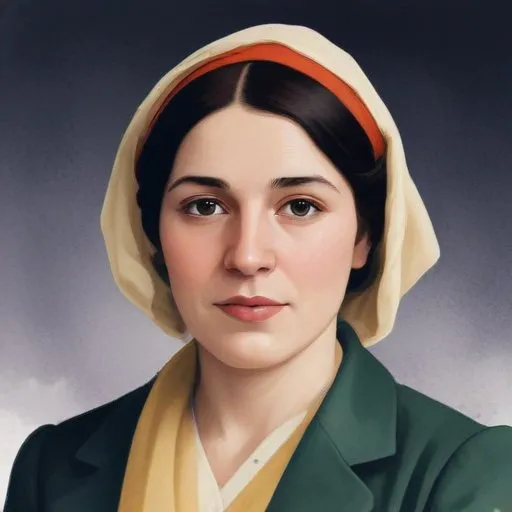
A British campaigner who helped hundreds of Jews escape Nazi Germany, and also wrote romantic novels under a pseudonym. She's most known for her bravery and selflessness during WWII.
Ida Cook is best known for her bravery and selflessness in helping Jews escape from Nazi-occupied Europe during World War II. This remarkable opera singer not only used her talent to entertain the masses but also risked her life to save hundreds of lives, earning her a place in history as a hero and humanitarian.
Ida Cook was born on February 24, 1904, in Sunderland, England, to a family of modest means. Her love for music led her to pursue a career in opera singing, and she began performing in local concerts and events. Cook's talent soon took her to the stages of London, where she became a prominent figure in the city's opera scene.
Cook's most notable achievements came during World War II, when she used her celebrity status to help Jews escape from Nazi-occupied Europe. Along with her sister, Louise, Cook traveled to Europe, posing as a wealthy socialite, and used her opera connections to secure visas and passports for those in need. She also smuggled money, jewelry, and other valuable items to help fund the escape efforts.
One of Cook's most remarkable feats was helping to rescue the famous Jewish composer, Franz Lehár. She convinced the Nazi officials that Lehár was her "uncle" and needed to attend a family wedding in England, securing his safe passage out of Austria.
Cook's actions during the war were driven by her strong sense of empathy and compassion. She believed that everyone, regardless of their background or faith, deserved to be treated with dignity and respect. Her bravery and selflessness during this turbulent period inspired countless people and reinforced the importance of standing up against injustice.
In recognition of her heroism, Ida Cook was awarded the title of Righteous Among the Nations by the State of Israel in 1967. This prestigious honor is bestowed upon non-Jews who risked their lives to save Jews during the Holocaust. Cook's courageous actions also earned her a place in the British Yad Vashem, a memorial to the victims of the Holocaust.
In addition to her humanitarian work, Cook continued to perform as an opera singer throughout her life. She also wrote an autobiography, We Followed Our Stars, which detailed her wartime experiences. Cook passed away on July 21, 1986, at the age of 82, leaving behind a legacy of courage, compassion, and inspiration.
Ida Cook's remarkable story has inspired generations to stand up against injustice and fight for human rights. Her bravery and selflessness serve as a powerful reminder of the importance of compassion, empathy, and courage in the face of adversity. Her legacy continues to inspire people from all walks of life to make a positive impact on the world.
Born in 1907
American journalist and author who helped rescue over 2,000 Jews and anti-Nazi dissidents from France during World War II, often referred to as the "American Schindler".
Born in 1908
A Czech-German businessman credited with saving the lives of over 1,200 Jews during the Holocaust by employing them in his factories. He is the subject of the award-winning film "Schindler's List".
Born in 1909
A brave and selfless individual who risked their life to hide a Jewish family, including a young girl who would become a symbol of hope and resilience, from the Nazis during WWII. This hero's actions allowed the family to survive for two years, and their story to be told.
Born in 1912
A Swedish architect and diplomat who saved thousands of Hungarian Jews from the Holocaust by issuing protective passports and providing shelter, earning a legendary status as a hero.
Born in 1910
A Polish nurse and humanitarian who smuggled over 2,500 Jewish children out of the Warsaw Ghetto during WWII, keeping detailed records to reunite them with their families after the war.
Born in 1914
A Polish-American activist and academic who risked his life to expose the atrocities of the Holocaust to the Western world, particularly the existence of concentration camps.
