


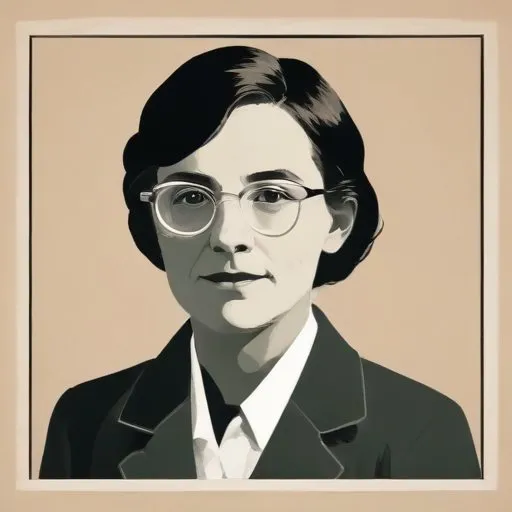
The first woman to break into the London Chemical Society, she pioneered a path for females in chemistry, making groundbreaking contributions to the field. Her work paved the way for future generations of women in STEM.
Ida Maclean was a trailblazing English biochemist who made history by becoming the first woman admitted to the prestigious London Chemical Society. Her groundbreaking research in biochemistry, particularly in the areas of fatty acid metabolism and fat synthesis, earned her recognition and respect in the scientific community.
Born Ida Smedley on June 14, 1877, in Birmingham, England, she was raised in a cultured and progressive household by her businessman father, William Smedley, and mother, Annie Elizabeth Duckworth. Her mother, who taught her at home until the age of nine, instilled in her a love for learning and a strong work ethic.
Maclean's academic prowess earned her a scholarship to King Edward VI High School for Girls in Birmingham, where she excelled from 1886 to 1896. She then pursued higher education at Newnham College, Cambridge, where she achieved first-class honors in part one and second-class honors in part two of the Natural Sciences Tripos.
Maclean's academic career was marked by several milestones. In 1906, she became the first female staff member of the chemistry department at Manchester University, where she taught and conducted research on the optical properties of organic compounds. Her work was supported by the Bathurst scholarship, which enabled her to pursue postgraduate research at the Central Technical College in London and later at the Royal Institution's Davy-Faraday Research Laboratory.
In 1910, she was awarded one of the first Beit fellowships, which enabled her to focus on biochemistry at the Lister Institute of Preventive Medicine. Her research in this field earned her the American Association of University Women's Ellen Richards prize. During World War I, she worked at the Admiralty, contributing to projects on gas warfare and the large-scale production of acetone by fermentation.
Between 1920 and 1941, Maclean published approximately thirty papers in the Biochemical Journal, many in collaboration with her colleagues. Her research focused on the role of fatty acids in animals and the synthesis of fats. Her work in this area was groundbreaking, providing valuable insights into the metabolic processes that govern life.
In 1913, Maclean married Hugh Maclean, a coworker at the Lister Institute, with whom she had a son and a daughter. Her legacy extends beyond her scientific contributions, as she paved the way for future generations of women in science. Her determination, perseverance, and passion for her work inspire us to this day.
Ida Maclean's pioneering spirit and scientific contributions have inspired countless women to pursue careers in science, technology, engineering, and mathematics (STEM). Her legacy serves as a testament to the power of hard work, dedication, and innovative thinking.
Ida Maclean's remarkable life and achievements serve as a beacon of inspiration for anyone pursuing a career in science. Her pioneering spirit, intellectual curiosity, and determination have left an indelible mark on the scientific community.
Born in 1920
A British scientist who contributed significantly to the discovery of the structure of DNA, providing high-quality X-ray crystallography images that helped James Watson and Francis Crick develop their famous model.
Born in 1867
A pioneering scientist who pioneered radioactivity research, discovering elements polonium and radium, and paving the way for breakthroughs in medicine and energy.
Born in 1910
A pioneering scientist who deciphered the structures of biomolecules like insulin and vitamin B12, revolutionizing our understanding of biology and medicine.
Born in 1903
Pioneering Irish crystallographer and first female Fellow of the Royal Society, known for her groundbreaking work on the structure of diamonds and benzene, and her advocacy for women in science.
