


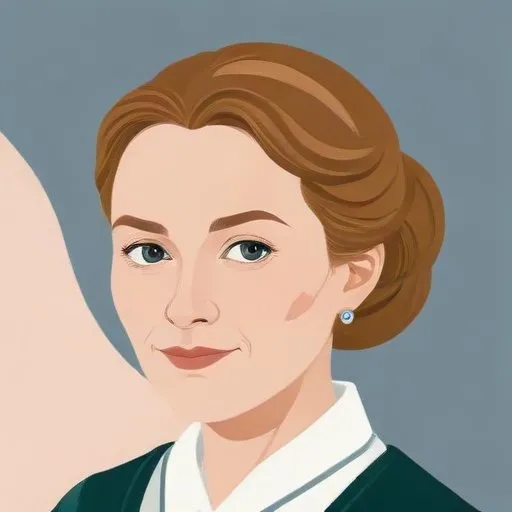
Danish folklore researcher and writer who collected and published traditional Danish folktales, making them accessible to a wider audience. Her work preserved Danish cultural heritage and inspired future generations of folklorists.
Inger Margrethe Boberg was a Danish folklore researcher and writer, renowned for being the first woman in Denmark to obtain a doctoral degree in folkloristics. Her groundbreaking work in the field of folklore research has left an indelible mark on the academic community, and her contributions continue to inspire scholars to this day.
Boberg was born on July 23, 1900, in Denmark. She pursued her passion for philology at the University of Copenhagen, where she earned her Master's degree in 1925. Her academic prowess soon took her to Lund University, where she worked under the guidance of esteemed folklore professor Carl Wilhelm von Sydow in 1927.
Boberg's academic excellence led her to become the first woman in Denmark to receive a Dr. Phil. degree in folkloristics in 1934. This milestone achievement cemented her position as a leading figure in the field of folklore research. She went on to work as an archivist at the Danish Folklore Archive (Dansk Folkemindesamling) from 1932 until her untimely passing in 1957.
In 1945, Boberg was awarded the prestigious Tagea Brandt Rejselegat, which enabled her to embark on a study trip to the United States. During her time in the U.S., she collaborated with renowned folklorist Stith Thompson, coediting his seminal work, Motif-Index of Folk-Literature. This international collaboration not only expanded her horizons but also solidified her reputation as a leading folklorist.
Throughout her remarkable career, Boberg made significant contributions to the field of folklore research, leaving behind a rich legacy of published works and inspiring a new generation of scholars. Her tireless efforts to document and analyze folklore have enriched our understanding of cultural heritage and continue to influence modern research in the field.
In conclusion, Inger Margrethe Boberg's pioneering work in folklore research has left an indelible mark on the academic community. Her groundbreaking achievements, international collaborations, and extensive published works have cemented her position as a leading figure in the field, inspiring generations of scholars to follow in her footsteps.
Born in 1864
A Swedish poet and literary historian who was awarded the Nobel Prize in Literature in 1931 for his poetry's lyric style and exploration of Swedish folklore. His works are still widely read and studied in Sweden today.
Born in 1858
A pioneering female writer and educator who won the Nobel Prize in Literature in 1909, known for her vivid storytelling and exploration of Swedish folklore.
Born in 1857
A Danish journalist and author who wrote about social issues and the lives of ordinary people, earning him the Nobel Prize in Literature in 1917.
Born in 1857
A Danish author and poet, known for his lyrical and philosophical works that explored the human condition, earning him the Nobel Prize in Literature in 1917.
Born in 1779
A leading figure in the Danish Golden Age of literature, he wrote influential plays and poems that explored themes of national identity and romanticism. His works are still widely studied and performed in Denmark today.
Born in 1813
A Danish philosopher and author who is considered the father of existentialism, known for his philosophical and theological writings that emphasized individualism and subjective experience.
