


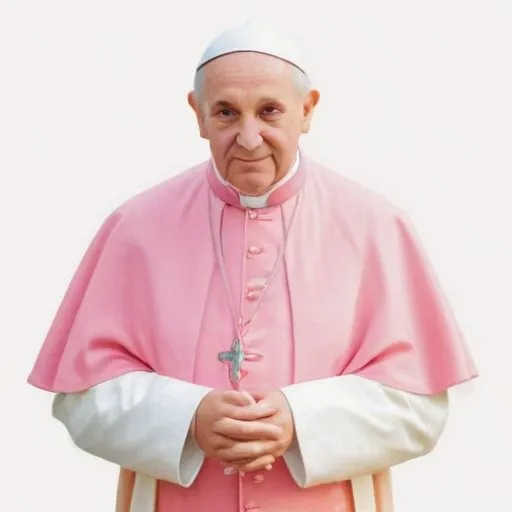
The pope who reformed the Catholic Church's finances and ended nepotism, promoting a more austere and humble papacy. He's also known for his bull "Romanum decus" which regulated the discipline of bishops.
Pope Innocent XII, born Antonio Pignatelli, was a beacon of reform in the Catholic Church, renowned for his unwavering stance against nepotism. During his papacy from 1691 to 1700, he vigorously worked to eradicate the pervasive practice of favoritism towards relatives, earning him a reputation as a champion of fairness and integrity.
Born on March 13, 1615, in Spinazzola, Kingdom of Naples, Antonio Pignatelli was the fourth of five children to Francesco Pignatelli and Porzia Carafa. He hailed from an esteemed aristocratic family that had produced several viceroys and ministers of the crown. Pignatelli's education took place at the Collegio Romano in Rome, where he earned a doctorate in both canon and civil law.
At the tender age of 20, Pignatelli began his career as an official of the court of Pope Urban VIII. He served as the Referendary of the Apostolic Signatura and later as the governor of Fano and Viterbo. His diplomatic prowess led him to Malta, where he worked as an inquisitor from 1646 to 1649, and subsequently as the governor of Perugia. Shortly after, he received his priestly ordination.
In 1652, Pignatelli was appointed as the Titular Archbishop of Larissa and received episcopal consecration in Rome. He went on to serve as the Apostolic Nuncio to Poland from 1660 to 1668 and later to Austria from 1668 to 1671. He was transferred to Lecce in 1671 and later became the Cardinal-Priest of San Pancrazio in 1681. Pope Innocent XI appointed him as the Archbishop of Naples in 1686, a position he held until his papal election.
Pope Innocent XII was elected on July 12, 1691, and his papacy was marked by a series of reforms aimed at eradicating nepotism. He issued a papal bull,
His papacy was also notable for his commitment to the poor and the sick. He established the Ospedale di Santo Spirito, a hospital in Rome that provided care to the needy. Innocent XII's reforms and charitable work earned him a reputation as a compassionate and just leader.
Pope Innocent XII's crusade against nepotism and his emphasis on social justice have had a lasting impact on modern society. His reforms paved the way for a more transparent and accountable Church, and his commitment to the poor and the sick inspired a new generation of charitable workers.
Today, Pope Innocent XII is remembered as a champion of fairness, a beacon of hope in a time of turmoil, and a shining example of leadership and compassion.
Born in 1652
The 18th-century Pope who banned Freemasonry and reformed the Roman Curia, leaving a lasting impact on the Catholic Church's governance and relations with secret societies.
Born in 1611
Led the Catholic Church during a tumultuous period, reforming the Church's finances and combating corruption, while also opposing the French monarch's attempts to exert control over the Church.
Born in 1599
A 17th-century pope who commissioned grand architectural projects, including the colonnade of St. Peter's Square, and was a patron of the arts.
Born in 1568
The 17th-century Catholic leader who reigned for 21 years, known for his strong stance against Galileo Galilei and his scientific discoveries, as well as his extensive patronage of the arts.
Born in 1554
Established the Congregation for the Propagation of the Faith, a missionary organization that aimed to spread Catholicism globally, and standardized the papal conclave process.
Born in 1568
The 17th-century Catholic leader who reigned for 21 years, known for his strong stance against Galileo Galilei and his scientific discoveries, as well as his extensive patronage of the arts.
Born in 1650
A Dominican friar who played a key role in the Western Schism, issuing several bulls to assert his authority and legitimacy as the true pope. He's also known for his reforms and attempts to restore the church's discipline.
Born in 1652
The 18th-century Pope who banned Freemasonry and reformed the Roman Curia, leaving a lasting impact on the Catholic Church's governance and relations with secret societies.
