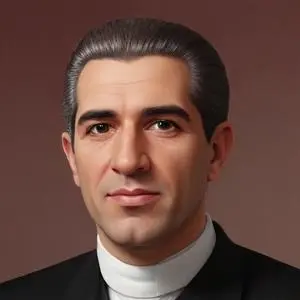
Ioannis Kapodistrias: The Architect of Greek Independence
A Visionary Statesman and Founder of Modern Greece
Ioannis Kapodistrias is renowned for being one of the most distinguished politicians and diplomats of 19th-century Europe, playing a pivotal role in shaping the modern Greek state and securing its independence. He is revered as the founder of modern Greece, recognized for his instrumental contribution to the Greek War of Independence and his remarkable governance as the first head of state of independent Greece.
Early Life and Career
Born on February 10, 1776, in Corfu, then under Venetian rule, Kapodistrias hailed from a distinguished Corfiote family. His father, Antonios Maria Kapodistrias, was a nobleman, artist, and politician. The Kapodistrias family's ancestral roots can be traced back to the city of Capodistria (now Koper) in Slovenia, where they originated before migrating to Corfu in the 13th century and adopting Orthodox Christianity.
Rise to Prominence: Minister of the Septinsular Republic and Foreign Minister of Russia
Kapodistrias' involvement in politics began as a minister of the Septinsular Republic in the early 19th century. He quickly rose through the ranks, eventually becoming the foreign minister of the Russian Empire from 1816 to 1822. During this period, he became increasingly active in supporting the Greek War of Independence, which broke out in 1821.
Unifying Greece: The Governor of Greece
In 1827, Kapodistrias was elected as the first head of state of independent Greece at the Third National Assembly at Troezen. He served as the governor of Greece from 1828 until his assassination in 1831. During his tenure, he worked tirelessly to unify the country, establishing a functional government, promoting education, and fostering economic growth.
Legacy and Impact on Modern Greece
Kapodistrias' remarkable contribution to Greek independence and his governance are still celebrated today. He is remembered as the architect of modern Greece, responsible for laying the foundations of the country's modern state. His legacy extends beyond politics, as he also played a significant role in promoting Greek culture, education, and arts.
Personal Milestones and Key Life Events
- 1776: Born in Corfu, Greece
- Early 19th century: Minister of the Septinsular Republic
- 1816-1822: Foreign Minister of Russia
- 1827: Elected as the first head of state of independent Greece
- 1828-1831: Governor of Greece
- 1831: Assassinated in Nauplion, Greece
Awards and Honors
Kapodistrias was honored with the title "Count" by
Charles Emmanuel II, Duke of Savoy, and his family's title was inscribed in the Libro d'Oro of the Corfu nobility in 1679.
Philosophical Contributions and Beliefs
Kapodistrias was a strong advocate for liberal values, democracy, and national unity. He believed in the importance of education, cultural preservation, and economic development in shaping a nation's identity and prosperity.
Trivia and Fun Facts
- Kapodistrias' family name, "Vitori" or "Vittori," originated from the city of Capodistria in Slovenia.
- He was a skilled artist and linguist, fluent in Greek, Italian, French, and Russian.
- Kapodistrias was a strong supporter of the Greek War of Independence, despite facing opposition from European powers.
Final Legacy
Ioannis Kapodistrias' remarkable life and achievements have left an indelible mark on modern Greece. His vision, leadership, and dedication to his country's independence continue to inspire generations, solidifying his place in history as one of the most important figures in Greek politics and diplomacy.
FAQ
What was Ioannis Kapodistrias role in the Greek War of Independence?
Ioannis Kapodistrias played a crucial role in the Greek War of Independence, serving as the leader of the Greek government-in-exile and later as the first Governor of Greece.
What was Ioannis Kapodistrias vision for modern Greece?
Ioannis Kapodistrias had a clear vision for modern Greece, which he sought to create as a united, independent, and modern state. He worked tirelessly to promote education, infrastructure development, and economic growth.
What were Ioannis Kapodistrias views on international relations?
Ioannis Kapodistrias believed in the importance of international cooperation and diplomacy. He worked closely with European powers to secure recognition and support for the new Greek state.
What were Ioannis Kapodistrias achievements as Governor of Greece?
Ioannis Kapodistrias achieved significant reforms as Governor of Greece, including the establishment of a new constitution, the promotion of education and infrastructure development, and the creation of a new national bank.
What is Ioannis Kapodistrias legacy in Greek history?
Ioannis Kapodistrias legacy in Greek history is that of a champion of Greek independence and modernization. He is remembered as one of the most important figures in Greek history, and his vision for a modern Greece continues to inspire Greeks today.