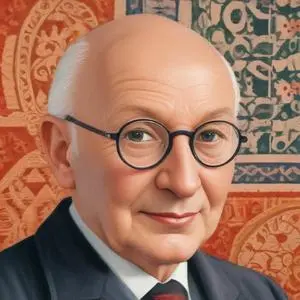
Isaac Bashevis Singer: The Prolific Yiddish Writer and Nobel Laureate
A Life Devoted to Literature
Isaac Bashevis Singer, a Polish-born Jewish-American novelist, short-story writer, memoirist, essayist, and translator, is best known for his rich and poignant literary works that capture the essence of Jewish culture and experience. His writing career spanned over six decades, earning him the Nobel Prize for Literature in 1978, among numerous other accolades.
Early Life and Upbringing
Born in 1903, likely on November 11, in Leoncin village near Warsaw, Poland, Singer grew up in a devout Jewish family. His father, a Hasidic rabbi, and mother, Bathsheba, instilled in him a deep love for learning and literature. The family moved to Warsaw in 1908, where Singer's father became the head of the Yeshiva.
Literary Career
Singer began writing in Yiddish, publishing his first novel,
Satan in Goray, in 1935. He went on to write over 30 novels, 14 short-story collections, and numerous essays, memoirs, and children's books. His works were often adapted for the theater and translated into English with the help of editors and collaborators.
Awards and Honors
Singer's contributions to literature were recognized with numerous awards, including:
- 1978 Nobel Prize for Literature
- Two U.S. National Book Awards: one in Children's Literature for A Day of Pleasure: Stories of a Boy Growing Up in Warsaw (1970) and one in Fiction for A Crown of Feathers and Other Stories (1974)
- Other notable awards include the Louis Lamed Prize, the Itzik Manger Prize, and the Bialik Prize
Philosophical Contributions and Beliefs
Singer's writing often explored philosophical themes, such as:
- The struggle between faith and doubt
- The tension between tradition and modernity
- The human condition, including love, morality, and mortality
His work was deeply rooted in Jewish culture and tradition, yet he was also critical of certain aspects of Orthodox Judaism.
Personal Milestones and Key Life Events
Singer's life was marked by significant events, including:
- Emigration to the United States in 1935, where he became a prominent figure in the Yiddish literary movement
- Marriage to Alma Haimann in 1940 and the birth of their son, Israel Zamir, in 1943
- Death of his brother, Israel Joshua Singer, in 1944
Influence on Modern Society
Singer's work has had a profound impact on modern society, inspiring generations of writers, scholars, and readers. His writing has been translated into numerous languages and continues to be widely read and studied.
Quotes and Memorable Sayings
Some of Singer's most notable quotes include:
- "We must believe in free will, we have no choice."
- "The very essence of literature is the war between emotion and intellect."
Legacy and Historical Context
Singer's work is a testament to the rich cultural heritage of Yiddish literature and Jewish tradition. His writing serves as a window into the past, offering a glimpse into the lives of Jewish communities in Poland and beyond.
Comparative Analysis with Contemporaries
Singer's work is often compared to that of other notable Yiddish writers, including his brother Israel Joshua Singer and
Sholem Asch. While sharing similar themes and cultural backgrounds, Singer's unique voice and style set him apart.
Personal Relationships and Anecdotes
Singer's life was filled with fascinating relationships and anecdotes, including his close friendship with the writer and translator, Saul Bellow.
Impact on Pop Culture
Singer's work has influenced popular culture, inspiring adaptations, references, and homages in film, theater, and literature.
Awards and Honors
In addition to the Nobel Prize and U.S. National Book Awards, Singer received numerous honorary degrees and awards, including the Congressional Gold Medal in 1989.
Visual Timeline and Milestones
Image: Isaac Bashevis Singer in his later years
Trivia and Fun Facts
- Singer was a prolific writer, often producing over 1,000 words a day.
- He was known for his love of coffee and would often write in coffee shops.
Inspirational Stories and Motivations
Singer's life and work serve as a testament to the power of creativity, perseverance, and dedication. His writing continues to inspire generations, offering a window into the human experience and the importance of preserving cultural heritage.