


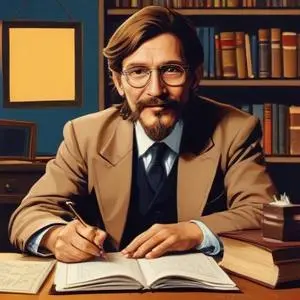
A renowned Yiddish author and playwright, best known for creating Tevye the Dairyman, a beloved character later adapted into the iconic musical "Fiddler on the Roof".
Sholem Aleichem, the pen name of Solomon Naumovich Rabinovich, is renowned for his poignant and humorous stories that immortalized the struggles and joys of Jewish life in Eastern Europe. His works have been adapted into countless plays, films, and musicals, including the iconic Fiddler on the Roof, which catapulted him into international fame.
Born in 1859 in Pereiaslav, Ukraine, Sholem Aleichem grew up in a rich cultural heritage, surrounded by the vibrant traditions of the Jewish community. His father, Menachem-Nukhem Rabinovich, was a prosperous merchant, but a failed business venture plunged the family into poverty, shaping the young Sholem's perspective on life. After his mother's untimely death in a cholera epidemic, he moved to Pereiaslav, where he began his writing journey.
Sholem Aleichem's earliest writings included an alphabetic glossary of epithets used by his stepmother and a Jewish version of Robinson Crusoe, composed at the tender age of 15. He adopted the pseudonym Sholem Aleichem, a Yiddish variant of the Hebrew expression "shalom aleichem," meaning "peace be with you." This nom de plume would become synonymous with Yiddish literature.
As a teacher, Sholem Aleichem began to write in earnest, capturing the essence of Jewish life in Eastern Europe. His stories, peppered with humor, wit, and pathos, resonated with readers worldwide. He authored numerous plays, novels, and short stories, including the beloved Tevye the Dairyman, which inspired the creation of Fiddler on the Roof.
Sholem Aleichem's works are imbued with a deep sense of empathy, compassion, and social commentary. He advocated for Jewish cultural preservation, women's rights, and economic equality, using his writing as a platform to address the pressing issues of his time. His stories often poked fun at the social norms and religious strictures that governed Jewish life, sparking controversy and debate.
Sholem Aleichem's writing captured the spirit of a bygone era, providing a window into the world of Eastern European Jewry. His works have been translated into numerous languages, ensuring their relevance and appeal to diverse audiences. Today, he is celebrated as one of the most important Yiddish writers of all time, his stories continuing to inspire new generations of readers and artists.
Sholem Aleichem's works have transcended cultural and linguistic boundaries, influencing writers, artists, and filmmakers worldwide. His stories have been adapted into numerous stage productions, films, and television shows, ensuring his legacy continues to inspire and captivate audiences.
"A language is a dialect with an army and navy." – Sholem Aleichem
"Life is a dream for the wise, a game for the fool, a comedy for the rich, a tragedy for the poor." – Sholem Aleichem
Sholem Aleichem's contributions to Yiddish literature have been recognized with numerous awards and honors, including a commemorative plaque in his honor at the Bronx's Hebrew Home for the Aged.
Sholem Aleichem's works have been incorporated into educational curricula worldwide, introducing new generations to the rich cultural heritage of Yiddish literature. His stories have inspired countless writers, including Nobel laureates Isaac Bashevis Singer and Elie Wiesel, who have acknowledged his profound influence on their work.
Sholem Aleichem's life and works serve as a testament to the power of storytelling, inspiring readers and writers to explore their cultural heritage and social consciousness. His legacy continues to motivate artists, writers, and scholars to preserve and promote Yiddish culture, ensuring its relevance and importance for generations to come.
Born in 1903
A Polish-American writer who crafted poignant, introspective stories that explored the human condition, often drawing from his Jewish heritage and experiences. His works are celebrated for their nuanced characters and philosophical depth.
97 Years Old
A Romanian-American writer, professor, and humanitarian who survived the Holocaust and dedicated his life to promoting peace, justice, and human rights, leaving a lasting impact on literature and activism.
93 Years Old
Acclaimed author of provocative, introspective novels that explore the American Jewish experience, identity, and the human condition, often blending humor and social commentary.
Born in 1914
Pulitzer Prize-winning author of novels and short stories that explore the human condition, often blending realism with myth and fantasy, and known for his poignant and introspective portrayals of Jewish-American life.
98 Years Old
A celebrated author of literary fiction, known for exploring Jewish identity and culture through her nuanced, lyrical prose. Her writing often delves into the human condition, morality, and the power of language.
Born in 1915
A Nobel Prize-winning author celebrated for his insightful and humorous portrayals of modern American life, exploring themes of identity, morality, and the human condition.
Born in 1894
A Russian literary master who crafted poignant, lyrical stories that captured the essence of humanity, often drawing from his experiences as a journalist and playwright.
Born in 1883
A writer of surreal, psychologically complex fiction that explores the human condition, often featuring isolated protagonists in absurd, nightmarish scenarios.
