


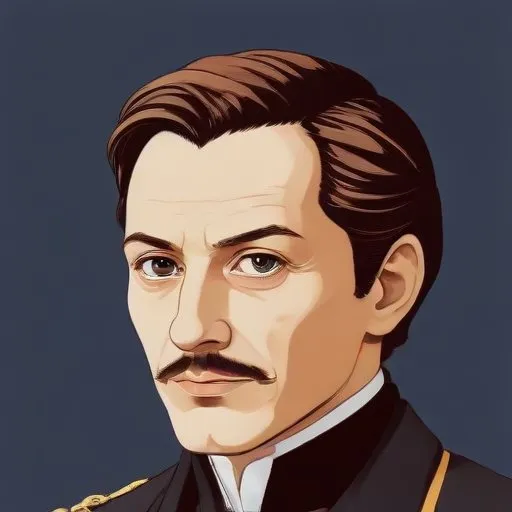
A 17th-century Dutch diplomat who played a key role in establishing trade relations between the Netherlands and Russia, and is also known for his cartographic contributions.
Isaac Massa, a Dutch grain trader, traveler, and envoy to Russia, is renowned for his meticulous accounts and cartographical contributions to the understanding of Eastern Europe and Siberia during the early 17th century. His memoirs, which chronicled the Time of Troubles in Russia, remain an invaluable resource for historians, while his maps of the region provided a foundational understanding of the geography for centuries to come.
Massa was born into a wealthy silk merchant's family in Haarlem, Netherlands, on October 7, 1586. His father, Abraham Massa, had relocated the family from Lige to Haarlem before Isaac's birth. The family surname, also known as Massart or Massaert, suggests French origins, hinting at a possible Huguenot ancestry.
In 1601, Massa left Haarlem to assist his family's trade in Moscow. During his stay, he witnessed the tumultuous reign of Boris Godunov and the subsequent civil war, later known as the Time of Troubles. Massa's experiences in Russia were marked by the capture of Moscow by False Dmitriy I and his eventual departure in 1609, just before the fall of Tsar Vasily Shuysky.
Massa's accounts of his travels and experiences in Russia were accompanied by detailed maps of the region, including the Land of Samoyeds. His cartographical contributions, published in an almanac edited by Hessel Gerritsz, provided a comprehensive understanding of Eastern Europe and Siberia, making him one of the earliest European cartographers to chart this territory.
In 1612-1613, Massa published two articles on Russian events and geography, which were reproduced in print in the 19th century. His memoirs, titled "Een cort Verhael van Begin en Oorspronk deser tegenwoordighe Oorloogen en troeblen in Moscovia totten jare 1610," offered a detailed account of the Time of Troubles and remain an essential resource for historians.
The Isaac Massa Foundation, established in Groningen, Netherlands, aims to stimulate scientific and cultural contacts between the Russian Federation and the Netherlands, perpetuating Massa's legacy as a bridge between the two nations.
Massa's accounts and cartographical work demonstrate his dedication to understanding and documenting the unknown. His experiences in Russia, particularly during the Time of Troubles, likely shaped his perspective on the importance of diplomacy and cultural exchange.
Massa's contributions to cartography, history, and cultural exchange continue to influence modern society. His work serves as a testament to the importance of understanding and cooperation between nations, emphasizing the significance of cultural and scientific exchange.
Isaac Massa's pioneering spirit, cartographical contributions, and meticulous accounts of his experiences in Russia have left an indelible mark on our understanding of Eastern Europe and Siberia. As a Dutch trader, traveler, and envoy, Massa's legacy serves as a reminder of the importance of cultural exchange, diplomacy, and the pursuit of knowledge.
Born in 1599
A 17th-century Dutch mayor and regent of Amsterdam, known for his significant role in the Dutch Golden Age, shaping the city's politics and economy. He was a skilled diplomat and strategist, playing a crucial part in the country's independence from Spain.
Born in 1686
Russian Minister of Foreign Affairs who played a crucial role in shaping Russia's foreign policy during the Napoleonic Wars, known for his diplomatic skills and ability to navigate complex international relations.
