


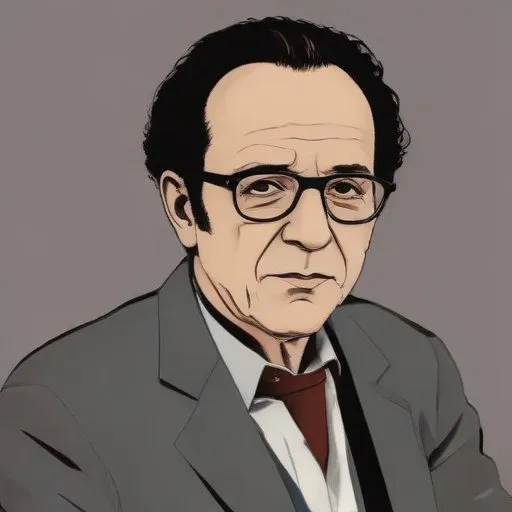
A celebrated Albanian writer, renowned for his poignant and thought-provoking works that often explore the complexities of Balkan history and culture. His writings are a window into the region's rich heritage and its people's struggles.
Ismail Kadare is renowned as a leading international literary figure and intellectual, celebrated for his thought-provoking novels, poems, essays, and plays that have captivated readers worldwide. With a writing career spanning over six decades, Kadare is particularly known for his poignant and insightful works that boldly critique totalitarianism, earning him recognition as one of the greatest writers of the 20th and 21st centuries.
Born on January 28, 1936, in Gjirokastër, Albania, Kadare's fascination with literature began at a young age. He developed a passion for poetry, which remained his primary focus until the publication of his first novel, The General of the Dead Army, in 1963. This seminal work catapulted him to international fame and solidified his position as a prominent literary figure.
During the tumultuous period of communist rule in Albania, Kadare masterfully evaded censorship by employing ingenious literary devices. He wove complex narratives rich in allegory, myth, and symbolism, cleverly injecting subtle critiques of the totalitarian regime. This ingenuity allowed him to convey powerful messages without directly confronting the authorities.
In 1990, Kadare defected to Paris, seeking refuge from the repressive communist regime. This bold move marked a turning point in his career, as he gained international recognition and accolades. France honored him with the prestigious title of foreign associate of the Académie des Sciences Morales et Politiques in 1996, followed by the esteemed Commandeur de la Légion d'Honneur in 2016.
Kadare's contributions to literature have been acknowledged with numerous prestigious awards, including:
Kadare's literary works and philosophical stance are deeply rooted in his critique of totalitarianism. He has consistently used his platform to advocate for individual freedom, democracy, and intellectual liberty. His writings have been praised for their depth and nuance, drawing comparisons to literary giants such as Franz Kafka, Nikolai Gogol, and Gabriel García Márquez.
Kadare's literary legacy extends beyond the literary world, with his works serving as a testament to the power of creative resistance against oppression. His influence can be seen in the realms of politics, philosophy, and art, inspiring a new generation of writers, intellectuals, and thinkers to challenge the status quo.
Kadare's life has been marked by significant milestones, including his decision to decline the opportunity to become the President of Albania in the 1990s. This bold move demonstrated his commitment to his artistic vision and his refusal to be swayed by political pressures.
Ismail Kadare's remarkable literary career has left an indelible mark on world literature. His courageous defiance of totalitarianism, coupled with his innovative storytelling and profound philosophical insights, have cemented his position as one of the greatest writers of our time.
Born in 1908
Albania's communist leader who ruled with an iron fist from 1944 until his death in 1985, known for his brutal suppression of dissent and isolationist policies.
