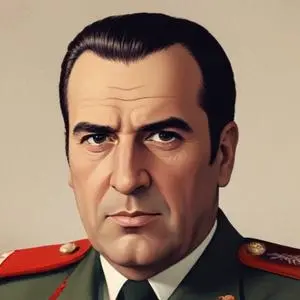
Enver Hoxha: The Prolific Leader of Albania's Communist Era
A Brief Overview
Enver Hoxha, the Albanian communist politician, is predominantly known for his tenure as the ruler of Albania from 1944 until his death in 1985. During this period, he held various significant positions, including the First Secretary of the Party of Labour of Albania, chairman of the Democratic Front of Albania, and commander-in-chief of the Albanian People's Army.
Early Life and Rise to Power
Born on October 16, 1908, in Gjirokastr, Albania, Hoxha pursued a career as a grammar school teacher in 1936. Following the Italian invasion of Albania, he joined the Party of Labour of Albania at its creation in 1941 in the Soviet Union. At the age of 34, he was elected First Secretary in March 1943.
Stalinist Reforms and Governance
Hoxha adopted Stalinist ideologies, converting Albania into a one-party communist state. He implemented state atheism, leading to anti-religious persecution against Muslims and Christians. His government reconstructed the war-torn country, building Albania's first railway line, increasing the adult literacy rate from 51.5% to over 90%, eradicating epidemics, electrifying the country, and promoting agricultural independence.
Totalitarian Methods and Human Rights Concerns
To implement his radical program, Hoxha employed totalitarian methods of governance, outlawing travel abroad and private proprietorship. His government imprisoned, executed, or exiled thousands of landowners, rural clan leaders, peasants who resisted collectivization, and allegedly disloyal party officials.
Break with Soviet Union and China
The later years of Hoxha's reign were marked by stagnation due to his political breaks with the Soviet Union and China. These breaks led to diminishing aid and support from these nations, further exacerbating Albania's economic struggles.
Legacy and Succession
Enver Hoxha's death on April 11, 1985, saw
Ramiz Alia succeed him as the leader of Albania. Under Alia's leadership, the country transitioned towards democratization, eventually abandoning communism.
Philosophical Contributions and Beliefs
Hoxha's adherence to Stalinist ideologies was instrumental in shaping Albania's political landscape during his rule. His beliefs were reflected in his policies, which prioritized state control and collectivization.
Personal Milestones and Key Life Events
- October 16, 1908: Born in Gjirokastr, Albania
- 1936: Became a grammar school teacher
- 1941: Joined the Party of Labour of Albania in the Soviet Union
- 1943: Elected First Secretary of the Party of Labour of Albania at the age of 34
- 1944: Became the de facto head of state after the abolition of the monarchy
- April 11, 1985: Passed away
Influence on Modern Society
Enver Hoxha's legacy is complex and multifaceted. While he initiated significant economic and social reforms, his totalitarian methods and human rights abuses tarnished his reputation. Nevertheless, his influence on Albanian history and politics remains undeniable.
Historical Context and Legacy
Hoxha's rule was marked by both achievements and controversies. His government's accomplishments in rebuilding Albania and promoting social welfare are undeniable, but his repressive policies and human rights abuses cannot be overlooked. As a prominent figure in Albanian history, his legacy continues to be debated and evaluated by scholars and historians alike.
FAQ
What was Enver Hoxhas political career like?
Enver Hoxha was an Albanian general and politician who served as Prime Minister of Albania from 1944 to 1954 and then as First Secretary of the Party of Labour of Albania until his death in 1985.
What were Enver Hoxhas policies during his rule?
Enver Hoxha implemented a series of radical socialist and Stalinist policies, including nationalizing industries, collectivizing agriculture, and isolating Albania from the international community.
How did Enver Hoxha consolidate power in Albania?
Enver Hoxha consolidated power by eliminating political opponents, suppressing dissent, and maintaining a cult of personality. He also maintained close ties with the Soviet Union until a rift in the 1960s.
What was Enver Hoxhas foreign policy like?
Enver Hoxhas foreign policy was marked by a period of isolationism, during which Albania withdrew from international organizations and severed ties with Western countries.
What legacy did Enver Hoxha leave behind?
Enver Hoxhas legacy is complex and contested, with some viewing him as a heroic nationalist and others as a repressive dictator responsible for human rights abuses and economic stagnation.