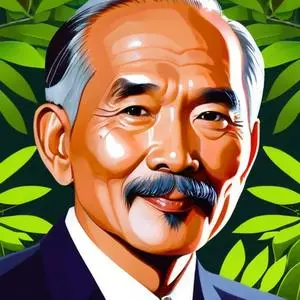
Ho Chi Minh: The Architect of Vietnam's Independence
A Revolutionary Leader and Unifying Force
Ho Chi Minh, also known as Uncle Ho, was a Vietnamese communist revolutionary, nationalist, and politician who is revered for his pivotal role in securing Vietnam's independence from French colonial rule and later, from American intervention. Minh is best known for serving as the prime minister of the Democratic Republic of Vietnam from 1945 to 1955 and as president from 1945 until his death in 1969.
Early Life and Revolutionary Beginnings
Born on May 19, 1890, in Ngh An province, French Indochina, Minh was exposed to the harsh realities of colonial rule from a young age. His early life was marked by a growing sense of nationalism and a desire to free his country from foreign dominance. In 1911, Minh left French Indochina to continue his revolutionary activities, eventually becoming one of the founding members of the French Communist Party.
Founding the Communist Party of Vietnam and the Viet Minh
In 1930, Minh founded the Communist Party of Vietnam, which would later become the Communist Party of Vietnam. Eleven years later, in 1941, Minh returned to Vietnam and founded the Viet Minh independence movement, an umbrella organization that united various nationalist groups to fight against Japanese occupation.
The August Revolution and Independence
Minh led the August Revolution against the Japanese in August 1945, which resulted in the declaration of independence and the establishment of the Democratic Republic of Vietnam. This marked a significant milestone in Vietnam's struggle for independence, although it was short-lived, as the French returned to power the following month.
Guerrilla Warfare and the Battle of Dien Bien Phu
Minh's government retreated to the Viet Bac region and began a guerrilla warfare against the French. The Viet Minh ultimately defeated the French Union in 1954 at the Battle of Dien Bien Phu, ending the First Indochina War and resulting in the division of Vietnam, with the Viet Minh in control of North Vietnam, and anti-communists in control of South Vietnam.
The Vietnam War and Leadership
Minh was a key figure in the People's Army of Vietnam during the Vietnam War, which lasted from 1955 to 1975. He officially stepped down from power in 1965 due to health problems, but remained a symbol of Vietnamese resistance against foreign intervention.
Legacy and Honors
Ho Chi Minh City, the former capital of South Vietnam, was renamed in his honor in 1976, a testament to his enduring legacy. Minh's influence on modern Vietnamese society is immeasurable, and his image continues to inspire generations of Vietnamese people.
Philosophical Contributions and Beliefs
Minh's philosophical beliefs were shaped by Marxism-Leninism, which emphasized the importance of class struggle and the role of the proletariat in revolution. He was also deeply influenced by nationalism and a desire to free his country from foreign domination.
Personal Milestones and Key Life Events
- 1890: Born on May 19th in Ngh An province, French Indochina
- 1911: Left French Indochina to continue revolutionary activities
- 1930: Founded the Communist Party of Vietnam
- 1941: Returned to Vietnam and founded the Viet Minh independence movement
- 1945: Led the August Revolution against the Japanese and declared independence
- 1954: Defeated the French Union at the Battle of Dien Bien Phu
- 1965: Officially stepped down from power due to health problems
- 1969: Passed away on September 2nd
Inspirational Quotes
"Nothing is more precious than independence and liberty."
"You can kill ten of our men for every one we kill of yours, but even at those odds, you will lose and we will win."
Ho Chi Minh's remarkable life and legacy continue to inspire generations of Vietnamese people and remain an integral part of Vietnam's history and identity.
FAQ
What was Ho Chi Minhs role in Vietnamese independence?
Ho Chi Minh was a key figure in Vietnams struggle for independence from French colonial rule. He served as the chairman of the Communist Party of North Vietnam and later became the first president of North Vietnam.
What was Ho Chi Minhs vision for Vietnam?
Ho Chi Minhs vision for Vietnam was one of independence, unity, and socialism. He believed in the importance of national liberation and social equality, which guided his actions and decisions throughout his life.
How did Ho Chi Minhs leadership impact Vietnam?
Ho Chi Minhs leadership had a profound impact on Vietnam, inspiring a generation of Vietnamese to fight for independence and self-determination. His legacy continues to shape Vietnamese politics and society to this day.
What was Ho Chi Minhs relationship with the United States?
Ho Chi Minhs relationship with the United States was complex and often tumultuous. He sought American support for Vietnamese independence, but later became a fierce opponent of US involvement in Vietnam.
What is Ho Chi Minhs legacy today?
Today, Ho Chi Minh is revered as a national hero in Vietnam, symbolizing the countrys struggle for independence and self-determination. His legacy continues to inspire Vietnamese people around the world.