


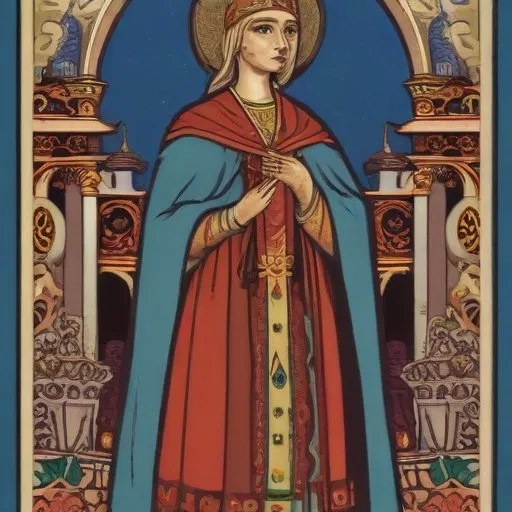
A renowned Russian illustrator and stage designer, famous for his vibrant, folk-inspired artwork and set designs that brought Russian folklore to life. His illustrations continue to influence children's book art and theatrical design.
Ivan Yakovlevich Bilibin was a renowned Russian illustrator and stage designer, celebrated for his mesmerizing interpretations of Russian folk tales and Slavic folklore. His work, deeply rooted in medieval Russian art and culture, has captivated audiences for generations.
Born on August 16, 1876 (O.S. August 4), in Tarkhovka, a suburb of St. Petersburg, Bilibin was destined for artistic greatness. He began his artistic journey in 1898 at Anton Abes Art School in Munich, where he was exposed to the influences of Art Nouveau and the German satirical journal Simplicissimus. Later, he studied under the tutelage of Ilya Repin in St. Petersburg.
Bilibin's breakthrough came in 1899, when he released his first illustrations for Russian fairy tales. This early success led to his association with the artists' association Mir Iskusstva, where he became an active member. His career as an illustrator of books and magazines began with a commission for Mir Iskusstva's magazine, followed by essays on Russian folk art and artistic designs for other magazines such as Dog Rose and productions of a Moscow publishing house.
Bilibin's work was heavily influenced by traditional Russian folk art and culture. In the period between 1902 and 1904, he traveled to the Vologda, Olonetsk, and Arkhangelsk Governorates, conducting ethnographic research and studying examples of Russian wooden architecture. His findings were later published in the monograph Folk Arts of the Russian North. Old Russian art had a profound impact on his work, as did traditional Japanese prints and Renaissance woodcuts.
Bilibin's illustrations for Russian folk tales, such as Vasilisa the Beautiful and The Firebird, are iconic representations of Russian folklore. His work extended to stage design, contributing to the renowned Ballets Russes. In 1937, he became a member of the Artists Union of the USSR. Bilibin co-founded the Union of Russian Artists, solidifying his position as a leader in the Russian art world.
Ivan Bilibin's contributions to Russian art and culture are immeasurable. His work has inspired generations of artists, designers, and illustrators. His legacy extends beyond Russia, influencing the global art community. Today, his illustrations remain a testament to the enchanting world of Russian folk tales and Slavic folklore.
Ivan Bilibin's life and work are a testament to the power of artistic expression, blending cultural heritage with creative genius. His enchanting illustrations continue to captivate audiences, ensuring his legacy as one of Russia's most celebrated artists.
Born in 1861
A Russian-French painter and set designer who blended Impressionism and Art Nouveau styles, creating vibrant, expressive works for the Ballets Russes and opera productions.
Born in 1856
A Russian Symbolist painter who created vibrant, dreamlike works that blended fantasy and reality, often featuring mythical creatures and folklore-inspired themes.
Born in 1875
A Russian-Lithuanian painter and illustrator renowned for his vibrant, dreamlike depictions of urban landscapes and fantastical scenes, blending realism with whimsy. His work often explores the intersection of technology and nature.
Born in 1860
A Russian painter and illustrator renowned for capturing the serene beauty of landscapes and the fleeting effects of light, evoking a sense of melancholy and nostalgia.
Born in 1844
A Russian master of realism, known for vivid depictions of Russian life and history, capturing the essence of the human experience through his brushstrokes.
