


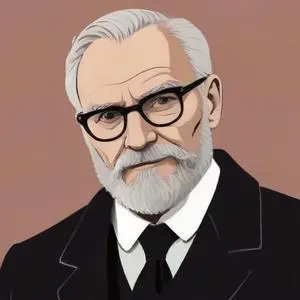
A Russian physiologist and physician who discovered the concept of classical conditioning, where he demonstrated that animals can learn to associate stimuli with a particular response, revolutionizing our understanding of behavior. His work laid the foundation for behavioral psychology and continues to influence fields like education and advertising.
Ivan Pavlov, a Russian physiologist, is renowned for his groundbreaking discovery of classical conditioning, a fundamental concept in psychology that has far-reaching implications in understanding human behavior and learning processes. Through his ingenious experiments with dogs, Pavlov demonstrated that associative learning can occur through the repeated pairing of stimuli, leading to a conditioned response.
Born on September 26, 1849, in Ryazan, Russian Empire, Pavlov was the first of ten children to Peter Dmitrievich Pavlov, a village Russian Orthodox priest, and Varvara Ivanovna Uspenskaya, a devoted homemaker. As a child, Pavlov developed a strong sense of responsibility, assisting with household chores and caring for his siblings.
Initially, Pavlov enrolled in the Ryazan church school and later attended the local theological seminary. However, inspired by the progressive ideas of Dmitry Pisarev, a Russian literary critic, and Ivan Sechenov, the father of Russian physiology, Pavlov abandoned his religious career and devoted his life to science. In 1870, he enrolled in the physics and mathematics department at the University of Saint Petersburg to study natural science.
While studying the physiology of the nerves of the pancreas, Pavlov stumbled upon an unexpected phenomenon. He observed that dogs would salivate not only in response to food, but also to the mere sight of the person who typically brought them food. This chance observation led Pavlov to design a series of experiments, which ultimately demonstrated the existence of classical conditioning.
Pavlov's experiments involved presenting dogs with a neutral stimulus, such as the sound of a bell, followed by an unconditioned stimulus, like food. Over time, the dogs learned to associate the bell with the food, leading to salivation upon hearing the bell alone. This fundamental discovery paved the way for a deeper understanding of learning and behavior.
Pavlov's contributions to science were recognized with numerous awards and honors, including the Nobel Prize in Physiology or Medicine in 1904. He was also awarded the Copley Medal in 1915 by the Royal Society for his outstanding work in physiology.
Pavlov's work had significant implications for our understanding of human behavior and learning. He believed that the study of physiology and psychology should be grounded in empirical observation and experimentation. Pavlov's emphasis on the importance of objective measurement and scientific rigor has had a lasting impact on the development of psychology as a scientific discipline.
The concept of classical conditioning has far-reaching applications in fields such as psychology, education, and advertising. Pavlov's discovery has influenced our understanding of human behavior, enabling the development of more effective teaching methods, advertising strategies, and behavioral interventions.
Pavlov married Serafima Vasilievna Karchevskaya in 1881, and the couple had four children together. He passed away on February 27, 1936, at the age of 86, leaving behind a legacy that continues to shape our understanding of human behavior and learning.
"Science demands from a man all his life. If for anything else he feels a responsibility, then I feel responsible for everything."
"Physiology is the basis of psychology."
Pavlov's work bridged the gap between physiology and psychology, paving the way for a deeper understanding of human behavior and learning. His pioneering research has inspired generations of scientists, shaping the development of psychology as a scientific discipline.
Born in 1856
Pioneering psychoanalyst who developed theories on the subconscious mind, childhood experiences, and the structure of personality, revolutionizing our understanding of human behavior and psychology.
Born in 1896
Developed groundbreaking theories on child cognitive development and learning, emphasizing active discovery and hands-on experience. His work has shaped modern education and parenting practices.
Born in 1904
Developed the theory of operant conditioning, which explores the relationship between behavior and environment, and invented the "Skinner box" to study learning and behavior.
Born in 1925
Developed the theory of social learning, which suggests that people learn new behaviors by observing and imitating others, and is known for his Bobo doll experiment.
Born in 1842
Pioneering philosopher and psychologist who explored the nature of consciousness, free will, and religious experience, and is known for his pragmatic approach to philosophy and psychology.
Born in 1903
A renowned expert in animal behavior, he pioneered the study of instinct and imprinting, and is famous for his work on aggression and his book "On Aggression".
Born in 1902
Developed the theory of psychosocial development, which proposes that individuals go through eight stages of development from infancy to old age, each with its own unique challenges and opportunities. His work has had a significant impact on our understanding of human development and identity formation.
Born in 1896
A pioneering psychologist who developed the sociocultural theory, which emphasizes the role of culture and social interaction in shaping human development and learning. His ideas have greatly influenced education and child development.
