


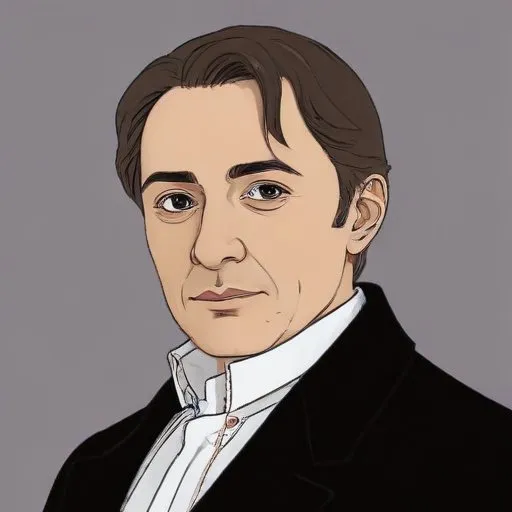
A radical literary critic who rejected romanticism and idealism, instead advocating for a more scientific and rational approach to art and literature.
Dmitry Pisarev, a pivotal figure in Russian nihilism, left an indelible mark on the country's literary and philosophical landscape. Known for his advocacy of liberation movements and natural science, his ideas had a profound impact on the likes of Lenin, Dostoevsky, and Nobel laureate Ivan Pavlov.
Born on October 14, 1840, in Znamenskoye, Russia, Pisarev hailed from a family of landed aristocrats. He completed his gymnasium education in Saint Petersburg in 1856 and went on to study history and philology at Saint Petersburg Imperial University.
Pisarev's writing career took off in 1858 when he began contributing to the liberal journal Rassavet as a literary critic. His works, often penned while imprisoned for political crimes, showcased his radical ideas and earned him notoriety.
Pisarev's nihilist philosophy centered around the ideas of negation and destruction, aiming to free individuals from antiquated moral and human authorities. He believed that the strong, or "new types," should emerge from the ashes of the old system, unfettered by traditional constraints. His famous dictum, "What can be smashed must be smashed. Whatever withstands the blow is fit to survive; what flies into pieces is rubbish," encapsulates his radical ideology.
Pisarev's writings, though often penned in captivity, exhibited a profound influence on Russian thought. His works inspired revolutionaries like Lenin and antinihilists like Dostoevsky, who even critiqued his philosophy in his celebrated novel Crime and Punishment. Additionally, Pisarev's emphasis on natural science resonated with scientists like Ivan Pavlov, who went on to win the Nobel Prize.
Pisarev's untimely death, which remains shrouded in mystery, has been attributed to either accidental drowning or suicide, amidst struggles with mental health issues. Despite his short life, his ideas have had a lasting impact on Russian history, shaping the country's revolutionary and intellectual landscapes. While his nihilist philosophy has drawn criticism, it remains an integral part of Russia's intellectual heritage.
The essence of Pisarev's ideology is encapsulated in his quotable phrases, which continue to resonate with thinkers and revolutionaries alike:
Pisarev's life may have been cut short, but his ideas continue to inspire and provoke, cementing his place as a giant of Russian nihilism.
Born in 1818
A Russian literary mastermind who crafted poignant novels and plays that explored the human condition, delving into themes of love, family, and social change.
Born in 1821
A Russian literary mastermind who penned psychologically complex novels that probed the human condition, exploring themes of morality, philosophy, and the darker aspects of human nature.
Born in 1828
A Russian literary giant who penned sweeping novels like "War and Peace" and "Anna Karenina", exploring the human condition with profound insight and masterful storytelling.
Born in 1870
Founder of the world's first socialist state, leading the Bolshevik Revolution and establishing the Soviet Union, known for his radical Marxist ideology and authoritarian rule.
Born in 1856
A Russian philosopher and theorist who developed Marxist theory and was a key figure in the Russian Revolution, known for his writings on dialectical materialism.
Born in 1853
A Ukrainian writer and social activist who exposed the injustices of the Russian Empire and advocated for human rights, particularly for the Ukrainian people.
